
Phlebiopsis
Phlebiopsis
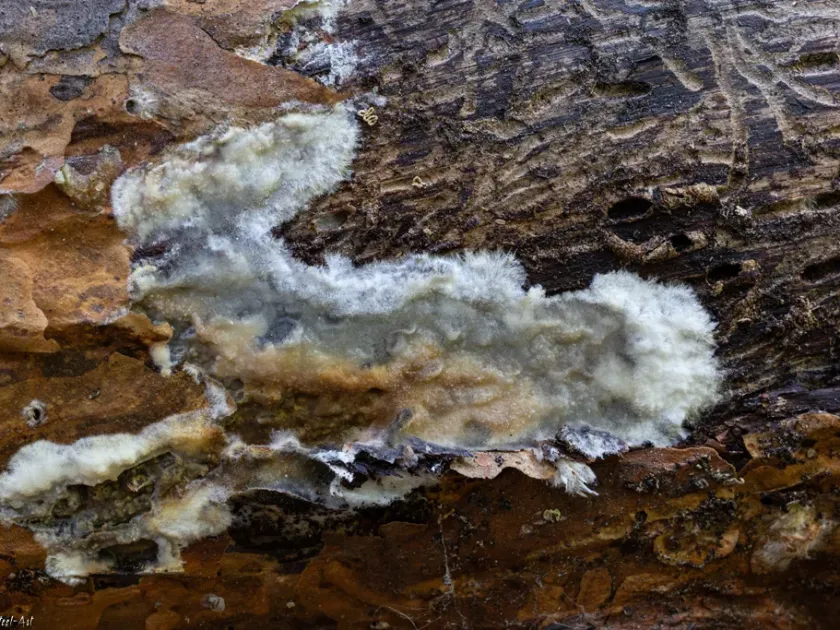
Description
Symptoms
The primary symptom is the emergence of distinctive fungal fruiting bodies, usually found on the lower trunk or on exposed roots of coniferous trees.
Infected wood exhibits a characteristic whitening and a fibrous, stringy texture, which indicates the advanced process of delignification.
Trees may display signs of general decline, such as yellowing needles and a significant reduction in annual growth due to the impairment of vascular tissues.
Beneath the bark, one can often find white mycelial mats or fine, web-like structures indicative of an active colonization process.
In later stages, the structural integrity of the wood is compromised, making the trees susceptible to snapping under wind pressure.
Pathogen
The disease is caused by fungi of the genus Phlebiopsis, with the most notable species being Phlebiopsis gigantea, a well-known pathogen responsible for white rot.
This fungus primarily acts as a wood-decaying organism that aggressively colonizes freshly cut wood, stumps, and occasionally weakened living trees.
The mycelium of the fungus penetrates deep into the timber, systematically breaking down lignin and cellulose, which are the main components of the wood structure.
The biological life cycle of this pathogen involves the formation of basidiocarps, which typically appear as leathery, crust-like structures on the bark surface.
Spread occurs primarily through the release of basidiospores, which are dispersed by air currents or through contact with contaminated forestry equipment.
Conditions for development
Phlebiopsis development is favored by high moisture levels, both in the air and in the soil, which are essential for the germination of fungal spores.
Optimal growth temperatures for the fungus range from 15 to 25 degrees Celsius, although it can remain active under a variety of climatic conditions.
Fresh stumps and logging residues are the most critical environments that facilitate the initial establishment and spread of the pathogen.
Dense forest stands with poor ventilation create a stagnant microclimate that promotes the accumulation of spores near the forest floor.
Mechanical damage to the bark or root systems during thinning and harvesting operations provides entry points for the fungus to invade living tissue.
Why it matters
The main impact of this disease is the degradation of timber quality, rendering it useless for most industrial or construction purposes.
By weakening the host tree, the fungus predisposes it to secondary infestations by bark beetles and other wood-boring insects.
Uncontrolled spread of the disease within forest stands leads to significant economic losses and the creation of large gaps in the forest canopy.
The infection can travel between trees through root grafts, causing localized pockets of root rot that expand over several years.
In forest nurseries, the pathogen can cause significant mortality among young saplings, leading to the loss of valuable planting stock.
Protection
The most effective management strategy involves proactive forest hygiene and the implementation of careful harvesting practices.
Biological control, specifically the application of antagonistic fungi to fresh stump surfaces, is widely used to prevent colonization by the pathogen.
Sanitary felling and the prompt removal of infected debris are essential measures to limit the spread and eliminate sources of inoculum.
Regular forest health monitoring allows for the early detection of infection sites, enabling prompt intervention before the disease spreads further.
- Application of biocontrol agents to stumps
- Minimizing mechanical damage during logging
- Sanitary removal of infected timber
- Disinfection of forestry tools between work sites
Discussion
No discussions yet — be the first.