
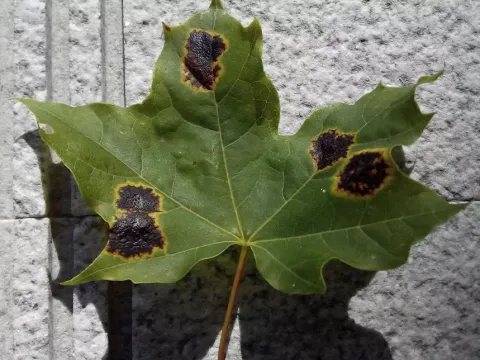
Maple leaf spot
Petrakia minima
The causal agent of this disease is the imperfect fungus Petrakia minima. This pathogen is a specific parasite that primarily targets various species of maple trees.
What the section contains
Maple leaf spot
The fungus overwinters mainly in fallen, infected leaves on the ground. During spring, it produces spores that are spread by wind or water splashes to young, emerging foliage.
The fungal mycelium invades leaf tissues through natural openings like stomata or through small mechanical injuries on the leaf surface. It secretes enzymes that break down plant cell structures.
Throughout the growing season, the pathogen can complete several life cycles. This allows the infection to spread rapidly under favorable weather conditions, potentially affecting the entire canopy.
Laboratory diagnosis usually involves examining the characteristic sporulation patterns found on the underside of the leaves to confirm the presence of Petrakia minima.
Initial symptoms appear in mid-summer as small, circular, brown or reddish-brown spots on the leaf blades. These spots are often surrounded by a darker, distinct margin.
As the disease progresses, these spots enlarge and may coalesce, covering a significant portion of the leaf surface. The centers of these spots may dry out and disintegrate, resulting in holes.
On the underside of the leaves, tiny, dark, pad-like structures appear within the spotted areas. These are the fruiting bodies where the fungus produces its spores.
Severe infestations cause premature yellowing, curling, and distortion of the leaves. In extreme cases, the entire leaf blade may wither and drop prematurely.
When the infection reaches the leaf petioles, it often causes earlier abscission. This significantly disrupts the tree's physiological processes before the natural dormancy period begins.
High humidity is the primary driver for the development and spread of this disease. Frequent rainfall, dew, and persistent fog create the perfect environment for spore germination.
Optimal temperatures for the fungus range between 18°C and 25°C (64°F–77°F). Within this range, the pathogen's metabolic activity and colonization speed reach their peak.
Dense, overcrowded planting prevents proper airflow within the canopy. Stagnant, humid air around the leaves is critical for the infection to take hold and spread from leaf to leaf.
Trees that are stressed due to drought, soil nutrient deficiencies, or other environmental factors show higher susceptibility to fungal attacks.
The presence of old leaf litter beneath the trees serves as the primary reservoir for the pathogen. Failure to clean up infected debris ensures a recurring cycle of infection each year.
The primary damage is the disruption of photosynthesis. By damaging the leaf tissue, the fungus reduces the tree's ability to produce the sugars necessary for growth and survival.
Premature leaf drop prevents the tree from storing enough carbohydrates to withstand the winter months, potentially leading to winter injury or decreased growth in the following season.
Aesthetically, the disease is highly detrimental. Infected trees lose their lush appearance, as the foliage becomes spotted, distorted, and sparse, which is a major concern for landscape maintenance.
Chronic annual infection can lead to stunted shoot growth and a general decline in the tree's vigor. Over time, this weakening makes the tree more prone to secondary pests.
In severe cases, persistent heavy infection combined with other environmental stressors can significantly reduce the lifespan of the tree, especially in urban settings.
The most important cultural control is the thorough removal and destruction of all fallen leaves in the autumn. This eliminates the overwintering source of the fungal spores.
Pruning the canopy to improve air circulation and sunlight penetration is highly recommended. This helps leaves dry out more quickly after rain, making it harder for spores to germinate.
If the infection is widespread, systemic fungicides may be necessary. Preventive applications are most effective, starting when the first leaves appear in early spring.
Repeat fungicide treatments at 10 to 14-day intervals if weather conditions remain wet and conducive to disease spread. Always rotate chemical classes to prevent resistance.
Ensuring the tree is well-watered and properly fertilized helps maintain its natural defenses. A healthy tree is far more resilient against Petrakia minima than one suffering from neglect.