
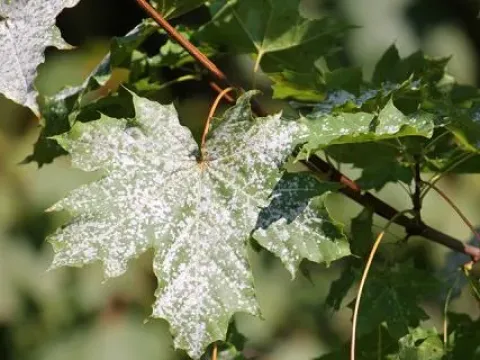
Maple powdery mildew
Erysiphe palczewskii
The disease is caused by Erysiphe palczewskii, an obligate biotrophic fungus belonging to the Erysiphales order, which thrives specifically on maples.
What the section contains
Maple powdery mildew
This pathogen draws nutrients from the host plant via specialized structures called haustoria, which penetrate the epidermal cells of leaves and shoots.
The life cycle involves the asexual reproduction stage, characterized by white conidial masses, and the sexual stage producing cleistothecia for overwintering.
The fungus is highly specialized, predominantly affecting the boxelder maple, which serves as a primary host in urban landscapes and forests.
Spore dispersal occurs primarily through wind currents, allowing the pathogen to spread across entire plantations during favorable meteorological conditions.
The hallmark symptom is the appearance of a white, powdery fungal growth on both the upper and lower surfaces of the leaves, resembling flour dusting.
As the infection progresses, the powdery spots expand and merge, eventually covering large portions of the leaf surface and inhibiting photosynthesis.
Tiny, black, pin-head-sized fruiting bodies known as cleistothecia appear scattered throughout the white mat as the season advances toward autumn.
Infected leaves may exhibit chlorosis, curling, and eventually necrosis, leading to premature leaf drop which is detrimental to the tree's health.
Shoot tips infected with the fungus often display stunted growth, curling, and abnormal development, which can result in long-term structural distortion.
Moderate temperatures and high relative humidity are critical environmental triggers that promote the germination of conidia and colonization of tissues.
The disease is most prevalent in the mid-to-late summer months when heavy dews and warm nights provide a moisture film on the foliage.
Densely planted areas with poor airflow trap moisture within the canopy, creating a perfect microenvironment for the powdery mildew fungus to flourish.
Excessive nitrogen fertilizer application creates succulent, tender growth that is significantly more susceptible to penetration by fungal hyphae.
Trees stressed by drought, poor soil quality, or urban air pollution are documented to have a higher incidence and severity of powdery mildew infection.
Severe infections reduce the overall vigor of the maple, as energy reserves are depleted due to impaired photosynthesis and early leaf senescence.
The aesthetic value of trees in parks and residential gardens is heavily compromised, making them undesirable for ornamental landscaping purposes.
Repeated annual attacks weaken the tree, increasing its susceptibility to secondary opportunistic pathogens and reducing its winter cold hardiness.
Stunting caused by the fungus affects the growth rate of young maples, which is a major concern for nurseries and reforestation projects.
While rarely fatal to mature, established trees, the disease can eventually lead to top dieback and overall decline if left unmanaged for years.
The most important control measure is the sanitation of the site, which includes raking and destroying all fallen leaves to remove overwintering spores.
Pruning the canopy to improve air circulation and sunlight penetration is an essential cultural practice to reduce the duration of leaf wetness.
Fungicide application using systemic products such as triazoles or strobilurins is recommended when initial signs of infection are detected in the canopy.
Maintaining tree health through proper irrigation and balanced fertilization helps the host plant build natural defenses against fungal invasions.
- Apply sulfur-based fungicides as a preventative measure during the early growth stage.
- Implement biological controls such as specific fungal antagonists during early infestation.
- Monitor nurseries regularly for early detection and immediate localized treatment.