
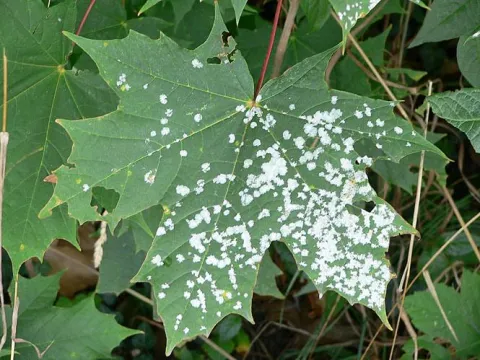
Maple powdery mildew
Sawadaea tulasnei
The disease is caused by the specialized fungus Sawadaea tulasnei, an obligate parasite that specifically infects various species of the Acer genus.
What the section contains
Maple powdery mildew
This fungus operates by developing a mycelial network across the leaf surface, which extracts nutrients from the host plant through specialized cells called haustoria.
The life cycle involves an asexual stage during the growing season, where conidia are produced and spread by wind to infect nearby leaves and healthy trees.
During the dormant season, the fungus survives in the form of cleistothecia, small black fruiting bodies found on fallen leaves or in the bark crevices of the host.
Being highly host-specific, the pathogen is well-adapted to the growth cycle of maples, ensuring it can efficiently colonize new foliage as it emerges in the spring.
The most recognizable symptom is the appearance of a dusty, white-to-gray mycelial growth on the upper surfaces of the maple leaves.
As the infection progresses, the fungal mat can spread to the underside of the leaves, as well as to petioles and young succulent shoots, causing minor deformations.
Look for tiny, dark, speck-like cleistothecia on the white powdery background, which indicate the sexual reproductive phase of the fungus.
Heavily infected leaves may exhibit yellowing (chlorosis), curling along the margins, and eventually premature necrosis or drying out.
The aesthetic decline of the tree is significant, as the foliage loses its healthy green appearance and may drop prematurely in severe cases.
Powdery mildew development is favored by warm, dry daytime temperatures coupled with high humidity or cool nights that lead to heavy dew formation.
Poor air circulation within the tree canopy, often caused by overly dense foliage or improper planting density, significantly increases the risk of an outbreak.
Shaded environments that prevent foliage from drying quickly after rain or dew facilitate the rapid germination of fungal spores.
High nitrogen availability often leads to an abundance of soft, succulent new growth, which is much more susceptible to fungal penetration than older, tougher leaves.
Extended periods of stable, moderate weather allow the fungus to complete its life cycle rapidly, leading to secondary infections throughout the summer months.
The primary damage is the disruption of the photosynthetic process, as the thick mycelial layer physically blocks sunlight from reaching the leaf epidermis.
The tree loses significant ornamental value, which is particularly detrimental for trees located in public parks, landscapes, and residential gardens.
Premature leaf drop reduces the tree's ability to store energy reserves, which can impair growth, reduce winter hardiness, and make the tree more vulnerable to other stresses.
Stunted shoot growth and a general decline in the tree's vigor are common long-term consequences of recurring annual infections.
While rarely fatal on mature, established maples, the disease can cause significant dieback and weakness in young, newly planted, or otherwise compromised trees.
Sanitation is the most effective management strategy; collect and dispose of all fallen leaves during the autumn to reduce the primary inoculum load.
Prune the canopy to improve air circulation and light penetration, which helps keep the foliage dry and makes the environment less hospitable to the fungus.
If chemical intervention is necessary, fungicides containing sulfur or systemic triazoles can be applied preventively or upon the first signs of infection.
Maintain tree health through proper fertilization and watering, ensuring that the tree is not under excessive stress that could weaken its immune response.
- Monitor trees regularly during the active growing season.
- Use resistant maple varieties where available for new plantings.
- Apply neem oil or biological fungicides for early-stage control.
- Avoid overhead irrigation to keep the canopy as dry as possible.