
Maple leaf spot (Pilidium)
Pilidium acerinum
Description
Symptoms
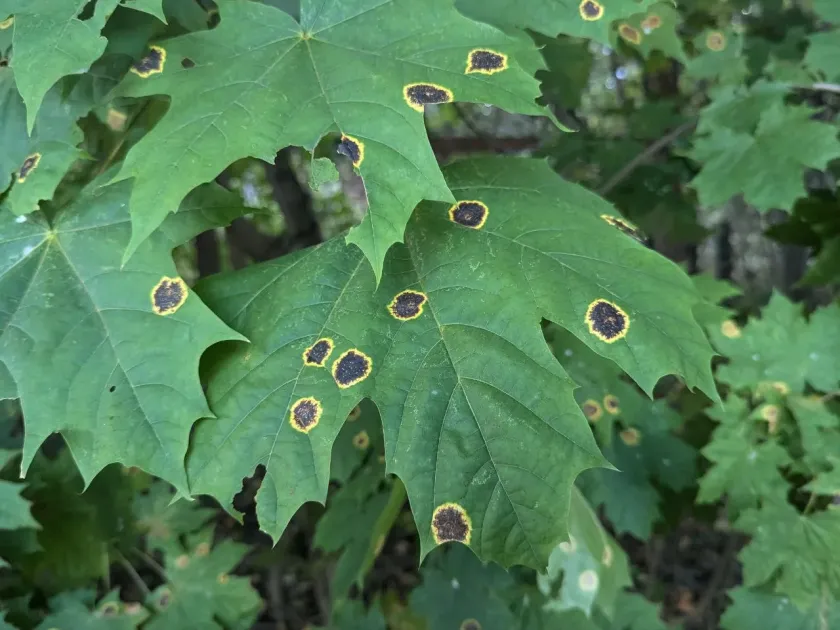
The initial symptoms are characterized by the appearance of brown or dark necrotic spots, which gradually expand in diameter.
Small, distinct black dots appear in the center of these lesions, representing the fungal fruiting bodies protruding through the epidermis.
Affected leaves may curl or deform as the infection progresses, often displaying yellowing borders around the necrotic spots.
Severe infestations result in heavy leaf drop before the end of the growing season, significantly reducing the tree's photosynthetic capacity.
Under close observation, the infected areas appear dull compared to healthy green tissue, indicating the death of the leaf blade cells.
Pathogen
The disease is caused by the fungus Pilidium acerinum, an ascomycete responsible for leaf necrosis in various species of maple trees.
The fungus produces its reproductive structures, known as pycnidia, within the necrotic lesions on the surface of infected leaves.
The pathogen overwinters primarily in fallen leaf litter, surviving as mycelium or conidia until the following spring season.
Host range is specific to maples, affecting both ornamental varieties in urban settings and trees in forest ecosystems.
Dissemination of fungal spores occurs via wind and rain splashes, which facilitate the spread of the disease within the tree canopy.
Conditions for development
High relative humidity and frequent rainfall are the primary environmental drivers for the rapid development of Pilidium acerinum.
The fungus thrives in moderate temperature conditions, typically favoring a range of 18 to 24 degrees Celsius for optimal spore germination.
Densely planted maple stands with poor air circulation retain excessive moisture on leaves, creating a perfect environment for fungal colonization.
Trees undergoing stress due to drought, nutrient deficiency, or root system damage are significantly more susceptible to infection.
Lack of sanitation in the garden or park areas provides a continuous supply of fungal inoculum, leading to repeated annual cycles of the disease.
Why it matters
The primary impact of the disease is aesthetic, as it disfigures the maple foliage and reduces the ornamental value of urban and landscape plantings.
Premature defoliation weakens the overall vigor of the tree by disrupting the accumulation of carbohydrates necessary for winter dormancy and spring growth.
Chronic annual infection can lead to branch dieback and a significant decrease in the structural integrity and health of the maple tree.
In nurseries, the presence of Pilidium leaf spot leads to economic losses, as infected stock is often rejected for sale due to poor appearance.
Reduced tree health caused by this fungus can make maples more vulnerable to secondary pests and various opportunistic pathogens.
Protection
The most effective management strategy is the thorough removal and destruction of fallen leaves during the autumn to eliminate the overwintering inoculum.
Pruning of dead or overcrowded branches is recommended to improve light penetration and air movement through the canopy.
Fungicidal treatments, particularly those containing copper or systemic active ingredients, can be used to control outbreaks during active growth.
Improving general tree health through proper fertilization, irrigation, and soil management increases the tree's natural resistance to fungal pathogens.
Proper spacing between trees when planning a landscape helps prevent the rapid spread of spores between individual specimens.
Discussion
No discussions yet — be the first.