
Maple powdery mildew
Sawadaea bicornis
Description
Symptoms
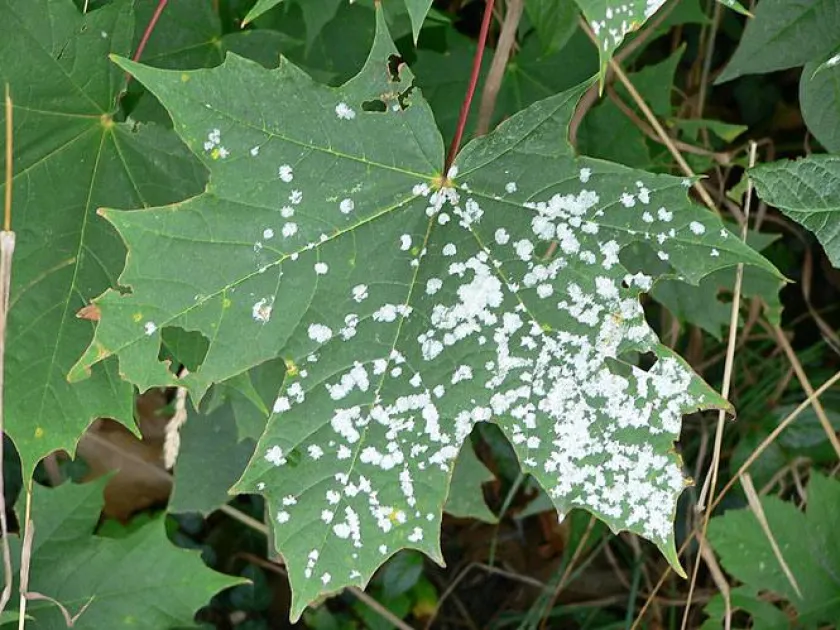
The initial manifestation is the appearance of small, white, circular patches of mycelium, commonly referred to as a powdery coating, on the leaf surface.
As the infection progresses, these patches expand and merge, eventually covering large portions of the leaf blade, petioles, and young shoots.
By late summer, the white patches become dotted with tiny black fruiting bodies, known as cleistothecia, representing the sexual stage of the fungus.
Affected leaves may exhibit curling, distortion, or stunted growth, which impairs the overall visual appeal and structural integrity of the foliage.
- White powdery growth on leaves.
- Leaf curling and deformation.
- Small black spots (cleistothecia) late in the season.
- Premature yellowing and leaf abscission.
Pathogen
The disease is caused by the obligate parasitic fungus Sawadaea bicornis, which is highly specialized for infecting various species of the maple genus (Acer).
The fungus develops a network of mycelium on the surface of the leaves, drawing nutrients from the plant host through specialized structures called haustoria.
The life cycle involves both asexual reproduction via conidia during the growing season and sexual reproduction forming cleistothecia for overwintering.
As a surface-dwelling pathogen, it typically colonizes the epidermal cells without causing immediate internal tissue rot, though it significantly disrupts leaf physiology.
Dispersal is primarily wind-driven, facilitating the spread of spores across canopies and neighboring trees during favorable weather conditions.
Conditions for development
Powdery mildew thrives in environments with high humidity and moderate temperatures, particularly when there is a significant contrast between day and night temperatures.
Poor airflow within the tree canopy, often caused by overly dense planting or lack of proper pruning, creates stagnant air pockets ideal for spore germination.
Shaded areas that remain damp for extended periods provide the perfect microclimate for the rapid colonization of maple leaves by Sawadaea bicornis.
Late spring and early autumn, with their typical dew formation and mild weather, are the most critical periods for the start and spread of the infection.
Trees that are stressed due to drought, poor soil fertility, or inadequate watering are significantly more susceptible to severe mildew outbreaks.
Why it matters
The presence of the fungal mat blocks sunlight, which directly interferes with photosynthesis and reduces the tree's ability to produce necessary carbohydrates.
Reduced photosynthetic activity leads to weakened tree health, diminished growth rates, and a lower overall ability to survive harsh winter conditions.
Severe infestations cause early leaf drop, which can exhaust the tree's energy reserves and limit its capability to produce strong buds for the following year.
In landscape settings, the aesthetic value of the maple tree is compromised, turning vibrant foliage into unsightly, mildew-covered matter.
Long-term recurrence of the infection can lead to branch dieback and an overall decline in the vigor of the tree, making it vulnerable to other stressors.
Protection
Sanitation is the most critical control measure: all fallen leaves should be raked and removed or destroyed to eliminate the fungus's overwintering source.
Pruning the canopy to improve air circulation and sunlight penetration is an effective cultural practice to discourage fungal colonization.
Fungicide treatments, including systemic options, can be applied to control active infections and prevent further spread during the growing season.
Maintaining tree vigor through proper irrigation and moderate fertilization helps the tree mount a stronger defense against various pathogens.
Biological controls, such as spraying beneficial microbes, offer a sustainable alternative for managing the disease in garden or park environments.
Discussion
No discussions yet — be the first.