
Pestalotiopsis palm leaf spot
Pestalotiopsis phoenicis
Description
Symptoms
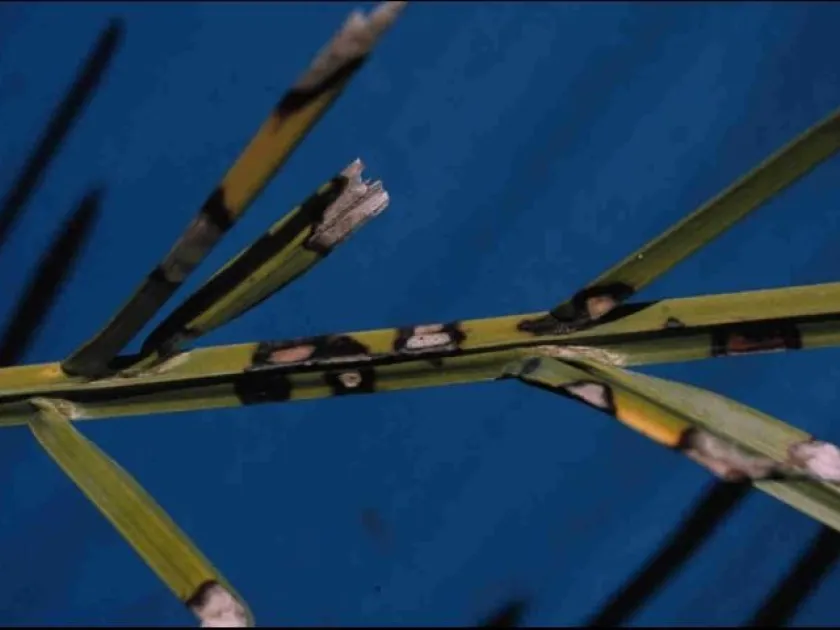
The primary symptom involves the appearance of leaf spots that are initially light brown or gray, eventually darkening with a distinct necrotic edge.
Tiny black spots, representing the acervuli, develop on the surface of these necrotic lesions. Under high humidity, these spots release spore masses, often visible as a light-colored exudate.
Severe infestations lead to the browning and eventual death of individual leaflets or entire fronds, resulting in a stunted appearance and loss of aesthetic value.
When the infection spreads to the petioles or the central rachis, it can lead to systemic disease, potentially causing the death of the palm's apical meristem.
Because these symptoms are similar to those of other fungal leaf spots, accurate diagnosis often requires laboratory isolation of the fungus from symptomatic tissue.
Pathogen
The disease is caused by the fungus Pestalotiopsis phoenicis, an anamorphic fungus classified within the order Diaporthales. It is a common pathogen known for attacking various species of palm trees.
The fungus persists in dead plant debris and the soil, producing conidia that serve as the primary inoculum. Spores are dispersed through wind, rain splashes, and contact with contaminated gardening tools.
While often described as an opportunistic pathogen that targets palms under environmental stress, Pestalotiopsis phoenicis can aggressively infect healthy tissues under favorable conditions.
The fungus produces small, dark structures called acervuli on the surface of infected lesions. These are essentially microscopic fungal fruit bodies that release masses of spores.
Understanding the life cycle of this pathogen is crucial for nursery managers and landscape gardeners who need to protect their collections from fungal outbreaks.
Conditions for development
High relative humidity is the most critical environmental factor for the development of Pestalotiopsis phoenicis. Sustained moisture on the foliage provides the ideal medium for spore germination.
The fungus thrives in temperatures between +20°C and +30°C, typical of the tropical and subtropical environments where many palms are grown.
Plant health is a significant factor; plants that are nutrient-deficient, poorly watered, or suffering from transplant shock are significantly more susceptible to colonization.
Poor ventilation within greenhouses or overly dense planting patterns prevents leaf surfaces from drying quickly, significantly increasing the likelihood of an outbreak.
Mechanical injuries caused by pruning or insect feeding provide easy entry points for the pathogen to bypass the plant's natural surface defenses.
Why it matters
The primary damage caused by this disease is the reduction of the photosynthetic surface area, which leads to slow growth and overall physiological weakness of the palm.
For ornamental palms used in landscaping or interior design, the cosmetic damage is severe, leading to significant economic losses for nurseries and property owners.
If the infection reaches the crown or the heart of the palm, the consequences can be fatal, resulting in the total loss of the specimen.
In high-density nursery environments, the rapid spread of the disease can cause significant economic losses as it quickly moves from one young seedling to another.
Chronic infections deplete the palm's energy reserves, leaving it vulnerable to secondary infections by other fungi, bacteria, or opportunistic pests.
Protection
Good sanitation practices, such as removing and destroying all infected foliage, are the first line of defense to reduce the inoculum levels in the environment.
Improving air circulation and avoiding overhead irrigation can help keep foliage dry, which significantly inhibits the ability of the fungus to spread.
Effective chemical control requires the use of appropriate fungicides, such as those containing copper compounds, mancozeb, or systemic triazoles, applied during the initial stages of infection.
- Sterilize all pruning tools to prevent cross-contamination.
- Maintain optimal nutrient levels to keep plants vigorous.
- Apply fungicides as a preventive measure during humid seasons.
When using chemical treatments, it is essential to rotate fungicide groups to mitigate the risk of the pathogen developing resistance to specific active ingredients.
Discussion
No discussions yet — be the first.