
Pestalotiopsis mangiferae
Pestalotiopsis mangiferae
Description
Symptoms
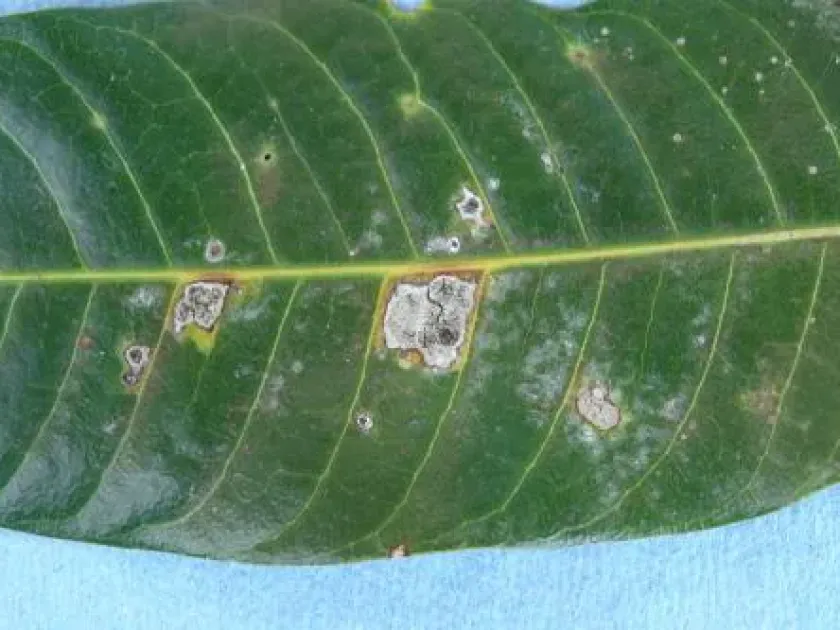
The initial symptoms appear as small, circular, chlorotic spots on leaves. As the disease progresses, these lesions expand into irregular necrotic patches with dark margins and gray centers.
Within the centers of these necrotic lesions, small black, pin-head-sized dots develop. These are the acervuli, where the fungus produces masses of conidia, often visible to the naked eye under humid conditions.
On fruits, the pathogen causes distinct sunken spots that turn dark brown or black. These lesions eventually lead to fruit rot, making the produce unmarketable and susceptible to secondary infections.
Severe infestations often lead to premature leaf drop, causing significant defoliation of the canopy. This affects the tree's ability to maintain optimal physiological processes throughout the growing season.
Twig dieback is another serious manifestation of the disease, where the pathogen colonizes the shoots, leading to the withering and death of affected branches and potentially hindering the tree's architecture.
Pathogen
The disease is caused by the deuteromycete fungus Pestalotiopsis mangiferae. This pathogen is known for its ability to colonize various tropical and subtropical fruit trees, causing necrotic lesions on plant tissues.
The fungus produces characteristic black acervuli, within which conidia are formed. These conidia are multicellular, fusiform, and possess distinct appendages that aid in dispersal and attachment to host surfaces.
This pathogen survives primarily as a saprophyte on decaying organic matter, but it effectively transitions to a parasitic mode when the host plant is stressed or weakened by environmental factors.
Spore dissemination is highly efficient and is facilitated by splashing water, wind, and insects. The fungus remains viable in infected plant debris, including fallen leaves and mummified fruits, serving as a primary inoculum source.
The biology of Pestalotiopsis mangiferae involves the secretion of enzymes that break down cell wall components, allowing the fungal hyphae to penetrate deeper into the plant tissue during infection.
Conditions for development
The development of Pestalotiopsis mangiferae is heavily dependent on high relative humidity. Frequent rainfall and prolonged leaf wetness periods are the most critical factors triggering the infection cycle.
Optimal temperatures for mycelial growth and sporulation range between 22°C and 28°C. These conditions are characteristic of humid tropical climates, where the disease can reach epidemic proportions.
Inadequate orchard management, such as high planting density and lack of pruning, creates a stagnant environment within the canopy, which encourages the buildup of moisture and accelerates fungal growth.
Physical injuries to the plant, caused by tools, insects, or environmental stress like hail, provide entry points for the fungus. Fresh wounds are highly susceptible to colonization by the pathogen.
Plant vigor plays a significant role in susceptibility. Trees under nutritional stress or those suffering from poor soil aeration are significantly more likely to show severe disease symptoms compared to healthy, well-fertilized trees.
Why it matters
The primary economic impact is the direct reduction in yield quality. Fruit rot makes harvesting and post-harvest storage extremely difficult, leading to major losses during the supply chain.
Leaf spotting reduces the photosynthetic capacity of the tree. With less energy produced, the tree struggles to maintain growth, fruit set, and the development of future buds, leading to overall yield decline.
Twig dieback results in the loss of productive wood, forcing the tree to expend energy on recovery rather than fruit production. This can lead to a decline in tree health over several seasons.
Management costs are a significant burden. Growers must invest in expensive fungicide programs and intensive orchard sanitation to keep the pathogen population below the economic threshold.
The presence of the disease can lead to quarantine issues in certain regions, restricting the export and trade of infected produce and affecting the profitability of commercial orchards.
Protection
Orchard sanitation is the cornerstone of control. Regularly collecting and destroying fallen leaves, twigs, and infected fruits is essential to eliminate the primary sources of fungal inoculum.
Proper canopy management is crucial; regular pruning helps improve airflow and light penetration, reducing the duration of leaf wetness and making the environment less favorable for the fungus.
Preventive fungicide sprays, particularly those containing copper-based compounds, are highly effective when applied during periods of peak risk, such as the onset of the rainy season.
Systemic fungicides, including triazoles and strobilurins, should be used for curative treatments. It is essential to implement a rotation strategy for these chemicals to prevent the development of resistant fungal strains.
Balanced fertilization, with an emphasis on potassium, helps harden plant tissues, making them more resistant to fungal penetration and improving the overall resilience of the trees.
Discussion
No discussions yet — be the first.