
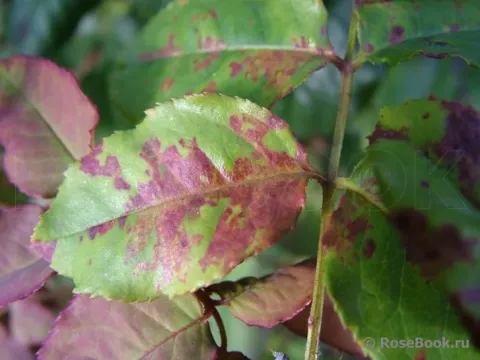
Downy mildew of rose
Peronospora sparsa
The causal agent of this disease is the oomycete Peronospora sparsa, a specialized plant pathogen that exclusively targets roses. It belongs to the group of downy mildews, which are known for their rapid spread under wet conditions.
What the section contains
Downy mildew of rose
The pathogen utilizes motile zoospores that require a film of liquid water to swim across the leaf surface and infect the host cells. This movement is a key stage in the pathogen's infection cycle.
Once inside, the fungus spreads through the leaf tissue, forming mycelium that extracts nutrients from the plant. This process eventually leads to the visible symptoms that characterize the disease.
The fungus can overwinter in dormant infected shoots, as well as in soil debris, where it survives as oospores. These resting structures allow the pathogen to persist for several seasons if not managed properly.
The rapid transmission is facilitated by wind and water splashing, which transport spores from infected leaves to healthy tissues, often causing localized outbreaks in nurseries or gardens.
Initial symptoms are characterized by irregular, angular spots on the leaves, restricted by the veins. The color of these spots can range from light green to reddish-purple or dark brown.
Under conditions of high humidity, a fine, greyish or purple-tinged mold develops on the underside of the infected leaves. This is the sporulation of the fungus, confirming the presence of the disease.
As the disease progresses, the leaves begin to yellow and drop prematurely, often starting from the lower parts of the plant. This leads to severe defoliation of the entire rose bush.
Stems can also show symptoms, including purple or black blotches and longitudinal cracks. In severe cases, the entire shoot may die back due to the extensive vascular tissue damage.
Flower buds are frequently impacted, showing deformation or necrosis. If infected early, the buds fail to open and eventually wither on the stem, significantly reducing the aesthetic value.
- Angular leaf spots.
- Greyish mold on the underside of leaves.
- Premature leaf drop.
- Necrotic patches on stems.
- Bud deformation.
High relative humidity (above 80%) is the most critical environmental factor for the development of downy mildew. The pathogen thrives when the air remains stagnant and moist.
Cooler temperatures combined with high night humidity create the perfect environment for the pathogen. Heavy morning dew is a classic trigger for new infection cycles in gardens.
Poor airflow, caused by dense planting or lack of proper pruning, allows moisture to linger on the foliage for extended periods, providing ample time for spores to germinate.
Overhead irrigation is a primary contributor to the spread of the disease. Watering should be directed to the soil to avoid creating a wet film on the leaves that spores need for infection.
Excessive nitrogen fertilization creates soft, succulent tissue that is highly susceptible to penetration by the fungal hyphae, making the plant more vulnerable during the growth season.
Downy mildew is considered one of the most destructive diseases for roses, capable of causing significant damage within just a few days during favorable conditions.
Defoliation reduces the photosynthetic capacity of the plant, which depletes energy reserves. This makes the rose bush weak and susceptible to winter damage or total death.
Infection of the stems disrupts the plant's vascular system, leading to dieback of branches and potential loss of the entire plant structure.
The disease is highly contagious and spreads rapidly within a collection. A single infected plant can jeopardize the health of the entire rose garden if not treated promptly.
The reduction in flower quality and quantity makes this a major economic threat for commercial nurseries and a significant frustration for home gardeners alike.
Prevention starts with selecting an appropriate planting site with good air circulation and full sun, which helps foliage dry out quickly after rain or dew.
Implementing proper spacing between rose bushes is essential to prevent microclimates with high humidity, which are ideal for fungal growth.
Rigorous sanitation, including the removal and destruction of all fallen leaves and infected prunings, is necessary to eliminate primary sources of inoculum.
Chemical control involving fungicides with systemic activity, such as those containing fosetyl-aluminum or copper-based compounds, should be applied at the first signs of symptoms.
Practice subsurface or drip irrigation to keep the foliage dry. If overhead watering is unavoidable, do it early in the morning so the sun can evaporate the moisture quickly.