
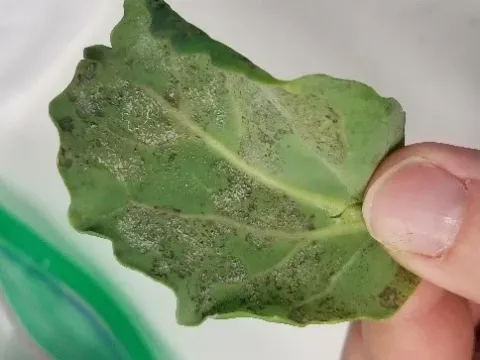
Downy mildew of spoonwort
Hyaloperonospora cochleariae
The first symptoms of this disease appear as irregular chlorotic spots on the leaf surface that gradually turn yellow over time.
What the section contains
Downy mildew of spoonwort
A distinctive feature of the infection is the development of a downy or grayish-white fungal growth on the underside of the leaves.
As the disease advances, the spots may turn necrotic and brown, ultimately leading to the premature drying and shedding of the leaves.
Young plants infected by the pathogen often show signs of stunted growth, leaf deformation, and a significant reduction in biomass.
Under conditions of persistent high humidity, the affected tissue may become soft, watery, and eventually collapse due to secondary rot.
The causative agent of the disease is the oomycete Hyaloperonospora cochleariae, which belongs to the family Peronosporaceae.
It is an obligate parasite that specifically infects plants within the Brassicaceae family, particularly those of the genus Cochlearia.
The pathogen produces resilient oospores that can survive in the soil or on infected plant debris throughout the winter season.
During the growing season, the disease is disseminated by motile zoospores that spread via wind, splashing rain, or overhead irrigation.
The life cycle of the pathogen is highly dependent on the availability of living host tissue, which ensures its survival throughout the year.
High relative humidity is the primary driver for the development and spread of Hyaloperonospora cochleariae in commercial plantations.
Temperatures ranging from 12°C to 18°C are considered optimal for the rapid germination of spores and the subsequent infection of the foliage.
Densely planted crops suffer from poor air circulation, which prevents leaf moisture from evaporating and provides a favorable environment for the fungus.
Prolonged rainy periods and frequent dew formation during the night create the necessary moisture conditions for the pathogen to thrive.
Poorly drained soils that retain excessive water contribute to the vulnerability of plants, making them more susceptible to downy mildew outbreaks.
The economic impact of the disease is significant, as it directly damages the edible foliage, making it unsuitable for commercial harvesting.
By attacking the leaves, the pathogen disrupts the plant's ability to photosynthesize, leading to an overall decline in growth and vigor.
Severe infestations can result in total crop loss if conditions remain favorable for the pathogen over an extended period of time.
Infected leaves undergo chemical changes that degrade their quality, which is particularly detrimental for herbs used in the medicinal industry.
Weakened plants are often more susceptible to colonization by secondary pathogens, which further complicates the health management of the crop.
Implementing a proper crop rotation strategy is the most effective way to break the life cycle of the pathogen in the field.
Removing and destroying all crop residues after harvest is essential to eliminate the primary sources of overwintering oospores.
Selecting well-drained soil sites helps maintain a drier environment around the plants, which naturally inhibits fungal spore germination.
- Optimizing plant spacing to facilitate better air movement and leaf drying.
- Utilizing drip irrigation systems instead of overhead watering to keep foliage dry.
- Applying preventive fungicidal treatments during high-risk, wet weather conditions.
Frequent field scouting allows for the early detection of localized outbreaks, enabling timely intervention before the disease becomes widespread.