
Downy mildew of stocks
Hyaloperonospora cheiranthi
The causal agent of this disease is the obligate parasite Hyaloperonospora cheiranthi, an oomycete that specifically targets members of the Brassicaceae family, including stocks (Matthiola incana).
What the section contains
Downy mildew of stocks
Classified as a downy mildew, this pathogen relies on a complex life cycle that involves the production of sporangia, which are disseminated by wind, rain splashes, and irrigation to initiate new infection sites on healthy foliage.
The pathogen overwinters as oospores in plant debris, soil, or within the seeds of infected plants. When favorable conditions return, these oospores germinate, serving as a primary inoculum source for early-season infections.
The biology of Hyaloperonospora cheiranthi is intrinsically linked to moisture availability. As a typical water mold, it thrives in high humidity, utilizing leaf surface wetness to infect host tissues efficiently.
Due to the pathogen's high genetic diversity and evolutionary potential, it remains a persistent threat in commercial flower production, necessitating ongoing vigilance and the application of integrated management strategies.
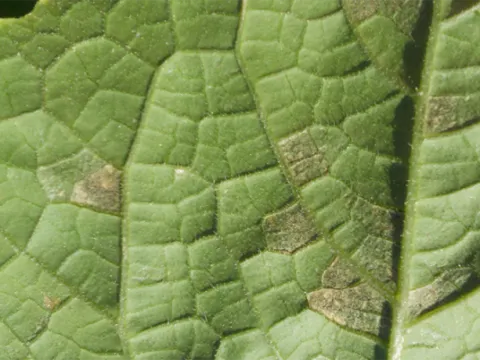
The initial manifestation of downy mildew on stocks is the appearance of chlorotic, yellowing patches on the upper surface of leaves. These spots may become angular, delimited by leaf veins, and gradually turn brown or necrotic.
A distinctive feature is the development of a downy, grayish or purplish fungal-like growth on the underside of the leaves, directly beneath the chlorotic spots. This corresponds to the sporulation stage of the pathogen.
As the infection spreads, the leaves may curl, yellow prematurely, and eventually drop. The entire plant exhibits stunted growth, resulting in deformed stems and significantly reduced flower size, which diminishes the plant's ornamental value.
Under conditions of excessive moisture, secondary decay may occur, leading to foul-smelling rotting of tissue. Young seedlings are particularly susceptible and may die rapidly if the environmental conditions favor the pathogen.
Unlike true powdery mildew, which appears as a white dusting on both sides of the leaf, downy mildew is localized on the underside and causes deeper tissue damage, often resulting in permanent disfigurement of the foliage.
High relative humidity, typically exceeding 80-90%, is the primary environmental driver for downy mildew outbreaks. Prolonged rainfall or condensation in greenhouses creates an ideal aqueous environment for spore germination.
Optimal temperatures for the pathogen range from 12°C to 20°C. Cooler, damp weather significantly accelerates the life cycle of Hyaloperonospora cheiranthi, leading to rapid disease transmission throughout the plot.
Dense planting patterns reduce airflow and promote a stagnant microclimate, which facilitates infection. Poor ventilation prevents foliage from drying out quickly, providing the sustained leaf wetness required by the pathogen.
Overhead irrigation is a significant risk factor, as it splashes spores from infected lower leaves to healthy upper foliage. Watering late in the day is particularly hazardous as it ensures leaves remain wet overnight.
Excessive nitrogen fertilization leads to rapid, succulent growth, which reduces the structural integrity of the leaf epidermis, making it easier for the pathogen to penetrate host tissue.
The primary impact of downy mildew is the severe loss of aesthetic quality, rendering the stock plants unsuitable for floral arrangements or landscape display.
Seedlings infected early in development may succumb to the disease entirely, causing uneven stands and the economic necessity of replanting, which adds labor and material costs.
In mature plants, the disease impairs photosynthetic capacity, weakening the plant's immune system and increasing its vulnerability to other environmental stressors and opportunistic pathogens.
The pathogen affects seed production, and seeds collected from infected stocks may carry the oomycete, thereby ensuring the disease is introduced into the next growing season.
Economic damage is twofold: it includes the direct cost of chemical control measures and the indirect loss of marketable product due to cosmetic damage and poor plant vigor.
Integrated control starts with crop rotation; avoiding the cultivation of Brassicaceae in the same area for at least three years helps break the disease cycle and reduces soil-borne inoculum.
Using resistant varieties and high-quality, disease-free seed is fundamental. Deep plowing and the thorough removal of crop residues in the autumn significantly reduce the population of overwintering oospores.
Moisture management is key; practice drip irrigation to keep foliage dry and ensure greenhouses are well-ventilated to reduce humidity levels below the threshold required for sporulation.
Chemical control should be implemented at the first sign of symptoms using copper-based protectants or systemic fungicides, such as those in the phenylamide or strobilurin groups, to halt disease progression.
- Promptly rogue and destroy infected plants to limit the spread.
- Space plants appropriately to allow for sufficient air circulation.
- Maintain balanced soil fertility, emphasizing potassium and phosphorus to strengthen cell walls.
- Disinfect tools and greenhouse structures regularly to prevent cross-contamination.