
Downy mildew of onion
Peronospora destructor
The causal agent of this disease is the oomycete Peronospora destructor, an obligate pathogen that specifically targets plants within the Allium genus.
What the section contains
Downy mildew of onion
The pathogen overwinters as dormant mycelium within infected onion bulbs or as resilient oospores in the soil, which can remain viable for several years.
During the growing season, the disease is spread through conidia, which are easily transported over long distances by wind, rain splashes, and irrigation water.
Upon landing on a susceptible leaf surface in the presence of moisture, the conidia germinate and penetrate the host tissue through stomata to initiate infection.
Under favorable environmental conditions, the pathogen undergoes a rapid life cycle, allowing it to produce multiple generations and trigger severe outbreaks.
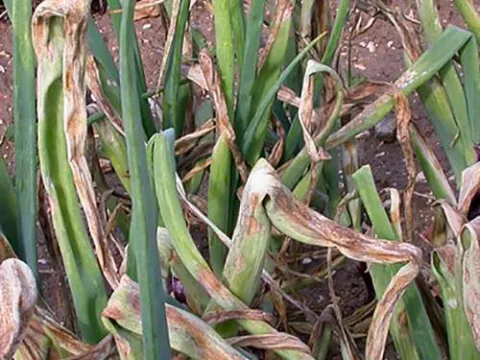
Initial symptoms present as pale green or yellowish chlorotic spots that appear on the onion leaves or flower stalks during the early stages of infection.
When humidity is high, a distinct grayish-purple fungal growth, consisting of sporophores and conidia, develops on the surface of the affected areas.
As the disease progresses, the leaves become twisted and distorted, eventually dying back from the tips downwards, leading to a stunted and sickly appearance.
In drier conditions, the visible fungal growth may be sparse, but the chlorotic tissues will rapidly brown and desiccate, mimicking natural senescence.
- Pale yellow leaf spots.
- Grayish-purple velvety fungal growth.
- Leaf distortion and curling.
- Dieback of foliage starting from the tips.
Downy mildew thrives in cool to moderate temperatures ranging from 12°C to 15°C combined with high relative humidity, typically exceeding 90%.
Persistent fog, heavy dew, or frequent rainfall are critical factors that facilitate the germination of spores and the subsequent spread of the disease.
Poor air circulation, often caused by overcrowding or dense planting, creates a humid microclimate that significantly favors the development of the pathogen.
The accumulation of inoculum in the soil due to short crop rotation cycles substantially increases the likelihood of early infection in new plantings.
Excessive nitrogen fertilization can lead to succulent foliage growth, making plants more susceptible to initial penetration and colonization by the fungus.
Downy mildew is considered one of the most destructive diseases of onions, capable of causing yield losses of over 50% in conducive environments.
Premature destruction of the photosynthetic leaf area results in significantly smaller, underdeveloped bulbs that fail to reach commercial quality standards.
Bulbs harvested from infected fields often show poor storage longevity and are highly susceptible to secondary rots caused by bacteria and fungi.
The overall quality of the harvest is severely compromised, leading to economic losses due to reduced market value and potential shipment rejection.
In seed production, the disease can reduce both the quantity and the viability of the seed, negatively impacting future planting seasons.
The primary control strategy involves planting high-quality, disease-free onion sets that have been treated to eliminate any latent infection.
Implementing a strict 3-4 year crop rotation is essential to prevent the buildup of the pathogen in the soil and to break the disease cycle.
Maintaining optimal spacing between plants and ensuring good field drainage helps to lower humidity levels and prevent conditions conducive to infection.
A proactive fungicide application program, timed according to weather forecasts, is highly effective in managing the disease during peak vulnerability.
Effective sanitation, including the thorough removal and destruction of crop debris after harvest, reduces the overwintering inoculum in the field.