
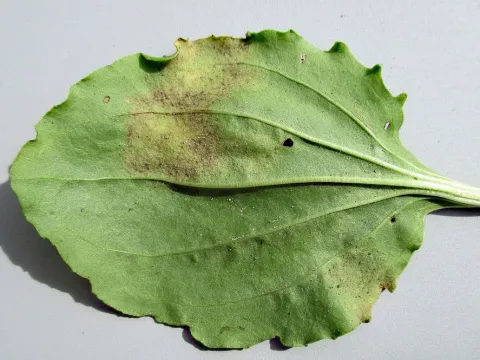
Downy mildew of plantain
Peronospora alta
The causative agent of the disease is Peronospora alta, an oomycete that specifically parasitizes plants of the Plantago genus.
What the section contains
Downy mildew of plantain
This pathogen belongs to the downy mildew group and thrives by colonizing the inter-cellular spaces within the plant tissues.
The fungus reproduces asexually via conidia, which are easily dispersed by wind currents and water splashes during rainfall.
The pathogen's life cycle is tightly synchronized with the growth stages of the host, allowing for rapid colonization during moist periods.
Overwintering occurs primarily through oospores embedded in decaying plant debris, ensuring the survival of the parasite between growing seasons.
The most visible symptom is the appearance of chlorotic, yellowish spots on the upper side of the infected plantain leaves.
A characteristic grayish-violet fuzzy growth appears on the underside of the leaves, representing the sporulation of the fungus.
As the infection progresses, these spots expand, eventually turning brown or necrotic, causing the leaf tissue to become brittle.
Severe infestations cause the leaves to curl, dry out, and die prematurely, drastically affecting the plant's structural integrity.
- yellowish patches on the leaf surface;
- gray-violet fungal fuzz on the underside;
- necrosis and browning of tissue;
- curling and premature leaf drop;
- reduced total biomass yield.
The development of Peronospora alta is heavily dependent on high humidity and the presence of leaf surface moisture.
Moderate temperatures ranging from 15 to 20 degrees Celsius provide the optimal environment for spore germination and infection.
Poor aeration in dense plantings contributes to a stagnant microclimate, which facilitates the quick spread of the disease.
Continuous foggy weather or heavy dew collection on leaves provides the necessary moisture for the pathogen to thrive.
Excessive nitrogen fertilizer application can lead to lush, soft foliage, making the plant more susceptible to fungal attacks.
The primary economic harm is the degradation of medicinal raw materials, as the leaves are the specific part of the plant harvested for pharmaceutical use.
The infection reduces the photosynthetic capacity of the plant, directly hindering its physiological development and growth rate.
Marketable quality is severely compromised, as leaves affected by downy mildew lose their potency and visual standards.
On a field scale, the disease can lead to significant crop failures, resulting in substantial financial losses for producers.
Infected plants may exhibit stunted growth, making them unable to compete effectively with surrounding vegetation or recover from stress.
Strategic crop rotation is essential to prevent the accumulation of oospores in the soil from previous seasons.
Sanitation practices, including the removal and destruction of crop residues, are critical for limiting the primary source of infection.
Maintaining proper plant spacing and effective weed management improves airflow, which lowers humidity levels around the foliage.
The selection of disease-resistant plantain varieties is considered the most sustainable long-term solution for management.
Chemical control using fungicides should be applied preventively or at the very first sign of symptoms to minimize further spread.