
Pea streak
Pea streak
Pea streak is caused by the Pea streak virus (PeSV), a member of the genus Carlavirus, which primarily infects various legume species including field peas.
What the section contains
Pea streak
This virus is a systemic pathogen, meaning it moves throughout the vascular tissue of the host plant, affecting all developmental stages of the crop.
The virus relies on insect vectors for transmission, with several species of aphids acting as the primary agents in spreading the infection within and between fields.
Alfalfa (Medicago sativa) serves as a critical reservoir host, where the virus persists throughout the winter months in the roots and crowns.
Once introduced into a pea crop, the virus is easily transmitted by aphids during their feeding activity, leading to a rapid spread throughout the field.
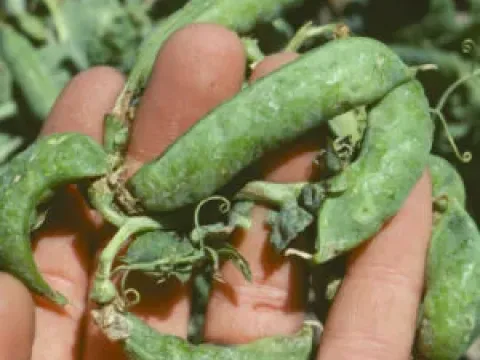
The disease is characterized by the appearance of dark brown or purple elongated streaks along the stems, leaf petioles, and sometimes the pods.
Affected plants often display severe chlorosis, mosaic patterns on the foliage, and significant curling or malformation of the leaves.
In advanced stages, the terminal shoots may become necrotic and wither, leading to a noticeable stunting of the entire plant structure.
Pod development is frequently impaired, resulting in smaller, misshapen pods that contain fewer and poorly developed, shriveled seeds.
Early symptoms are often overlooked, but the diagnostic "streaking" of stems provides a clear indicator of a systemic viral infection.
The development and spread of the disease are highly dependent on the population dynamics of aphid vectors, which thrive in warm and dry environmental conditions.
Proximity to perennial legume crops, particularly established alfalfa fields, significantly increases the pressure of the virus in newly sown pea fields.
The timing of aphid migration relative to the pea growth stage is critical, with early-season infections causing the most severe impact on total yield.
Field margins with high weed density often serve as temporary holding grounds for aphids, facilitating the secondary spread of the virus into the crop.
While environmental factors like temperature influence vector flight, the primary driver remains the availability of infected source plants near the pea fields.
Pea streak causes significant economic losses by drastically reducing the total biomass of the pea crop and the final grain yield.
The disease negatively impacts seed quality, leading to poor germination rates and reduced vigor in seedlings grown from infected seeds.
Systemic infection disrupts physiological processes like photosynthesis, which weakens the plant's overall resistance to secondary stressors.
Yield reduction can range from moderate to severe, depending on the timing of initial infection and the overall health of the crop during the season.
The combination of lower yield and poor seed quality reduces the market value of the harvest, making control measures economically necessary.
The most effective strategy is the spatial isolation of pea fields from perennial legume crops, especially alfalfa, to break the viral lifecycle.
Regular monitoring of aphid populations is essential, and systemic insecticide applications should be used when thresholds are exceeded.
Implementing a strict crop rotation schedule helps to ensure that legumes are not planted in the same area frequently, limiting the accumulation of the virus.
Good weed management throughout the farm, including the removal of potential reservoir hosts on field borders, is crucial for virus suppression.
- Selection of resistant or tolerant pea varieties
- Early planting to avoid peak aphid migration periods
- Use of certified, virus-free seed stock