
Peach enation
Peach enation
Peach enation is caused by the Peach enation virus (PEV), which is associated with the Umbravirus genus. This virus is a systemic pathogen that primarily inhabits the phloem tissue of the host plant.
What the section contains
Peach enation
The virus has a narrow host range, affecting mainly Prunus persica. Once infected, the tree remains a carrier for the rest of its life, as the virus integrates into the plant's physiological system.
Transmission mainly occurs through vegetative propagation using infected budwood or rootstocks. In orchards, aphids are the primary insect vectors that spread the virus from tree to tree.
The pathogen thrives in young, actively growing shoots, where the concentration of viral particles is usually at its highest. It is highly mobile within the vascular system of the tree.
Due to its systemic nature, there is no chemical cure for an infected tree. Therefore, biological and agrotechnical management remains the only viable strategy for orchard protection.
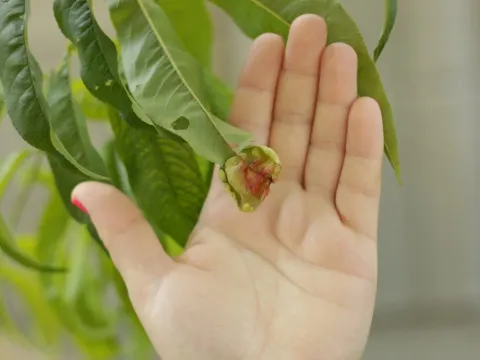
The characteristic sign of the disease is the development of enations — thin, blade-like outgrowths on the underside of leaves. These usually form along the primary leaf veins.
Leaves on infected trees are often severely distorted, stunted, and show signs of chlorosis. This leaf deformation significantly reduces the total photosynthetic area of the tree.
Young twigs may exhibit abnormal swelling, cortical roughness, and premature leaf drop. The growth habit of the tree often becomes stunted, with distorted branch patterns.
Fruits produced by infected trees are often small, misformed, and lack proper development. Premature abscission of fruit and flower buds is frequently observed in severe cases.
Symptoms are most distinct during the spring and early summer periods when new vegetative growth is most rapid. Late-season symptoms may be less obvious but still indicate chronic infection.
The primary economic impact of Peach enation is a substantial reduction in fruit yield. Infected trees lose their vigor, leading to poor quality and quantity of harvested peaches.
The virus compromises the tree's overall health, making it more susceptible to environmental stressors such as frost or drought. Over time, the structural integrity of the tree declines.
Chronic infection leads to the gradual decline of the tree, which may result in the death of major scaffold branches or the entire tree over several growing seasons.
In nurseries, Peach enation poses a severe risk. If left unchecked, it can contaminate an entire stock, leading to significant financial losses and the potential for regulatory quarantine.
The loss of marketable fruit quality means that growers face direct income losses. Moreover, the long-term cost of replacing infected trees creates a significant financial burden.
The most important control strategy is the use of certified, virus-free planting material. Establishing a new orchard with tested nursery stock is the foundation of prevention.
Regular orchard inspection is critical. Infected trees should be promptly removed and destroyed, including the root system, to eliminate the reservoir of the virus.
Managing populations of insect vectors, particularly aphids, is essential to limit the natural spread of the virus. Integrated pest management (IPM) practices help reduce vector activity.
Strict hygiene protocols must be followed during pruning. Tools should be thoroughly sanitized between trees to prevent the mechanical transmission of the virus through sap.
While there are no therapeutic treatments for the virus, maintaining optimal tree nutrition and water status can help mitigate some of the symptoms of decline and keep trees productive for longer.