
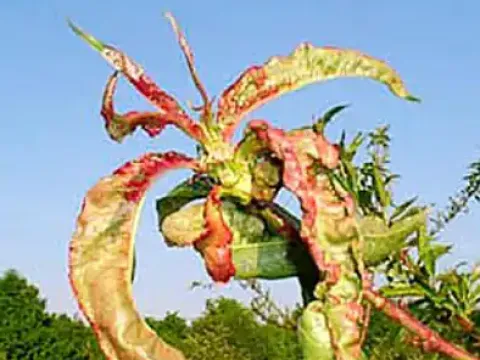
Peach leaf curl
Cantharellus crispus
The disease is caused by the ascomycete fungus Taphrina deformans. This pathogen is highly specialized and targets members of the Prunus genus.
What the section contains
Peach leaf curl
The fungus overwinters as spores or mycelium on the bark of twigs and within the scales of dormant buds. As soon as temperatures rise in early spring, the fungus activates.
The primary infection occurs at the bud-swell and bud-break stage. The fungus enters the young, emerging leaves, which are the most susceptible tissue.
Once inside the leaf, the mycelium grows intercellularly. It secretes growth-regulating substances that cause the plant cells to divide and enlarge abnormally.
In mid-summer, the fungus produces conidia, visible as a white, powdery bloom on the leaf surface. These spores are then dispersed by wind and splashing rain.
Initial symptoms become visible shortly after bud break. Leaves appear curled, twisted, and distorted compared to healthy, flat foliage.
The leaf tissue thickens and turns bright shades of red, pink, or yellow. This is a result of abnormal cell growth and altered pigment production.
A dusty, white coating eventually develops on the underside of the affected leaves, signaling the production of new fungal spores.
Shoots also exhibit clear signs of infection. They become stunted, thickened, and often display an intense red or yellow discoloration before dying back.
In severe cases, the disease affects fruits, causing them to develop reddish, blistered patches, which often lead to fruit cracking and premature dropping.
Peach leaf curl thrives in cool, wet spring weather. The ideal temperature range for infection is between 6 and 16 degrees Celsius.
Extended periods of rain or high humidity during the bud-swell phase are critical factors that facilitate the germination of overwintering spores.
If the weather turns dry and hot immediately after the leaves emerge, the development of the fungus is suppressed, and the infection may stop spreading.
Poor air circulation within the tree canopy, often caused by lack of pruning, keeps the foliage wet for longer periods, increasing the infection rate.
The presence of fallen infected leaves or mummified fruits under the tree provides a significant reservoir of spores for the next growing season.
The most devastating effect is early defoliation. Trees often shed their infected leaves by mid-June, which causes severe physiological stress.
The tree must use its stored energy to produce a second set of leaves, which drains its reserves and leaves it vulnerable to winter injury or drought.
Fruit yield is significantly reduced, as the energy is redirected to leaf replacement rather than fruit development, and infected fruits are often inedible.
Long-term infestation weakens the tree's immune system, making it more susceptible to secondary pests like aphids or other fungal pathogens.
If left untreated for several consecutive years, peach trees can lose their vigor entirely and die, leading to significant economic losses in the orchard.
The most effective strategy is the application of fungicide sprays in late winter or very early spring, just before the buds start to swell.
Copper-based fungicides or synthetic products containing chlorothalonil or difenoconazole are commonly used. Thorough coverage of all bark surfaces is vital.
- Prune and destroy infected branches as soon as symptoms appear.
- Remove and compost fallen leaves to minimize the source of inoculum.
- Select resistant peach cultivars if available in your climate zone.
- Maintain tree health through proper fertilization and irrigation to improve resilience.
Timing is critical; once the buds have opened, the fungus is already inside the tissue, and protective fungicide sprays will no longer be effective.