
Parateratosphaeria
Parateratosphaeria
Parateratosphaeria is a genus of ascomycetous fungi that causes significant leaf diseases in various plant species, particularly Eucalyptus. These fungi belong to the Mycosphaerellaceae family, which is well-known for containing numerous aggressive plant pathogens.
What the section contains
Parateratosphaeria
The biological cycle of this fungus involves the production of both ascospores and conidia, which allow the pathogen to survive under changing environmental conditions. This dual-mode reproduction enhances its capacity to infect host plants.
The fungus invades host tissue by entering through stomata or wounds, subsequently developing an extensive mycelial network. This network secretes enzymes that break down plant cell walls, leading to tissue degradation.
Taxonomic revisions have confirmed that members of the Parateratosphaeria genus are key drivers of leaf spot diseases. Understanding their life cycle is essential for agricultural and forestry professionals monitoring plantation health.
The pathogen is often associated with the degradation of photosynthetic tissues. Its ability to colonize foliage leads to reduced carbon assimilation, impacting the overall vitality of the host organism.
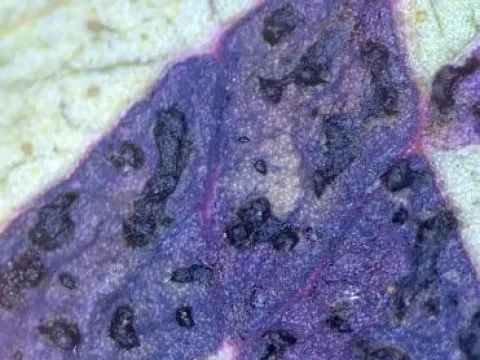
Early symptoms typically appear as small, chlorotic spots on the leaf surface. As the fungus matures, these spots expand and develop a darker pigmentation, often ranging from reddish-brown to black.
A distinctive feature of this disease is the presence of small, dark fruiting bodies called pseudothecia on the lesion surface. These structures are often visible to the naked eye or with a hand lens.
Severe infestations manifest as extensive necrosis, causing leaves to curl, dry out, and drop prematurely. This defoliation can significantly reduce the tree's canopy density and aesthetic value.
The fungus can also infect young shoots, leading to tissue deformation and stunted growth. In persistent cases, the tips of the branches may die back, resulting in a distorted appearance of the tree crown.
Under high humidity, a fine, powdery fungal growth may appear on the necrotic spots. This layer represents a massive output of spores, indicating high disease activity within the plant canopy.
The growth and spread of Parateratosphaeria are heavily dependent on high moisture levels and warm temperatures. These conditions stimulate spore germination and accelerate the infection process.
Rain splash is a primary mechanism for the dispersal of fungal spores to healthy leaves. Consequently, prolonged wet seasons or rainy weather patterns often trigger significant disease outbreaks.
Poor ventilation within dense plantations or windbreaks promotes a humid microclimate, providing ideal conditions for pathogen colonization. High planting density significantly increases the speed of transmission.
Stressed trees, particularly those suffering from nutrient deficiencies or drought, are highly susceptible to infection. The compromised immune status of such plants makes it easier for the fungus to establish itself.
Temperature plays a crucial role in the development rate, with the optimal range typically being 20°C to 25°C. Outside of these ranges, the fungus may become less active but remains viable in plant debris.
The primary damage caused by Parateratosphaeria is the reduction of the leaf area available for photosynthesis. This leads to a decline in tree growth, diminished timber production, and increased risk of mortality.
Repeated annual infections weaken trees, making them susceptible to secondary infections and secondary pests like wood-boring insects. This cumulative stress is often lethal to young saplings.
In forestry, the disease leads to significant economic losses due to the degradation of wood quality and the necessity of frequent fungicide applications. Maintenance costs in nurseries increase substantially.
The loss of foliage affects the ecological balance of the area, potentially destabilizing the health of the local forest ecosystem. It serves as a limiting factor for the cultivation of certain susceptible species.
In nursery environments, the impact of this pathogen can result in the complete loss of a batch of seedlings. This requires strict quarantine and preventative measures to protect healthy plant stocks.
Sanitation is a critical control measure, involving the removal and destruction of fallen leaves and pruned branches that act as reservoirs for the fungus. This reduces the inoculum pressure for the next season.
The application of systemic fungicides, including copper-based products or strobilurins, can be effective when applied according to a strategic monitoring schedule. Proper timing is crucial for success.
Optimizing plant spacing ensures better air circulation, which helps keep foliage dry and inhibits fungal growth. This simple practice significantly lowers the infection risk in plantations and nurseries.
Strengthening plant health through balanced nutrition and adequate irrigation improves resistance. Healthy plants are better equipped to withstand potential fungal attacks and recover from mild infections.
Frequent scouting and early detection of symptoms are essential for preventing a localized infection from turning into an epidemic. Rapid response strategies are vital for effective disease containment.