
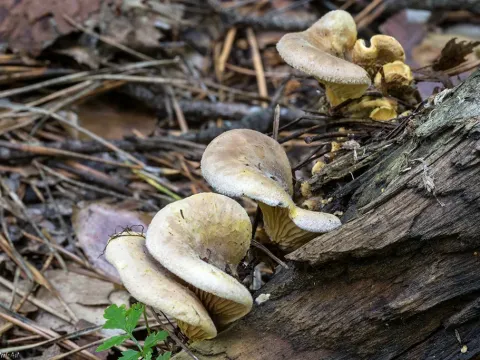
Panus
Panus
Panus is a genus of wood-decaying fungi belonging to the order Polyporales. These fungi function primarily as saprotrophs in nature, but they can act as opportunistic pathogens on trees that are weakened by environmental stress, mechanical damage, or age.
What the section contains
Panus
The fungus invades the xylem tissue, where its mycelium secretes enzymes that break down the structural polymers of the wood, specifically lignin and cellulose. This process leads to white rot, resulting in the softening and eventual collapse of the wood tissue.
Reproduction is carried out through the release of basidiospores. Once these spores land on exposed wood or bark wounds, they germinate and penetrate the host tissue, establishing a new colony within the sapwood or heartwood.
The fruiting bodies of Panus are typically tough, coriaceous, and often stalked. Their appearance signals that the fungus has established a robust internal mycelial network, capable of producing spores for further propagation.
Panus species can persist for years within dead wood, fallen branches, and decaying stumps, maintaining a reservoir of infection that can persist in the environment until suitable conditions for colonization of living trees appear.
The most visible indicator of Panus infection is the development of leathery, stalked fruiting bodies on the trunk or large limbs of the tree. These clusters are often found near old pruning wounds or frost cracks.
Internally, the wood undergoes significant decay, showing signs of bleaching and a loss of density. The affected wood becomes brittle, and in advanced stages, the structural integrity of the tree is severely compromised, leading to hollow stems.
Above-ground symptoms include progressive thinning of the canopy, chlorosis of leaves, and the dying back of individual branches. These symptoms reflect the fungus's interference with the tree's vascular system and nutrient transport.
Infection sites often show bark splitting and localized necrosis. Peeling back the affected bark may reveal white, cotton-like mycelial fans spreading across the cambium layer, indicating active colonization.
Structural instability is a critical danger sign. Affected trees often show signs of leaning or lose branches during moderate winds, indicating that the core of the tree has been hollowed out by fungal activity.
Panus thrives in environments characterized by high humidity and poor air circulation. These conditions are typically found in dense stands or orchards where the bark remains moist for extended periods after precipitation.
The fungus is highly active during temperate periods, typically with temperatures ranging from 18 to 25 degrees Celsius. However, it is hardy enough to remain dormant during harsh winters and resume growth when favorable conditions return.
Wounds caused by improper pruning, machinery impact, or natural events like sunscald are essential for the fungus to bypass the tree's natural defense mechanisms. Without such entry points, healthy bark usually prevents infection.
Accumulated debris such as stumps, deadwood, and branches left on the ground provide an ideal nutritional foundation for the fungus. These sources serve as major focal points for secondary spread to neighboring trees.
Trees suffering from nutrient deficiency, drought stress, or soil compaction are significantly more susceptible to colonization, as their natural immune responses are too weak to contain the fungal invasion.
The primary harm is the structural degradation of the tree's vascular system, which limits the tree's ability to transport water and minerals, leading to overall decline and potential tree mortality.
In orchard settings, Panus infection causes reduced fruit quality and yield, eventually rendering the tree unproductive. This forces early removal and replacement, which impacts the economic stability of the farm.
Ornamental and urban trees infected with Panus pose a significant safety risk. The decay caused by the fungus makes large branches or entire trunks prone to sudden failure, endangering people and property nearby.
Economic losses arise not only from the loss of the tree but also from the costs associated with the removal of hazardous trees, stump grinding, and soil sterilization required to prevent the spread to adjacent specimens.
The pathogen's ability to create a permanent infection source in the landscape makes it a difficult problem to manage, requiring consistent monitoring and sanitation to protect the surrounding vegetation.
Management starts with rigorous sanitation practices. Removing dead wood, stumps, and fallen debris from the garden eliminates the primary breeding ground for the fungus and prevents spore production.
Pruning must be performed using sanitized tools, and all cuts should be treated with appropriate sealants or fungicides to prevent colonization during the healing process. Protecting the bark from mechanical injury is paramount.
Maintaining tree vigor through balanced fertilization and adequate hydration is key to bolstering the tree's innate defense mechanisms. A healthy tree can better compartmentalize and resist fungal penetration.
- Regular inspection of bark for fruiting bodies or mycelial growth.
- Sanitize tools with alcohol or bleach after each use.
- Seal pruning wounds and frost cracks immediately.
- Improve canopy airflow to reduce humidity around the stem.
In cases where fruiting bodies appear, carefully excise the affected tissue back to clean, healthy wood and treat the area with a fungicide. Severely infected trees should be removed and destroyed to prevent environmental contamination.