
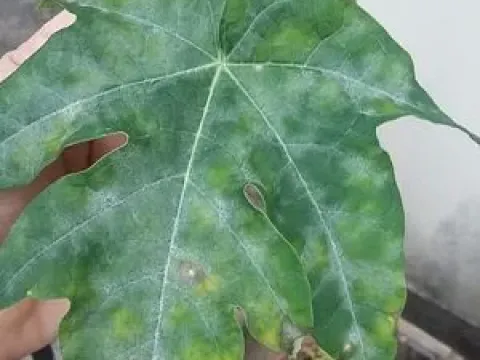
Papaya powdery mildew
Phyllactinia papayae
The disease is caused by the obligate parasitic fungus Phyllactinia papayae, often referred to in literature as Oidium caricae. This fungus colonizes the surface of leaves and stems, extracting nutrients via haustoria.
What the section contains
Papaya powdery mildew
The life cycle involves the production of numerous conidia, which act as the primary inoculums for rapid spread during the growing season via wind dispersal.
Unlike some other fungal pathogens, Phyllactinia papayae is highly specialized to the genus Carica, specifically targeting papaya plants under various cultivation environments.
The fungus thrives on the surface, making it somewhat accessible to contact fungicides, although systemic treatment is often necessary for severe infections.
The formation of cleistothecia may occur under certain environmental conditions, allowing the pathogen to survive in plant debris and initiate new cycles in subsequent seasons.
The first indicator of infection is the appearance of white, powdery mycelial patches, typically on the abaxial (lower) surface of the leaves.
As the infection progresses, these white spots expand and eventually cover both leaf surfaces, petioles, and young fruit stems, forming a thick grayish layer.
Affected leaves begin to show signs of chlorosis, followed by curling and premature abscission (dropping), which significantly reduces the leaf canopy.
Fruit infestation is characterized by a dusty coating and localized disfigurement, which compromises the marketability and quality of the papaya fruit.
Severe infections result in stunted growth of young trees, characterized by a lack of vigor and limited development of new foliage.
Powdery mildew development is favored by temperatures ranging from 20°C to 28°C, providing an ideal thermal environment for conidial germination.
While some powdery mildews require high humidity, moderate humidity combined with poor airflow is often sufficient for Phyllactinia papayae to thrive.
Dense planting configurations that restrict air movement around the tree canopy significantly increase the severity and spread of the infection.
High nitrogen levels in the soil, leading to an abundance of succulent, tender leaf tissue, increase the susceptibility of the papaya tree to attack.
Dew formation and cool nights followed by warm days create the microclimate fluctuations that trigger mass sporulation of the fungus.
The primary impact is the significant reduction of photosynthetic capacity due to leaf covering and eventual defoliation, which drains the tree's energy reserves.
Tree weakening makes the papaya plant more susceptible to secondary stressors, including other diseases and opportunistic insect pests.
Direct damage to fruit surface renders the produce unappealing for consumers and prone to post-harvest decay caused by other microorganisms.
Loss of yield is a direct consequence of reduced fruit sizing and weight caused by the plant's inability to produce sufficient carbohydrates.
In nurseries, this disease can lead to high mortality rates among seedlings, causing significant financial losses for commercial producers.
Effective management begins with proper pruning practices to maximize sunlight penetration and airflow throughout the tree canopy.
Sanitation is crucial; removing and destroying infected plant material, especially fallen leaves, helps reduce the local pathogen load.
- Application of sulfur-based fungicides for early-stage preventative control.
- Use of systemic triazole fungicides to manage established fungal colonies.
- Maintaining optimal soil moisture and avoiding nitrogen-heavy fertilizer applications.
Biological controls utilizing beneficial bacteria like Bacillus subtilis have shown efficacy in suppressing powdery mildew in organic and integrated pest management programs.
Regular scouting of the plantation is essential to detect early symptoms, allowing for localized treatments before the disease becomes widespread across the field.