
Papulaspora white plaster mold
Papulaspora byssina
Description
Symptoms
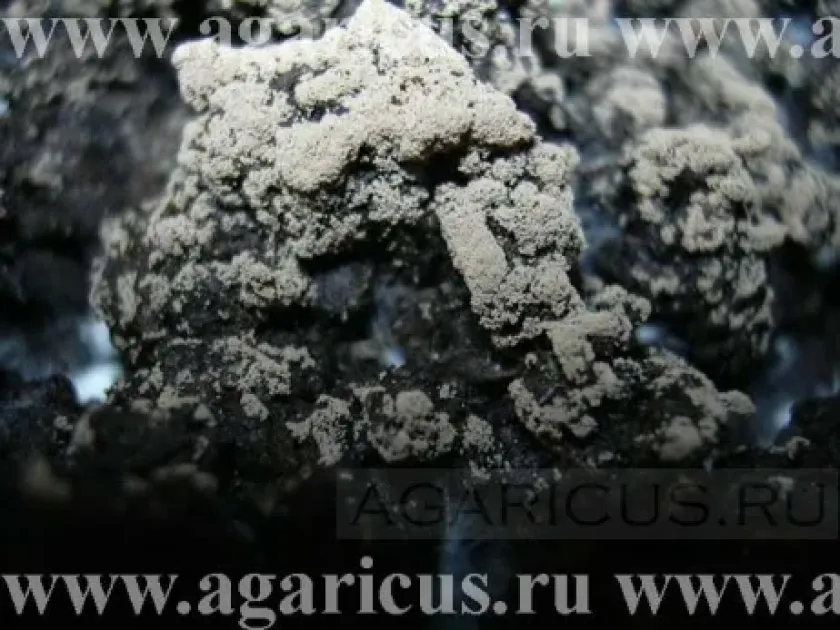
The primary symptom is the appearance of white, fluffy mycelial patches on the surface of the casing soil. Over time, these patches turn brown, taking on a powdery or crusty appearance.
The affected compost or casing layer develops a texture resembling plaster. This distinct visual change, combined with the powdery consistency, is why the disease is commonly referred to as plaster mold.
Close inspection reveals dense, compact spherical clusters known as bulbils. These structures adhere firmly to particles of peat or compost, indicating that the fungus has deeply penetrated the medium.
In infested areas, the mushroom mycelium dies back or fails to pin. The pathogen creates a physical barrier, preventing the mushroom mycelium from accessing the necessary moisture and oxygen.
A dusty, dry appearance of the substrate is a diagnostic marker. Unlike beneficial mycelium, the plaster mold creates a distinct, crust-like layer that disrupts the uniformity of the growing bed.
Pathogen
The disease is caused by the fungus Papulaspora byssina. In the mushroom industry, it is widely known as brown or white plaster mold, depending on the stage of its development and appearance on the casing layer.
The pathogen produces a dense, white mycelium that eventually develops into complex structures called bulbils. These clusters of cells are highly resistant to environmental stress and allow the fungus to persist in the cultivation environment.
As a competitive weed mold, it rapidly colonizes the compost intended for mushroom growth. By outcompeting the Agaricus bisporus mycelium for nutrients and space, it effectively halts the development of the commercial crop.
The disease is commonly introduced through contaminated casing materials or components of the compost that were improperly pasteurized. The spores are easily dispersed via air currents, tools, and workers' clothing.
Its biological resilience makes it a difficult pathogen to eradicate once established. The shift from vegetative mycelium to spore-bearing bulbils is rapid, often leading to sudden outbreaks in growing rooms.
Conditions for development
The development of the disease is highly correlated with poor climate control. The fungus thrives in temperatures between 20°C and 25°C, which are typical for certain phases of mushroom production.
Excessive humidity in both the air and the substrate acts as a catalyst for the germination of bulbils. Over-watering creates an ideal environment for the spores to spread across the shelving units.
Poor sanitation practices, such as failing to disinfect equipment between production cycles or leaving organic waste in the room, significantly increase the likelihood of a massive outbreak.
Inadequate pasteurization of the growing medium is the most common cause of contamination. If the compost does not reach the required temperature during the cook-out phase, the pathogen will likely survive.
Insufficient ventilation and high levels of carbon dioxide create microclimates that favor weed molds. Stagnant air allows the spores to settle and concentrate in specific areas of the growing room.
Why it matters
The main impact is the displacement of the commercial mushroom mycelium, leading to severe yield loss. The pathogen occupies the space and nutrients, effectively starving the mushrooms.
Infection results in bare patches on the beds where no mushrooms can grow. Any mushrooms produced near the infected area are often stunted, deformed, and of poor commercial quality.
Economic damage is compounded by the ease of spore transmission. Once a single tray is infected, the entire production room can quickly become compromised due to the airborne nature of the bulbils.
Infestation complicates the cleaning process for subsequent cycles. The persistence of the fungus necessitates more rigorous and expensive sterilization protocols to ensure the room is safe for re-use.
Without intervention, the entire crop can be rendered worthless. The presence of the mold often triggers the need for early harvesting or complete abandonment of the contaminated production beds.
Protection
Strict adherence to composting and pasteurization protocols is the most effective defense. Proper heat treatment of the substrate is essential to eliminate the pathogen from the source.
Implement rigorous hygiene standards, including the use of footbaths, protective clothing, and the disinfection of all tools. Preventing cross-contamination between rooms is a critical management practice.
If small patches of the disease appear, they should be immediately removed and disposed of carefully. It is crucial to remove the infected area along with some surrounding healthy soil to stop the spread.
Treating the affected area with salt or specific fungicides can help contain the spread of the bulbils, provided that the protocol is followed carefully to avoid spreading spores during removal.
Improved climate management, including better ventilation to reduce CO2 levels and avoiding excessive moisture on the casing layer, will significantly reduce the risk of mold growth.
Discussion
No discussions yet — be the first.