
Papulosa leaf spot
Papulosa amerospora
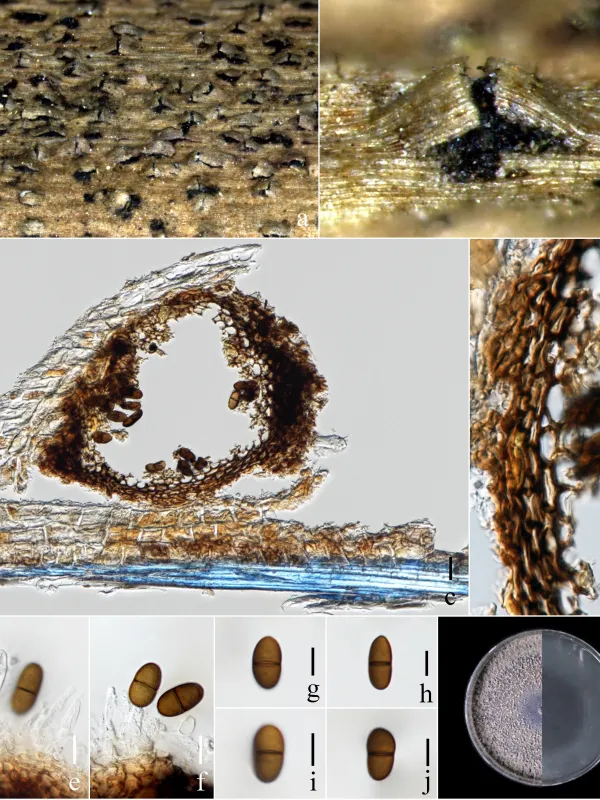
Description
Symptoms
The initial signs of Papulosa leaf spot appear as tiny, pale dots on leaf surfaces. Over time, these spots grow into characteristic papules — small, raised bumps that stand out above the leaf plane.
The spots often exhibit a dark brown coloration with a lighter center. Frequently, a chlorotic halo develops around the affected area, indicating the plant's response to the pathogen's toxins.
In high humidity, a subtle fungal growth consisting of conidiophores and conidia may become visible on the surface of the spots. This feature serves as a primary diagnostic indicator for the disease.
As the infection progresses, individual spots may coalesce, leading to significant tissue necrosis. This results in yellowing, premature leaf drop, and a general decline in the plant's photosynthetic capability.
Besides leaves, the pathogen can infect petioles and stems, where larger and more hardened lesions may form, potentially impairing the plant's vascular transport system.
Pathogen
The causal agent of this disease is the fungus Papulosa amerospora, which belongs to the group of imperfect fungi (Deuteromycetes). This pathogen is known for its ability to infect the aerial parts of various crops during the growing season.
The fungus develops mycelium within the host plant tissues, causing disruption in cellular functions. It reproduces through spores that are easily spread by wind, splashing rain, or contact with contaminated equipment.
A notable biological trait of this pathogen is its ability to overwinter in plant debris, remaining viable in the soil. This behavior necessitates strict crop rotation practices to break the infection cycle.
The development of the fungus is highly dependent on environmental factors, specifically temperature and humidity levels. Under optimal conditions, the pathogen can produce multiple generations in a single season.
Infection typically begins when spores land on the plant surface, germinating and penetrating tissues through stomata or mechanical injuries to the leaf cuticle.
Conditions for development
The primary driver for the development of Papulosa leaf spot is the combination of high atmospheric humidity and moderate temperatures. The fungus is most active within the 18 to 24 degrees Celsius range.
Prolonged rains and morning dews create the necessary moisture film on leaves for successful spore germination. Without this surface moisture, the infection process is significantly inhibited.
High-density planting increases the risk of disease, as poor airflow keeps humidity levels high within the canopy for extended periods. Lack of ventilation promotes rapid pathogen spread.
Improper irrigation techniques, particularly overhead sprinkling, provide ideal conditions for spore dispersal. Water droplets act as the primary medium for transferring the pathogen from diseased to healthy plants.
Neglecting sanitation practices, such as failing to remove infected plant material, allows the fungus to remain in the field and trigger an outbreak the following growing season.
Why it matters
The primary damage from Papulosa leaf spot stems from the significant reduction in the plant's leaf area. This limits photosynthesis, leading to a shortage of carbohydrates required for crop maturation.
The disease negatively impacts the development of generative organs, resulting in smaller fruit or grain size and reduced overall yield. The quality of the harvested product often suffers as well.
Infected plants exhibit lower resistance to other biotic and abiotic stresses. These weakened plants are frequently targeted by secondary infections that further exacerbate the damage caused by the fungus.
Economic losses can be substantial in cases of severe outbreaks, especially if the infection establishes itself early in the growing cycle. Control efforts require significant investment in fungicides.
Severe early-stage infections can lead to stunted growth or total plant failure, necessitating replanting or total crop loss in the affected field sectors.
Protection
Management of Papulosa leaf spot relies on a robust integrated pest management (IPM) strategy. Proper crop rotation is the fundamental step to prevent pathogen accumulation in the soil.
Cultural practices, including the removal and destruction of crop debris, are essential to eliminate the primary sources of inoculum. Deep plowing helps to bury residual pathogens and reduce their survival.
Chemical control is achieved through the timely application of contact or systemic fungicides. Early detection is key, as treating the disease at the onset of spots prevents widespread infection.
- Selection of resistant plant varieties and hybrids.
- Optimizing planting density to enhance canopy ventilation.
- Removing infected foliage in protected culture environments.
- Transitioning to drip irrigation systems to minimize leaf wetness.
Preventive fungicide treatments during weather windows favorable for disease development help keep the pathogen population below the threshold of economic damage.
Discussion
No discussions yet — be the first.