
Opegraphaceae
Opegraphaceae
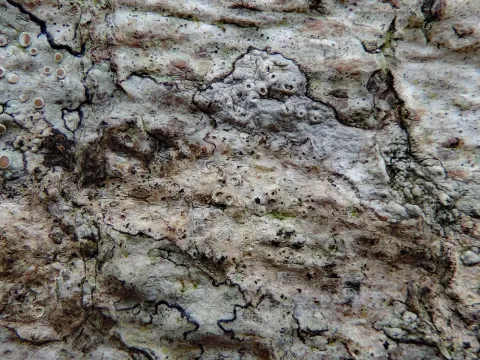
The Opegraphaceae family consists of lichenized fungi characterized by distinctive ascocarps, known as lirellae. These fruiting bodies appear as elongated, sometimes branched dark lines, resembling markings or script on the substrate.
What the section contains
Opegraphaceae
The thallus of these fungi is usually crustose, meaning it adheres tightly to the surface of the bark, rocks, or wood. It is often thin and inconspicuous, occasionally displaying greyish or yellowish pigmentation depending on light exposure.
The lirellae are typically sessile or immersed within the thallus and lack a well-defined proper margin. This morphological feature is a critical diagnostic character used by mycologists for taxonomic classification.
These organisms often form intricate patterns across the surface of tree bark. They do not penetrate deep into the living tissue, instead residing entirely on the outer, dead layers of the bark.
Microscopic analysis of spores and ascus structure is often required to distinguish between different species within this family due to their highly variable external appearance.
Members of Opegraphaceae are ascomycete fungi that form a symbiotic relationship with algae. They are classified as epiphytes rather than plant pathogens, as they do not invade or feed upon the living cells of their host plants.
The fungal component provides a structured environment that protects the algal cells from desiccation and UV radiation, while the algae supply carbohydrates through photosynthesis. This mutualism allows the lichen to thrive in diverse environments.
Reproduction is primarily sexual, involving the production of ascospores within the lirellae. These spores are dispersed by wind or water, colonizing new substrates when moisture levels are sufficient for germination.
The biological cycle is heavily dependent on ambient humidity. During dry periods, the metabolic activity of the fungus slows significantly, allowing it to enter a dormant state until moisture returns.
Ecologically, these fungi act as bioindicators of environmental air quality, as they are particularly sensitive to atmospheric pollutants like sulfur dioxide, which can inhibit their growth.
The development of Opegraphaceae is favored by stable microclimatic conditions, including high humidity and low levels of air pollution. They are most commonly found in well-established forests or gardens with mature trees.
The texture of the bark plays a significant role in their establishment. Older trees with rough, fissured bark provide more surface area and shelter for spore germination and thallus development.
These organisms prefer sites with moderate light intensity. While they can tolerate some shade, consistent exposure to extreme sunlight and drought can prevent their colonization on younger, smoother-barked trees.
Agricultural settings with poor orchard hygiene, characterized by high tree density and lack of pruning, often show higher densities of Opegraphaceae due to the reduced air circulation around the trunks.
Temperature fluctuations are generally tolerated well by these fungi; however, the presence of these lichens is often more pronounced in cooler, temperate zones where humidity remains stable throughout the growing season.
Opegraphaceae are not considered plant pests. They have no negative impact on the physiological functions of the host plant, such as nutrient uptake, photosynthesis, or fruit production.
The common perception that they damage trees is incorrect. They do not possess haustoria or any other structures required to derive nutrients from the living tissues of the host tree.
In some cases, the presence of abundant lichen growth might suggest that a tree is aging or suffering from slow growth, but the lichen is a bystander rather than the cause of the tree's poor health.
From an aesthetic standpoint, some orchard managers prefer to keep tree trunks clean; however, the fungi themselves do not compromise the structural integrity or the vitality of the tree.
It is crucial for agronomists to differentiate between these harmless epiphytic lichens and true fungal pathogens, such as cankers or rots, which actively damage plant tissue.
No specific control measures are required for Opegraphaceae, as they do not threaten crop health. Preventive maintenance in an orchard environment is usually sufficient to manage their presence.
Mechanical removal of old, dead bark during dormant seasons can reduce the available surface area for lichen attachment. This also helps in managing other pests that may overwinter in bark crevices.
Whitewashing trunks with a mixture of lime and copper sulfate is a standard practice that disinfects the bark surface and makes it less hospitable for the establishment of lichen spores.
Pruning is the most effective cultural practice to manage epiphytic growth. Improving light penetration and airflow through the canopy discourages the humid microclimate that these organisms require.
- Regular removal of dead and decaying branches.
- Applying trunk whitewash annually.
- Maintaining optimal tree nutrition to promote vigorous growth.
- Promoting good air circulation within the orchard.