
Opegrapha
Opegrapha
Description
Symptoms
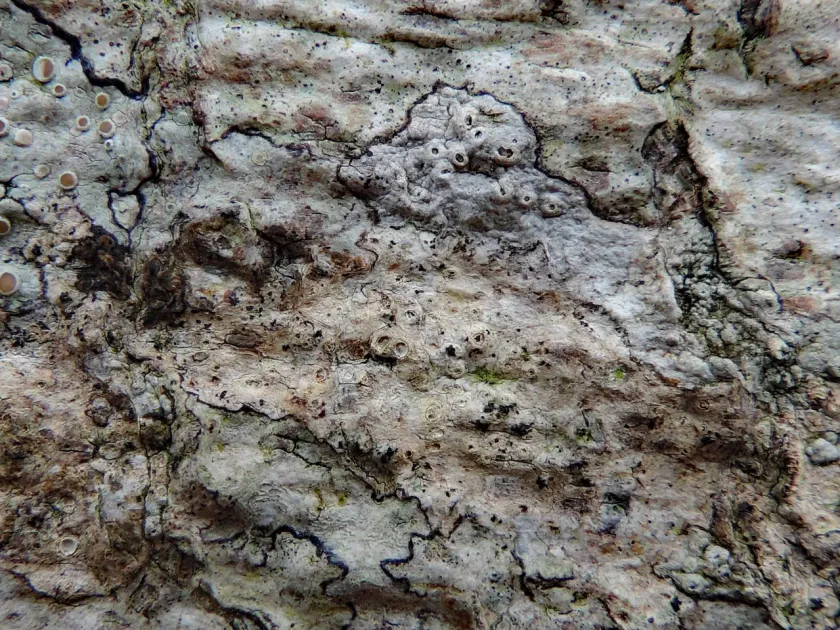
Opegrapha is a genus of lichens that typically colonizes the bark of various tree species. They are characterized by dark, often black, thin lines that resemble scribbles or ancient handwriting.
The fruiting bodies, known as apothecia, are linear and elongated, sometimes branched, which creates a distinct graphical pattern on the surface of the tree bark.
The thallus of the lichen is usually firmly attached to the bark, sometimes appearing partially embedded within the outer layers of the periderm.
These lichens often appear on older trees with slower growth rates. While they do not destroy the bark directly, their presence is easily noticeable due to the contrast between the dark markings and the lighter bark surface.
Opegrapha patches can grow over several years, gradually covering significant portions of the trunk and primary branches if environmental conditions remain favorable.
Pathogen
The organism consists of a fungal partner (mycobiont) and an algal partner (photobiont) living in a symbiotic relationship. It is not a pathogenic fungus that extracts nutrients from the host plant.
The fungus provides structural support and protection from environmental stress, while the algae produce carbohydrates through photosynthesis to sustain the system.
In biological terms, Opegrapha is strictly an epiphyte. It utilizes the tree bark merely as a substrate for attachment rather than as a source of nourishment.
The reproduction occurs via spores that are dispersed by wind or water. Upon landing on a suitable, moisture-rich bark surface, the spores germinate to form a new lichen colony.
Agronomically, its presence is interpreted more as an indicator of environmental humidity and the age of the bark rather than as a primary infectious disease.
Conditions for development
The primary prerequisite for the development of Opegrapha is high atmospheric humidity. It thrives in shaded, moist environments where the bark remains damp for extended periods.
Dense tree canopies that restrict air movement and block sunlight create the microclimate necessary for the proliferation of these epiphytes.
Trees with damaged bark, deep fissures, or generally declining vigor provide the most suitable surface for the spores to take hold and begin development.
The growth rate of the lichen is remarkably slow, requiring years of consistent environmental conditions, particularly high humidity, to establish visible colonies.
Poor orchard management, such as the lack of thinning cuts and failure to maintain clear trunks, allows these colonies to expand unchecked over the lifecycle of the tree.
Why it matters
While Opegrapha is not a parasite, its dense growth can physically obstruct the lenticels of the bark, which are essential for the gas exchange of the tree.
The accumulation of lichen traps moisture against the bark surface. This persistent dampness creates a secondary habitat that may encourage the development of true pathogenic fungi and rot.
The textured surface of the lichen provides a perfect hiding spot for various orchard pests, including scale insects, mites, and their eggs, which are then harder to reach with treatments.
Significant coverage can lead to a decline in tree vigor, as the cumulative effect of obstructed gas exchange and high surface humidity stresses the bark tissue.
Over time, the affected tree may show signs of premature bark senescence, making the timber more vulnerable to opportunistic infections and environmental stressors.
Protection
The most effective management strategy involves mechanical cleaning. Removing old bark and lichen layers with stiff brushes or specialized scrapers during the dormant season is highly effective.
Painting trunks with lime wash, often fortified with copper-based fungicides, is a traditional and effective method to eliminate remaining spores and prevent re-colonization.
Pruning is essential to improve airflow and light penetration within the canopy, which naturally creates a less favorable environment for lichen growth.
Application of copper-based sprays (such as Bordeaux mixture) during the spring or autumn helps to disinfect the bark surface and limit the spread of epiphytic organisms.
- Manual bark cleaning.
- Application of lime wash.
- Canopy thinning for better airflow.
- Copper-based spray applications.
Discussion
No discussions yet — be the first.