
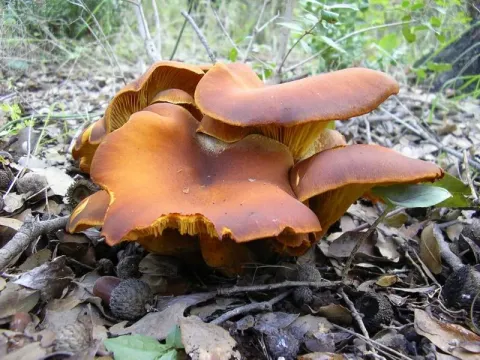
Omphalotus
Omphalotus
Omphalotus is a genus of basidiomycete fungi known primarily as wood-decaying organisms. While not a traditional "plant disease" caused by bacteria or viruses, it functions as a pathogen that causes white rot in hardwood trees.
What the section contains
Omphalotus
The fungus propagates through spores that settle in open wounds, broken branches, or exposed areas of the tree's bark, eventually germinating into the wood tissue.
As a saprotrophic and parasitic organism, Omphalotus digests the lignin and cellulose within the wood, which gradually compromises the structural integrity of the host.
The fungus is well-known for its bioluminescent properties in its gills, though its most significant impact is the hidden biological degradation of the tree's internal structure.
Because it thrives on both living but weakened trees and decaying stumps, it serves as a persistent reservoir for infections in woody environments.
The most distinctive sign of Omphalotus presence is the emergence of dense clusters of bright orange to yellow-brown mushrooms at the base of the tree or near deep scars.
The fruit bodies are usually funnel-shaped with crowded gills, which, in many species, display a distinct green bioluminescent glow in complete darkness.
Internally, the wood undergoes a transformation known as white rot, where the timber becomes soft, stringy, and light-colored as the fungus consumes the lignin.
Affected trees often show signs of general decline, including premature leaf senescence, thinning foliage, and a general lack of vigor due to impaired nutrient transport.
Surface cracks and peeling bark often reveal underlying mycelial mats, which confirm that the fungal colonization has reached a significant depth.
The development of Omphalotus is highly dependent on environmental humidity, favoring locations with high moisture levels and poor air circulation.
Shaded areas and sites with high canopy density are particularly susceptible, as they maintain the consistent moisture needed for the fungal mycelium to thrive.
Physical trauma to the tree, caused by wind damage, pruning negligence, or pest activity, provides the necessary entry points for spores to infect the woody core.
Trees undergoing abiotic stress, such as prolonged drought or nutrient deficiencies, possess weaker chemical defenses, making them prime candidates for colonization.
The accumulation of woody debris and organic mulch around the base of the trunk provides an additional substrate that facilitates the spread of the pathogen.
The primary danger of Omphalotus is the systemic structural weakening of the tree, which significantly increases the risk of trunk failure or limb collapse during high winds.
As the rot spreads, it disrupts the vascular system (xylem), hindering the tree's ability to transport water and essential minerals, leading to branch dieback.
Long-term colonization leads to the irreversible decline of the host tree, often resulting in premature mortality and significant economic loss for foresters or gardeners.
The persistent nature of the fungus means it can easily spread to neighboring trees, turning localized infections into a broader management problem.
Furthermore, because the fruit bodies are toxic if ingested, their presence in public parks or gardens poses an additional safety risk to people and pets.
Effective management begins with strict sanitation: pruning dead or damaged branches and properly sealing large wounds to prevent spore entry.
Proactive care, including balanced fertilization and deep watering during dry spells, helps maintain tree vigor and robust natural defense mechanisms.
All visible fruit bodies of Omphalotus must be removed and destroyed by burning or disposal in sealed bags to reduce the amount of inoculum in the environment.
If an infection is identified deep within the main stem, the tree may need to be removed completely and the stump treated or cleared to prevent further spread.
Regular monitoring of the garden, particularly during the humid summer and autumn months, is essential for early detection and mitigation of fungal outbreaks.