
Omphalotus olearius
Omphalotus olearius
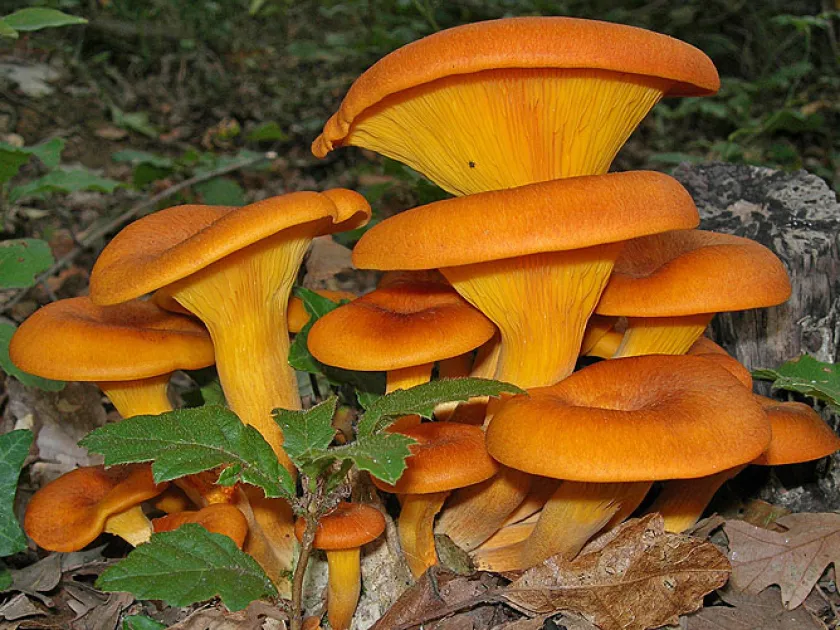
Description
Symptoms
The most distinctive sign of infestation is the emergence of bright, orange-yellow, funnel-shaped mushrooms growing in dense clusters at the base of the trunk or on the root system.
Internal wood samples show typical signs of white rot: the timber becomes pale, bleached, and soft. Over time, the core of the tree may develop hollow spaces as the fungus consumes the heartwood.
Canopy thinning is a secondary sign, as the tree's vascular system becomes impaired, leading to premature leaf drop and the death of twigs and branches.
Advanced infections may cause the tree to lose structural integrity, potentially resulting in catastrophic failure or splitting of the trunk during storm events.
Bioluminescence of the mycelium and gills is a unique marker, occasionally observable in the dark, though diagnosis in the field is usually based on the appearance of the clusters.
Pathogen
Omphalotus olearius, commonly known as the jack-o-lantern mushroom, is a saprobic fungus that frequently acts as a wood-decay pathogen. It specifically targets the internal structures of hardwood trees, initiating the process of white rot.
The pathogen spreads primarily via spores, which enter the host through wounds, pruning cuts, or bark fissures caused by environmental stress. Once inside, the mycelium colonizes the wood, breaking down lignin and cellulose.
As a powerful decomposer, the fungus utilizes specialized enzymes to degrade woody tissue, turning it into a friable, fibrous mass. This structural degradation is what leads to the progressive weakening of the tree host.
The fungus can persist for years within the woody tissue, slowly depleting the tree's health while preparing the internal environment for the eventual emergence of its bioluminescent fruit bodies.
Biologically, it is a formidable threat to woody biomass, characterized by its ability to thrive even in trees that show only minor external signs of stress.
Conditions for development
Omphalotus olearius thrives in warm, humid climates, with its activity peaking during wet seasons when spores are most effectively dispersed by wind and rain.
Trees that have been weakened by drought, insect attacks, or poor maintenance provide the best conditions for the fungus to establish its presence and begin colonization.
Poor orchard management, such as leaving large pruning wounds exposed to the elements, significantly increases the risk of infection as these areas remain moist and accessible.
Shaded, stagnant environments with high humidity favor the germination of spores and the subsequent spread of fungal mycelium across the root zone of healthy trees.
The fungus is particularly well-adapted to hardwood species, such as olive and various fruit trees, where it can capitalize on the moisture-retaining properties of the bark.
Why it matters
The primary threat of this pathogen is the degradation of structural wood, which transforms healthy trees into hazardous, unstable structures that pose a risk of falling.
Economic damage in orchards is severe, as infected trees often require complete removal and destruction to prevent the pathogen from spreading to neighboring healthy specimens.
The loss of physiological function in the tree prevents adequate water and nutrient uptake, leading to a significant decrease in crop yields before the tree eventually dies.
Once established in the roots, the fungus can form a reservoir of infection in the soil, making it difficult to replant or maintain other trees in the same location for years.
Beyond individual tree death, the fungus causes landscape-level damage by creating clusters of diseased trees, often leading to total loss of orchard productivity.
Protection
Sanitation is the cornerstone of control. All infected trees, including their entire root systems, must be removed and destroyed to eradicate the source of the fungal spores.
Preventative measures include the proper sealing of all pruning cuts and tree wounds with fungicides or appropriate wound sealants to create a physical barrier against spores.
Maintaining high tree vigor through proper irrigation and balanced fertilization helps trees build their natural defenses against wood-decaying organisms.
- Sterilize all pruning tools between trees using a bleach or alcohol solution.
- Avoid damaging the bark of tree trunks with machinery during orchard operations.
- Promptly remove and incinerate any fruiting bodies to reduce airborne spore counts.
- Monitor the bases of older trees regularly for signs of fungal clusters.
Integrated pest management strategies focusing on early detection and prevention are the most effective ways to manage risks associated with Omphalotus olearius.
Discussion
No discussions yet — be the first.