
Onion Alternaria leaf blight
Alternaria porri
Description
Symptoms
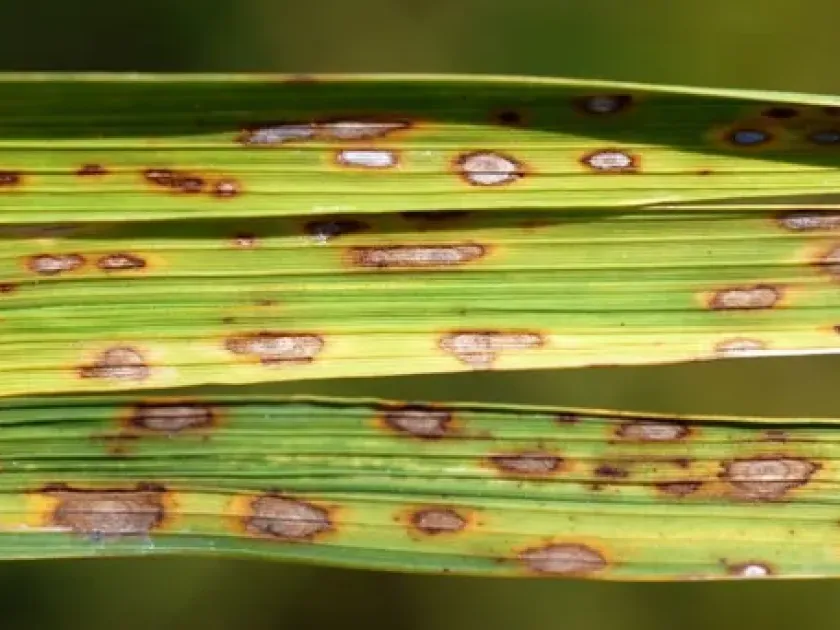
Early symptoms appear as small, water-soaked, white lesions on the leaves. These spots eventually enlarge and develop into oval or elongated shapes with a purple to brown necrotic center.
Under conditions of high humidity, the affected areas become covered with a characteristic dark, olive-brown to black, velvet-like fungal growth, which consists of masses of conidia.
As the disease progresses, the leaves often turn yellow and collapse, starting from the tip downwards. This premature senescence significantly weakens the entire plant.
If the infection reaches the neck area, it can lead to internal rotting of the bulb, which severely compromises the shelf life and quality of the harvested crop.
- Water-soaked white to tan spots
- Target-like concentric zonation within lesions
- Leaf tip dieback and yellowing
- Severe blighting and collapse of foliage
Pathogen
The disease is caused by the fungus Alternaria porri, a member of the hyphomycete class. This pathogen is known for its ability to survive in soil and on infected crop debris for several years.
The fungus penetrates onion tissues through stomata or wounds caused by pests and mechanical damage. It produces toxins that promote tissue degradation and the development of necrotic lesions.
Its life cycle involves the production of large, multi-celled conidia that are easily dispersed by wind, rain splashes, and irrigation water, facilitating the rapid spread of the disease.
This pathogen specifically infects members of the Allium family, including bulb onions, leeks, shallots, and garlic, making crop rotation essential for management.
The fungus is highly resilient, and its ability to adapt to varying temperatures allows it to persist across different agro-climatic zones, posing a challenge to growers.
Conditions for development
The disease thrives in warm and humid conditions, with optimal temperatures for fungal growth ranging between 20°C and 25°C (68°F–77°F).
Frequent rainfall, prolonged dew, and high atmospheric humidity provide the necessary environment for fungal spore germination and penetration of the onion leaf.
Poor field management, such as high planting density, limits air circulation and maintains excessive moisture within the leaf canopy, promoting the disease.
Plants under physiological stress—due to nutrient deficiencies, water imbalance, or pest damage—are significantly more susceptible to Alternaria porri infection.
The presence of insect vectors like thrips is a major factor, as they create entry points for the pathogen while causing direct feeding damage to the leaf tissue.
Why it matters
Onion leaf blight can lead to significant yield reductions by causing premature death of the foliage, which prevents bulbs from reaching their full size and maturity.
The disease reduces the market value of the crop due to poor bulb appearance and structural weakness, often making bulbs unsuitable for long-term storage.
When the infection spreads to seed crops, it affects the flower stalks, leading to reduced seed weight and poor germination rates in subsequent plantings.
Secondary infections by soft rot bacteria are common in bulbs weakened by Alternaria, further increasing post-harvest losses and waste.
Economic impact is significant, as growers are often forced to implement intensive fungicide spray programs to prevent total crop failure during wet seasons.
Protection
Integrated disease management begins with crop rotation, ensuring that onion crops are not planted in the same field for at least three to four years.
Sanitation is crucial; removing and destroying infected plant debris after harvest reduces the amount of primary inoculum available for the next season.
Applying fungicides is necessary during favorable weather conditions. It is important to rotate systemic and contact fungicides to prevent the development of fungal resistance.
Balanced fertilization, especially maintaining adequate potassium levels, helps strengthen plant cell walls and enhances natural resistance to the pathogen.
Effective pest control measures, particularly targeting thrips, are essential to minimize tissue damage and prevent the onset of fungal infection.
Discussion
No discussions yet — be the first.