
Omphalotus japonicus
Omphalotus japonicus
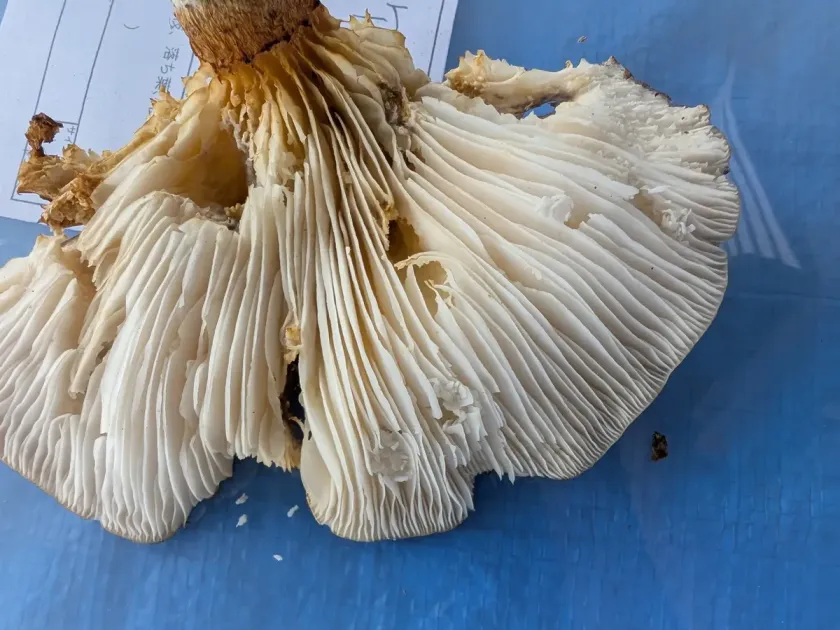
Description
Symptoms
The most reliable sign of infection is the appearance of conspicuous, funnel-shaped fruit bodies growing in dense, clustered clumps near the base of the tree trunk.
These mushrooms typically exhibit a yellowish-brown or olive-toned color, with stems often fused together at the base, creating a distinct visual marker.
Inside the host, the pathogen triggers white rot, a condition where the wood loses its density and turns into a fibrous, bleached mass that is easily broken.
Infected trees often show systemic stress symptoms, including premature leaf senescence, sparse canopy cover, and occasional crown dieback.
As the disease advances, the structural integrity of the tree deteriorates significantly, often leading to deep-seated rot that is not always visible from the bark surface.
Pathogen
Omphalotus japonicus is a highly specialized basidiomycete fungus known for its role as a destructive wood-decay pathogen in various broad-leaved forest ecosystems.
This fungus acts primarily as a necrotrophic parasite that colonizes living wood, eventually breaking down the structural components such as lignin and cellulose.
One of the most distinct biological features of this species is its bioluminescence, which causes the gills of its fruit bodies to emit a faint glow in darkness.
The mycelium of the fungus is aggressive, invading the interior of the tree trunk through wounds or natural cracks, establishing a long-term parasitic relationship.
It predominantly targets species like the Japanese beech, though it can adapt to other hardwood hosts under favorable environmental conditions.
Conditions for development
The proliferation of Omphalotus japonicus is highly dependent on high humidity and moderate temperatures, which are essential for spore germination.
Wounds caused by mechanical damage, frost, or insect activity serve as the primary entry points for fungal spores, initiating the infection cycle.
Shaded, sheltered forest environments provide the optimal microclimate for the fungus to establish itself and expand its mycelial network within the host tree.
Trees that are under stress, whether from drought, nutrient deficiency, or overcrowding, show a higher susceptibility to being colonized by this pathogen.
The spore dispersal and fruit body formation peak during periods of frequent rainfall, when the fungus can spread rapidly to neighboring vulnerable hosts.
Why it matters
The primary threat posed by this fungus is the complete degradation of the trunk's internal structure, which poses a severe risk of tree collapse and windthrow.
It causes major economic losses in forestry by rendering timber quality unusable due to the extensive rot damage throughout the wood fibers.
The ecological impact is significant, as the fungus accelerates the decline of mature forest stands, disrupting the local forest habitat and nutrient cycling.
In urban and park environments, the presence of the fungus transforms trees into a safety hazard, necessitating their costly removal to prevent accidents.
Furthermore, the mushroom itself is highly toxic to humans, as it contains potent compounds that cause severe gastrointestinal distress if consumed.
Protection
Sanitary felling and complete removal of infected stumps are the most effective methods to eliminate the primary source of inoculum in an affected area.
To prevent infection, it is crucial to protect trees from mechanical injury and to treat any existing wounds with antifungal wound dressings or specialized sealants.
Implementing proper forest management practices, such as maintaining appropriate tree density and soil health, can improve tree vigor and resistance.
Regular monitoring of forest stands, particularly after storms, allows for the early detection of injured trees and immediate application of preventative measures.
In high-value landscapes, professional application of systemic fungicides may be used as a prophylactic measure to safeguard healthy but vulnerable trees.
Discussion
No discussions yet — be the first.