
Swiss Needle Cast
Nothophaeocryptopus gaeumannii
The first noticeable symptom of the disease is the discoloration of needles. They gradually turn yellow and eventually develop a brown or tan appearance, which gives the tree a sickly and thin look.
What the section contains
Swiss Needle Cast
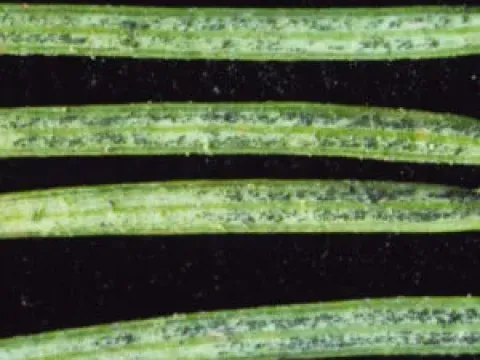
On the underside of the needles, specifically in the stomatal regions, numerous tiny black fungal fruiting bodies called pseudothecia develop. They appear as small black dots arranged in neat rows along the needle.
Unlike many other needle cast diseases, the infected needles may remain on the tree for several years before dropping, which leads to significant foliage loss and bare branches in the lower parts of the crown.
In cases of severe infection, there is widespread premature needle cast, which is most prominent in the interior and lower sections of the crown where humidity levels remain higher.
The appearance of an infected tree is characterized by a thinning effect, which reduces the aesthetic appeal and overall vigor of the Douglas fir compared to healthy trees in similar conditions.
The causative agent of this disease is the microscopic ascomycete fungus Nothophaeocryptopus gaeumannii. This pathogen is a highly host-specific parasite that exclusively affects trees of the genus Pseudotsuga (Douglas fir).
The fungus develops directly within the needle stomata. Its mycelium infiltrates the plant tissue, interfering with normal gas exchange and photosynthesis, which gradually exhausts the tree's physiological reserves.
The fungal life cycle is strictly dependent on moisture. Spores are primarily disseminated by wind and rain splashes, landing on the young needles during the active growth periods of spring and summer.
The infection is characterized by a long incubation period. Often, the fungus may exist in the needle tissue in a latent form, showing no external symptoms until conditions become favorable for fruiting.
The biology of the pathogen is such that it does not kill the tree immediately, but its persistent presence leads to chronic stress, reducing the overall vitality and economic productivity of the stand.
Prolonged periods of damp and warm weather favor the development of the infection. High relative humidity is the critical factor required for the successful germination of fungal spores on the needle surface.
Dense and overcrowded plantations create the ideal microclimate for the spread of the disease. Lack of adequate crown ventilation slows down the drying process of needles after rainfall, encouraging spore development.
The disease frequently attacks weakened trees growing in suboptimal soil conditions or those suffering from nutrient deficiencies. Environmental stressors make the Douglas fir much more susceptible to the fungus.
Most active infection occurs during the spring and early summer when the tree produces new needles, which are the most vulnerable tissues to Nothophaeocryptopus gaeumannii colonization.
Geographic regions characterized by frequent fog and mild winters provide the most dangerous conditions, as the fungus can continue its development over longer portions of the year.
The primary damage consists of premature needle drop, which results in significant reductions in tree growth rates. Impaired photosynthesis directly impacts the productivity and health of the forest stand.
In ornamental gardening and landscape design, Swiss needle cast causes serious aesthetic damage, rendering the trees unsuitable for high-visibility plantings or public park settings.
Chronic infestation leaves the Douglas fir susceptible to secondary pests, such as bark beetles or stem-boring insects, which prefer to colonize trees already weakened by the fungal infection.
In commercial forestry, intensive Swiss needle cast infection can lead to substantial economic losses associated with decreased wood quality and lower annual volume increment of forest stands.
Long-term exposure to the pathogen without proper intervention can lead to the death of young seedlings, particularly in nurseries where tree density is extremely high.
A primary preventive measure involves selecting high-quality, resistant planting material and ensuring appropriate spacing between trees to facilitate good air circulation and crown drying.
Regular sanitation pruning of infected and dead branches helps reduce the overall spore load. All fallen needles should be removed from the site or burned to prevent further spread of the infection.
The application of copper-based fungicides or systemic chemical treatments is an effective control method in nurseries or when managing high-risk ornamental stands.
Strict adherence to treatment schedules is necessary, focusing on the periods of active needle growth. Generally, 2-3 preventive applications at 10-14 day intervals are recommended.
Maintaining tree vigor through proper irrigation and regular fertilization improves the Douglas fir's immune response, helping the tree to better withstand the pressure of the pathogen.