
Sycamore powdery mildew
Erysiphe platani
Description
Symptoms
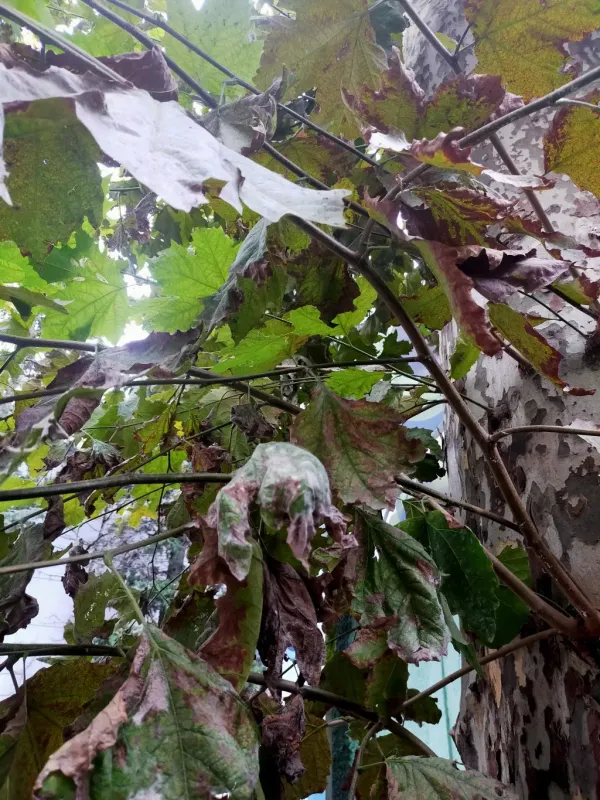
The most distinctive sign of the disease is the appearance of a white or grayish powdery fungal growth on leaves, shoots, and stipules. This white layer consists of mycelium and a mass of spores.
As the infection progresses, the leaves may become distorted, curled, or stunted. Necrotic spots can develop in areas where the fungal colonies are particularly dense and aggressive.
Young shoots are often severely affected, showing signs of twisting, growth inhibition, and fragility. This can lead to the dieback of shoot tips if left untreated during the active growth period.
By late summer or early autumn, the white powdery patches become dotted with tiny black spheres known as cleistothecia, indicating that the fungus is entering its overwintering phase.
Severe infestations result in premature leaf drop, which leaves the tree with a sparse canopy and significantly impairs its visual and structural health.
Pathogen
The causal agent of this disease is the ascomycete fungus Erysiphe platani (often referred to as Microsphaera platani). This pathogen is a highly specialized parasite that infects trees of the Platanus genus.
It thrives as an ectoparasite, developing primarily on the leaf surface and young shoots. The fungus penetrates the plant epidermis with specialized structures called haustoria to absorb nutrients.
Reproduction is carried out via conidia, which form in chains on the surface of the infected tissue. These spores are easily disseminated by wind and water splashes to adjacent foliage.
In the later stages of the growing season, the fungus produces cleistothecia, small dark fruiting bodies that look like black specks. These are essential for the sexual reproduction and survival of the fungus through winter.
The infection persists in the debris of fallen leaves and within the crevices of the bark, where the fungus waits for optimal environmental conditions to restart the infection cycle in the spring.
Conditions for development
The development of Erysiphe platani is favored by mild, humid weather conditions. An optimal temperature range of 18 to 25 degrees Celsius promotes rapid spore germination and mycelial growth.
High relative humidity and poor air circulation within the canopy create a microclimate that allows the fungus to spread rapidly across the entire tree.
Trees located in crowded settings or areas with limited airflow are at a much higher risk of suffering from severe outbreaks compared to those in open, well-ventilated locations.
Environmental stress factors, such as soil moisture deficiency or nutrient imbalances, can weaken the tree's natural defense mechanisms, making it more susceptible to colonization.
Urban landscapes, with their heat-trapping surfaces and pollution, can exacerbate the impact of the disease by creating stressful growing conditions for sycamores.
Why it matters
The primary damage is caused by the restriction of photosynthesis. The dense fungal mat physically blocks light from reaching the leaf tissues and interferes with essential gas exchange processes.
Premature senescence and leaf drop deplete the energy reserves that the tree requires to prepare for dormancy, leading to poor vigor and reduced cold hardiness in the following year.
In nursery settings, powdery mildew can be particularly devastating, as it stunts growth and ruins the aesthetic quality of young trees, rendering them unsuitable for sale.
Chronic infections weaken the tree over time, making it less resilient to other biotic and abiotic stressors, such as secondary pests or severe weather events.
The overall reduction in photosynthetic capacity leads to stunted annual growth, which significantly hinders the long-term development of the tree in urban and residential settings.
Protection
Cultural management is the first line of defense. Removing and destroying fallen leaves during autumn is essential to eliminate the primary sources of overwintering inoculum.
Proper pruning practices, such as thinning out the canopy to improve air circulation and sunlight penetration, can significantly lower the risk of infection.
Chemical control involving fungicides should be initiated at the first sign of symptoms. Products containing sulfur, triazoles, or strobilurins are typically effective.
Applications should be repeated every 10 to 14 days during the peak risk season, rotating between different classes of fungicides to prevent the development of resistant fungal strains.
- Apply balanced fertilization to support vigorous, resilient plant growth.
- Ensure adequate irrigation, especially during dry spells, to minimize physiological stress.
- Monitor trees regularly during the spring and early summer for early signs of mildew.
Discussion
No discussions yet — be the first.