
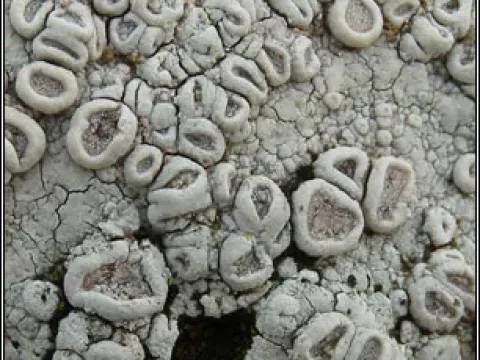
Ochrolechia parella
Ochrolechia parella
Ochrolechia parella is a crustose lichen known for forming dense, whitish or greyish patches on the bark of trees. It establishes itself firmly on the substrate, creating a characteristic crust-like appearance.
What the section contains
Ochrolechia parella
The most distinctive feature of this species is the presence of numerous apothecia, which appear as small, disk-like fruiting bodies with thick, prominent margins that match the color of the main body.
These lichens are most commonly found on the trunks and major skeletal branches of mature or old trees, where the bark surface is stable and provides adequate anchor points.
Visually, areas covered by the lichen appear lighter and significantly rougher than healthy, clean bark. The patches may expand over time, creating a mosaic of crusty structures.
Although it does not look like a typical decay-causing organism, the visible presence of Ochrolechia parella changes the texture of the tree surface and indicates a mature, stable environment.
Biologically, Ochrolechia parella is an epiphytic lichen formed through a symbiotic relationship between a fungus and algae. It is not a parasite, as it does not derive nutrients from the tree's sap.
The fungal component provides protection and structure, while the algal partner performs photosynthesis, allowing the organism to thrive on vertical surfaces without invading the host's tissue.
The lichen spreads vegetatively through fragments of its thallus or via spores dispersed by wind and rain, which can easily land on nearby tree surfaces in suitable conditions.
It exists as an epiphyte, meaning it uses the tree solely for physical support. It remains dormant during dry spells and resumes activity when moisture levels are sufficient.
It is not considered a pathogen, yet it acts as an indicator species, often appearing in environments with clean air where industrial pollution levels are low.
High humidity and consistent moisture levels are the most critical factors for the development of Ochrolechia parella. It thrives in environments where bark surfaces stay damp for prolonged periods.
The age and condition of the bark are important, as mature trees with rough, fissured surfaces offer better opportunities for spores to attach and colonize compared to smooth, young bark.
The lichen is sensitive to air pollution. Its proliferation is often a sign of good local air quality, as it struggles to survive in areas with high levels of nitrogen dioxide or sulfur emissions.
Orchards with poor ventilation and dense canopy cover are more susceptible to colonization, as these environments maintain the high humidity needed for the lichen to grow.
Lack of maintenance, such as failure to prune dead branches or clear debris, provides a perfect starting point for the expansion of lichen populations throughout the garden.
The primary concern regarding this lichen is that it covers the bark surface, which may hinder the natural gas exchange required for the tree to breathe properly.
Dense layers of lichen can trap moisture against the bark for extended periods, potentially creating a micro-environment that encourages the growth of harmful bacteria and fungi.
The physical structure of the lichen provides shelter for various garden pests, including scale insects and mites, which use the crusty patches as protection from predators and elements.
While the lichen itself is harmless, its excessive accumulation is often associated with tree stress, as it usually colonizes already aging or poorly performing specimens.
Over time, the competitive pressure for surface space and the potential for underlying bark degradation can contribute to a decline in the tree's overall vigor.
Mechanical cleaning is the most effective approach. Using a stiff brush or a scraping tool during the dormant season allows for the removal of lichen patches without harming the tree.
Following manual cleaning, the trunk and main branches should be treated with a fungicide or a solution of copper/iron sulfate to kill any remaining spores and disinfect the bark.
Proper pruning is essential for prevention, as it opens up the canopy, increases airflow, and ensures that the tree trunk dries out faster after rainfall.
Applying a lime wash to the trunks acts as an excellent preventative barrier, making the surface inhospitable for lichen spores to germinate and grow.
- Manual removal of lichen in winter
- Application of copper-based fungicides
- Improvement of crown aeration through pruning
- Whitewashing trunks for prevention
- Regular health monitoring of orchard bark