
Ochrolechia tartarea
Ochrolechia tartarea
Description
Symptoms
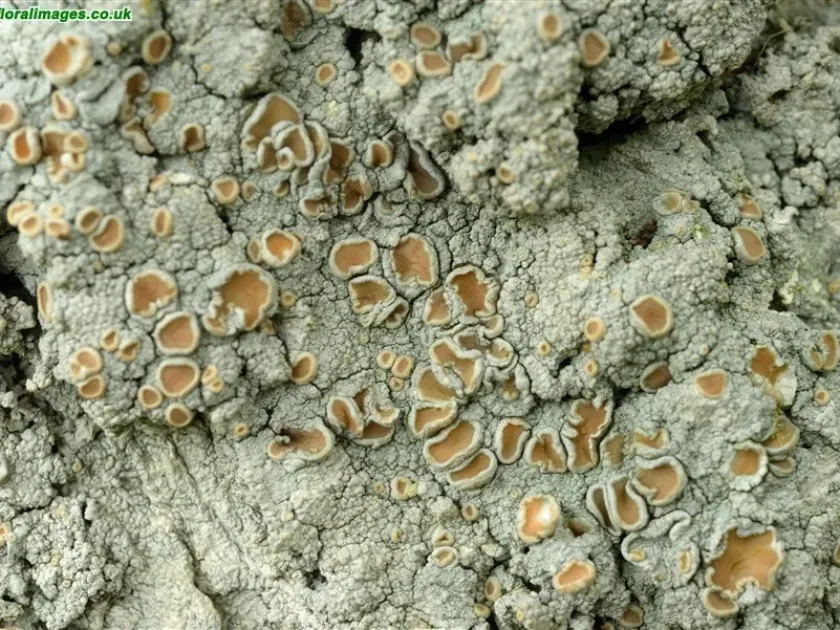
Ochrolechia tartarea appears as massive, dense crusty formations on the surface of tree trunks and skeletal branches. The thallus has a characteristic grayish, whitish, or yellowish hue with a granular, often cracked texture.
The primary external sign of this organism is the presence of numerous apothecia—disc-shaped fruiting bodies that densely cover the surface of the thallus. They have a recessed center and a light-colored margin, giving the tree bark a specific mottled appearance.
The lichen adheres firmly to the substrate, creating a visible relief layer that can cover significant portions of the tree over time. Unlike pathogenic fungi, this lichen does not penetrate deep into the wood tissue, remaining confined to the outer bark layers.
During intense colonization, Ochrolechia colonies visually mask the natural state of the bark, making it difficult to timely diagnose other diseases or damage. The color of the thallus may vary depending on light exposure and environmental humidity.
In early stages, the lichen appears as small whitish spots that gradually merge into continuous areas, eventually encircling the tree trunk completely.
Pathogen
The causative agent is the lichen Ochrolechia tartarea, which is a symbiotic organism consisting of a fungal mycobiont and an algal photobiont. It is not a classic infectious pathogen that triggers systemic plant disease.
Biologically, this species belongs to the group of epiphytes that use tree bark solely as a substrate for attachment. The fungal component provides protection for the alga and fixation on the surface, without feeding on the host plant's sap.
The type of interaction is classified as commensalism, where the lichen benefits from its placement on the tree, while the tree generally experiences no direct negative impact on its metabolic processes under normal physiological conditions.
Nevertheless, the expansion of Ochrolechia is categorized in agronomy as a secondary factor that requires attention, as the presence of a thick lichen cover often signals slowed bark growth or general tree weakness.
Reproduction occurs primarily through spores or vegetative fragments of the thallus, which are spread by wind or raindrops and form new colonies upon reaching a suitable substrate.
Conditions for development
High air humidity and moderate temperatures, typical of northern and temperate latitudes, are required for the active development of Ochrolechia. The lichen prefers areas with good access to diffused light.
The cleanliness of the atmospheric air plays a special role, as this species is sensitive to sulfur dioxide pollution levels. Its abundant presence often indicates the ecological purity of the region where the affected plantations are located.
Colony development is most active on old trees with rough, slowly renewing bark, which provides a stable base for the lichen hyphae to anchor for many years.
Crowded plantations and a lack of proper pruning create an ideal microclimate with increased humidity levels in the crown, which facilitates the rapid spread of the lichen along the branches.
Prolonged periods of moisture stagnation on the bark surface after precipitation stimulate the growth and physiological activity of Ochrolechia, allowing it to occupy new areas during a short growing season.
Why it matters
This lichen causes no direct harm to the tree's life, as it is not a parasite. However, the massive spread of Ochrolechia indirectly negatively affects the condition of the bark and the plant's overall health.
A dense layer of lichen blocks gas exchange through the bark lenticels, which, under critical coverage, can lead to the suppression of trunk respiration processes, especially in young trees.
Under the massive layers of Ochrolechia, favorable conditions are often created for the overwintering of various garden pests, such as scale insects and mites, which use the lichen as a shelter.
The presence of lichens hinders visual inspection of the bark by growers, which may lead to missing the initial stages of necrosis, bacterial blight, or pest damage.
In exceptional cases, due to excessive moisture retained under the thallus, foci of bark rot may occur, creating a favorable environment for secondary fungal infection.
Protection
The main protection measure is the regular cleaning of trunks and skeletal branches from old bark and lichens using scrapers or stiff brushes during the tree's dormant period.
Whitewashing trunks and the bases of skeletal branches with lime milk mixed with copper sulfate is considered an effective preventive method, as it prevents lichen spores from anchoring.
To remove Ochrolechia colonies, spraying with iron sulfate solutions (at a concentration of 3-5%) is used, which effectively suppresses epiphyte development without damaging the tree bark.
- Sanitary and thinning pruning to improve crown ventilation.
- Timely fertilization to maintain the tree's overall immunity.
- Monitoring humidity levels in intensive orchards.
If lichens are found on young trees, it is recommended to remove them mechanically as soon as possible to avoid disturbing normal bark growth and to prevent the spread of spores throughout the area.
Discussion
No discussions yet — be the first.