
Needle and leaf rust
Coleosporium
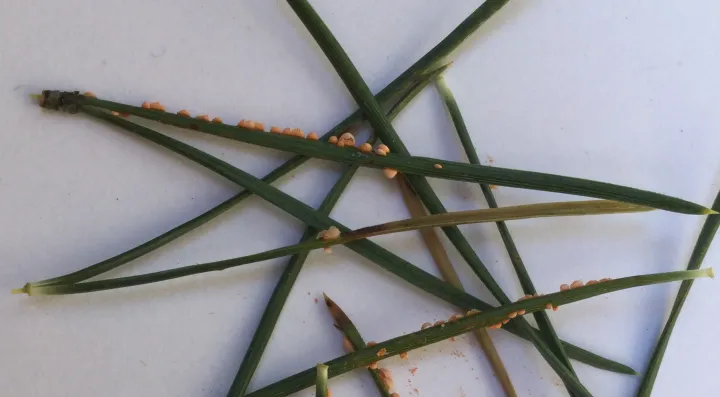
Description
Symptoms
The first noticeable sign of the disease on pine trees is the emergence of bright orange or yellow pustules, known as aecia, protruding from the needles. These structures are easily visible to the naked eye.
Infected pine needles begin to yellow prematurely, lose their turgor, and eventually dry out. Severe infections often lead to needle cast, which significantly stresses young trees.
On herbaceous plants, the disease manifests as small orange pustules on the underside of the leaf blades. These spore masses can cover large areas of the leaf surface if left untreated.
As the infection progresses, chlorotic spots appear around the pustules, which eventually turn brown and necrotic. The leaves lose their ability to photosynthesize and die off prematurely.
- Bright orange aecia appearing on pine needles.
- Premature yellowing and shedding of pine needles.
- Orange pustules on the underside of herbaceous leaves.
- Leaf necrosis and premature tissue death.
- Reduced plant vigor and stunted overall growth.
Pathogen
Needle and leaf rust is caused by heteroecious rust fungi of the genus Coleosporium. These pathogens have a complex life cycle that requires two different hosts to complete their biological development.
The primary hosts are various species of pine, where the fungus produces spores during the spring season. Secondary hosts include a wide variety of herbaceous plants, such as groundsel, bellflowers, and coltsfoot.
The fungus overwinters primarily in pine needles as mycelium, ensuring its survival during cold temperatures. In spring, it develops aecia that release spores, which are then carried by the wind to infect herbaceous plants.
On herbaceous hosts, the fungus completes its summer (urediniospores) and autumn (teliospores) stages. This phase is crucial for the mass spread of the disease throughout the surrounding landscape.
Successful reproduction of the fungus depends on the proximity of these two distinct host types. Disrupting the proximity of these hosts is a core strategy in integrated pest management.
Conditions for development
The development of Coleosporium fungi is favored by high humidity and moderate temperatures. Rainfall, dew, and foggy conditions are critical factors that facilitate spore germination and plant infection.
Poor air circulation, often caused by high planting density, creates a stagnant microclimate that encourages fungal growth. Lack of sunlight within the canopy also keeps needles wet for longer periods.
Spores are disseminated primarily by wind, allowing the infection to travel over long distances. This makes it difficult to prevent infections on sites located near wild forest areas.
Dense ground cover around the base of trees retains soil moisture and increases humidity levels. This creates an ideal environment for the disease to jump between host plants.
Nutrient deficiencies or water stress can weaken the plant's immune system, making trees and herbaceous plants significantly more susceptible to successful fungal colonization.
Why it matters
The primary damage caused by rust is the disruption of the photosynthetic process. The loss of needles and leaf tissue forces the plant to deplete its internal energy reserves, leading to severe weakening.
Conifers show a significant reduction in shoot growth and overall height. Stressed trees are more prone to secondary attacks by pests such as bark beetles and are less tolerant of frost or drought.
The aesthetic value of ornamental conifers is severely diminished, which poses a major economic problem for nurseries and landscape maintenance programs.
For herbaceous crops, the disease leads to a rapid loss of green biomass, which reduces agricultural yield and can kill off sensitive plant species entirely.
Chronic infection over several seasons leads to the premature death of the host plant. Young pine seedlings under the age of 10–12 are especially vulnerable to lethal damage.
Protection
The most effective preventative measure is spatial isolation between pine plantations and herbaceous secondary hosts. Regular weeding of host plants around conifers is essential.
Upon detection, infected plant parts should be pruned and removed from the site. Proper disposal of this debris by burning is recommended to reduce the localized inoculum load.
Fungicide applications, particularly those containing copper or systemic triazole compounds, are highly effective if applied correctly at the start of the growing season.
Good cultural practices, such as proper irrigation management and balanced fertilization, enhance the natural resilience of plants against fungal pathogens.
Nurseries must implement strict monitoring programs and maintain proper planting distances. Quarantine measures should be enforced immediately upon finding any infection foci.
Discussion
No discussions yet — be the first.