
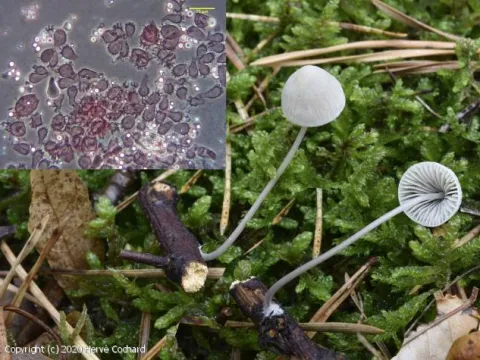
Yellow-white mycena
Mycena xantholeuca
Yellow-white mycena (Mycena xantholeuca) is not a plant pathogen and does not cause diseases in crops or trees.
What the section contains
Yellow-white mycena
It is classified as a saprotrophic fungus, which plays a vital role in decomposing organic matter within various ecosystems.
By breaking down cellulose and lignin in leaf litter and dead wood, the fungus recycles nutrients back into the soil, supporting plant growth.
The organism feeds exclusively on dead plant tissues and does not possess the mechanisms to infect living plant cells.
In terms of agricultural pathology, this species is considered a beneficial decomposer rather than an agent of plant disease.
The fruit bodies of this mycena are generally small, typical of the genus Mycena, with a delicate and fragile structure.
The cap often exhibits a pale yellowish-white color, which fades as the fungus matures or dries out.
The stipe (stem) is usually thin, hollow, and translucent, providing a distinct appearance for identification by experts.
Gills are adnate or free, typically white, and the spore print is consistently white, serving as a reliable taxonomic characteristic.
Clusters of these fungi are commonly found growing on decomposing wood, twigs, or dense leaf litter in humid environments.
High relative humidity and consistent moisture in the substrate are the primary requirements for the development of these fungi.
They thrive in cool, shaded areas where temperatures are moderate and the microclimate remains stable for extended periods.
The presence of abundant decaying organic matter is essential for the colonization and mycelial expansion of the species.
Peak activity is usually observed during wet seasons when the forest floor or garden soil remains damp for a long duration.
Lack of direct sunlight and minimal soil disturbance provide ideal conditions for the natural lifecycle of this mushroom.
There is no economic harm or negative impact caused by Mycena xantholeuca on agricultural or horticultural crops.
It does not cause any symptoms of plant damage, such as wilting, chlorosis, root rot, or leaf spotting.
The fungus acts as a natural recycler, and its presence indicates a healthy, active soil environment with organic material breakdown.
Labeling this species as a plant disease is factually incorrect and stems from a misunderstanding of its ecological niche.
No agricultural management strategies are needed for this species as it is entirely harmless to living plant biology.
As Mycena xantholeuca is not a pathogen, no control or containment measures are required by farmers or gardeners.
The use of fungicides to eliminate this species would be counterproductive, potentially harming beneficial soil microorganisms.
If the abundance of fungal fruit bodies is undesirable, simply improving drainage and air circulation in the soil is sufficient.
Maintaining a balanced soil ecosystem through proper organic management prevents the overgrowth of any single fungal species.
Focusing on general plant health and sanitation is the best practice, ensuring that no dead plant debris accumulates excessively near crops.