
Zeller's bolete
Xerocomus zelleri
Description
Pathogen
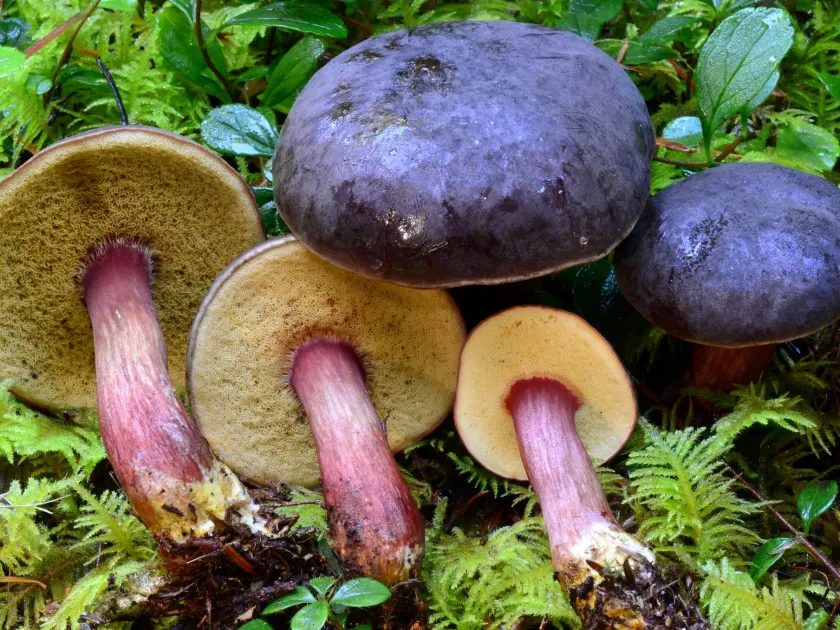
Zeller's bolete (Latin: Xerocomus zelleri) is an edible mushroom species from the family Boletaceae. It is not a plant disease or a pathogen.
This organism exists primarily as a mycorrhizal symbiont in forest ecosystems, providing nutrients to host trees in exchange for carbohydrates.
Unlike true plant pathogens, this mushroom does not cause infections, decay, or physiological damage to cultivated crops.
Agronomic records do not classify this species as a threat, and it plays no role in the development of agricultural crop diseases.
Confusing this mushroom with a disease agent is scientifically incorrect, as it is a beneficial part of forest soil ecology.
Conditions for development
Zeller's bolete develops in forest habitats, specifically in association with conifers and certain hardwood trees in the Pacific Northwest.
Favorable conditions for its growth include moist, well-drained soil rich in organic material and forest litter.
The development of the fruiting body typically occurs during cool and damp autumn months, mirroring the seasonal patterns of other boletes.
The mushroom requires the presence of living tree roots to establish its mycorrhizal network, which is impossible in typical field environments.
The environmental needs of this species are distinct from those of pathogens that target commercial vegetables or grains.
Discussion
No discussions yet — be the first.