
Yellowfoot
Cantharellus tubaeformis
Description
Symptoms
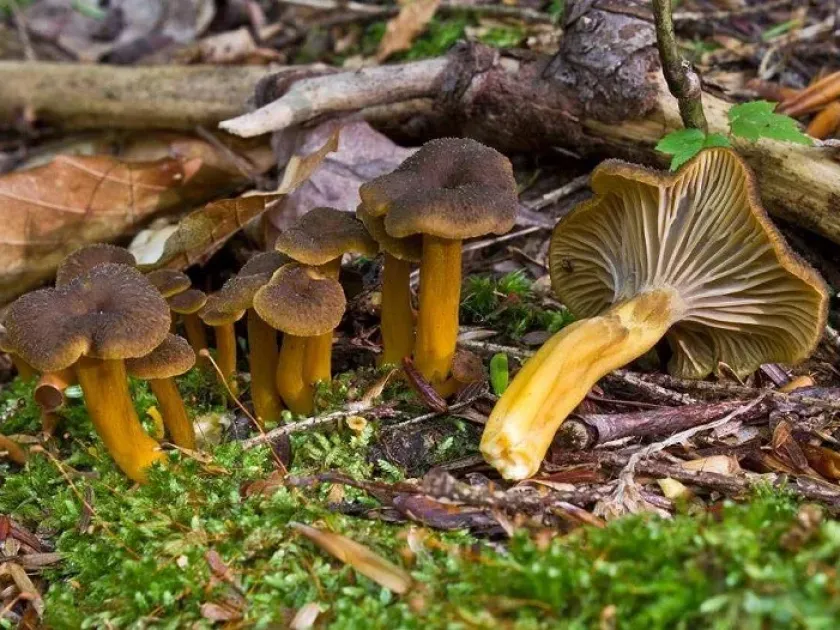
The most visible signs of this fungus are its fruiting bodies, which appear in late summer and autumn, often growing in massive clusters.
The cap typically features a depressed, funnel-shaped center, which transitions directly into a hollow, yellowish stem.
Underneath the cap, you will find well-developed, decurrent gill-like folds that are characteristic of the genus Cantharellus.
The coloration of the fruiting body ranges from grayish-brown to golden yellow, providing excellent camouflage against mossy forest floors.
Dense colonies often carpet areas with high humidity, making them easily distinguishable from other forest floor inhabitants.
Pathogen
Cantharellus tubaeformis, commonly known as the yellowfoot or winter chanterelle, belongs to the Cantharellaceae family. It is vital to clarify that this fungus is not a plant disease and does not act as a phytopathogen.
This species is recognized for its mycorrhizal relationship with coniferous and deciduous trees, playing a beneficial role in forest soil nutrient cycling.
Unlike parasitic fungi that cause plant diseases, the yellowfoot focuses on decaying organic matter and forming beneficial symbiotic links with tree roots.
Its morphology includes a distinct hollow stem and a yellow-brown cap. It is primarily found in damp forest environments rather than agricultural landscapes.
Agronomically, this organism is considered a natural component of forest biodiversity and poses no threat to crops or garden plants.
Conditions for development
The yellowfoot thrives in cool, moist, and acidic soil environments, particularly in mixed or coniferous forest stands.
High relative humidity and consistent moisture in the substrate are critical requirements for the development of its mycelium and fruiting bodies.
Moss-covered areas and decaying organic debris provide the ideal environment for its colonization and long-term survival.
The fungus is highly sensitive to desiccation and direct sunlight, which is why it is predominantly found under dense tree canopies.
It remains active throughout the cool autumn months, often surviving until the first heavy frosts of the early winter season.
Why it matters
This fungus is completely harmless to agricultural crops. It lacks the biological mechanisms to infect or damage healthy plant tissues.
There is no evidence of this species secreting toxins that could interfere with plant growth or development in adjacent areas.
On the contrary, its presence is a sign of a stable and healthy forest ecosystem, contributing to organic matter decomposition.
It does not cause root rot, leaf spots, or any other pathological condition associated with common agricultural plant diseases.
In conclusion, the yellowfoot is an ecologically beneficial species that poses zero risk to horticultural or farm production.
Protection
No plant protection measures are required for this fungus, as it does not constitute a threat to cultivated plants.
If its presence is undesirable in landscaping, improving drainage and reducing leaf mulch will naturally inhibit its growth.
Fungicidal applications are strongly discouraged, as they are ineffective against beneficial forest fungi and may disturb the soil's natural microbial balance.
Maintaining proper air circulation and reducing moisture levels in shaded garden areas is sufficient to discourage its colonization.
No agricultural control protocols exist for this species, as it is strictly managed as a wild mushroom rather than a pest or disease.
Discussion
No discussions yet — be the first.