
Mutinus
Mutinus
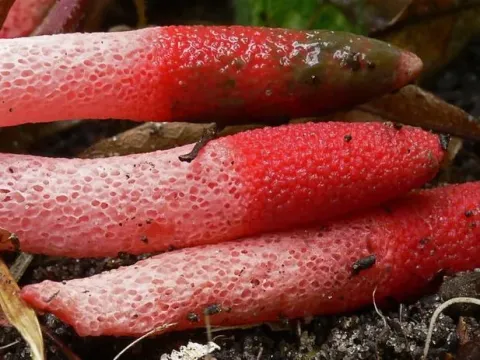
Mutinus is a genus of fungi belonging to the family Phallaceae. It is scientifically categorized as a saprotrophic fungus and is not considered a plant disease or a crop pathogen.
What the section contains
Mutinus
These organisms survive by decomposing dead plant matter, including wood chips, bark, and rich humus soil. They lack the ability to infect or parasitize living plant tissues.
Biologically, the fungus functions as a decomposer, breaking down complex organic compounds and contributing to the natural soil nutrient cycle.
The life cycle involves the formation of a subterranean mycelium that eventually produces a distinctive ephemeral fruiting body above the ground surface.
In an agricultural setting, the presence of Mutinus should be viewed as a sign of high soil organic content rather than a pathological infection.
Mutinus requires specific environmental conditions for fruiting body development, primarily characterized by high humidity and the presence of abundant organic debris.
The fungus thrives in warm temperatures and damp environments, such as forest edges, shaded areas of a garden, or large compost heaps.
High moisture levels in the soil, combined with deep layers of mulch, provide the perfect substrate for the mycelium to spread rapidly.
Neutral to slightly acidic soil conditions, rich in organic carbon, are ideal for the rapid maturation of the fruiting bodies.
In well-managed fields with regular cultivation practices, the appearance of these fungi is rare due to the consistent disturbance of the soil surface.
Mutinus poses no threat to agricultural crops, ornamentals, or horticultural plants. It does not possess any phytotoxic or parasitic properties.
There is no record of damage to roots, stems, or foliage caused by this fungus. It serves as an ecological beneficiary rather than a harm-causing agent.
The only potential nuisance associated with Mutinus is the strong odor emitted by its mature fruiting bodies, which attracts flies and other insects.
Its presence is purely accidental and is restricted to areas where organic decomposition is already underway, meaning it does not attack healthy living plant tissue.
Farmers and gardeners do not need to worry about crop loss or yield reduction due to the colonization of soil by this specific genus.
Since Mutinus is not a pathogen, specific control measures such as fungicides are unnecessary and discouraged in standard agricultural practice.
Managing the site by regulating the amount of organic mulch can effectively discourage the growth of visible fruiting bodies.
Regular soil aeration and maintenance of proper drainage are highly effective in limiting the success of fungal colonization in unwanted areas.
- Avoid excessive layering of wood chips or coarse bark.
- Use fully decomposed compost instead of raw manure or fresh organic residues.
- Maintain consistent soil cultivation to disrupt fungal mycelium.
- Ensure adequate air circulation around plant bases.
By focusing on proper soil structure and organic matter management, the presence of these fungi can be naturally minimized without the use of chemical interventions.