
Mutinus caninus
Mutinus caninus
Description
Symptoms
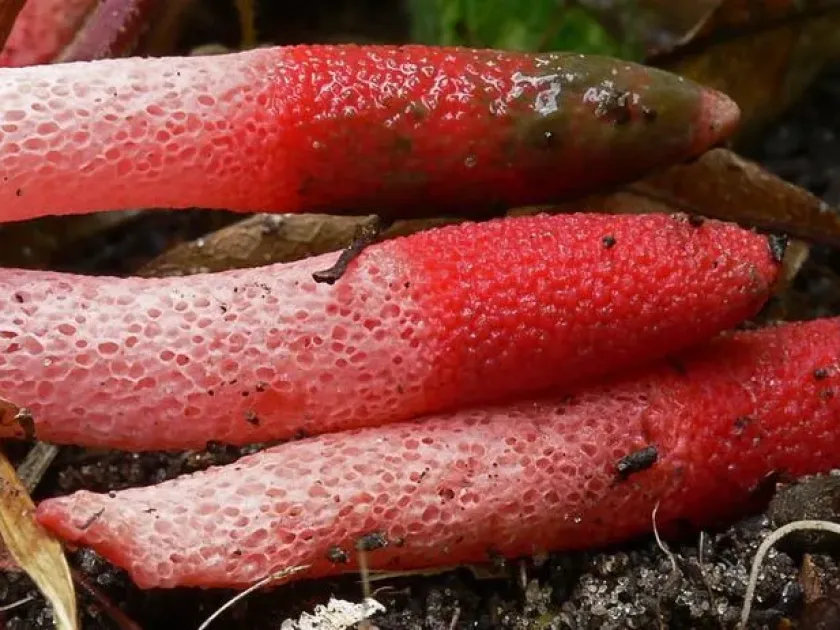
The fruiting body of the fungus has an elongated, cylindrical shape, reaching 10–12 centimeters in height. The color of the stalk ranges from white to pinkish shades.
The tip of the fruiting body is covered with olive-green slime, which contains the fungal spores. This substance has a sharp, often unpleasant, carrion-like odor.
The fungus develops from a dense, egg-like structure embedded in the soil or forest litter. After the "egg" membrane ruptures, the fruiting body expands rapidly.
It is often mistaken for pathological growth or exotic plant diseases on roots; however, it is an independent organism with no connection to infectious plant processes.
The presence of this species in a plot indicates high soil moisture levels and an abundance of decomposing wood chips or sawdust in the topsoil layer.
Pathogen
Mutinus caninus (Dog Stinkhorn) is not a plant pathogen and does not infect agricultural crops. It is a saprotrophic fungus belonging to the Phallaceae family, thriving solely on decaying organic matter.
This organism cannot be classified as a disease agent because its life cycle is strictly linked to the decomposition of wood, mulch, and leaf litter. It lacks specialized structures required to parasitize living plant tissues.
The biology of this fungus involves development from a subterranean mycelial network that efficiently recycles soil humus. Unlike pathogens, it serves as a beneficial decomposer within the ecosystem.
Its life cycle begins with the formation of an "egg," from which the fruiting body eventually emerges. The entire metabolic process is directed towards the mineralization of organic materials rather than inhibiting crop growth.
Mistaken identification of this fungus as a plant pest often stems from its unusual shape and distinct odor, which attracts insects. In agronomy, it is viewed as an indicator of rich, biologically active soil.
Conditions for development
Mutinus caninus requires moist, shaded areas with high humus content for active fruiting. It prefers loose, fertile soil conditions.
The optimal temperature range for the formation of fruiting bodies is between +15 and +22 degrees Celsius. Constant humidity or high atmospheric moisture is a critical environmental factor.
The fungus is frequently found in gardens and parks where soil is mulched with wood bark or sawdust. High humus levels create an ideal environment for mycelial activity.
Spore dispersal occurs via insects attracted by the odor of the slime on the fungus tip, ensuring rapid colonization of other suitable substrates.
Stable soil pH, close to neutral or slightly acidic, favors the development of the mycelial network. Small groups of the fungus may form in areas of intense wood decay.
Why it matters
Mutinus caninus is completely harmless to the health of agricultural crops. It does not cause necrosis, rot, or deformations in plant tissues.
Lacking enzymes to degrade living plant cells, it poses no threat to home gardens or commercial plantations. The fungus serves as a beneficial element of the soil biota.
There is no economic damage associated with its presence. Conversely, the decomposition of woody debris helps accumulate nutrients in a form accessible to plants.
The only minor inconvenience may be its aesthetic appearance or specific odor, which typically dissipates within 1–2 days after the fruiting body appears.
In agronomy, this fungus is interpreted as a sign of healthy, biologically active soil with an intensive nutrient turnover.
Protection
Specific control measures against this species are unnecessary as it is not a pest or a disease agent affecting crops.
If the presence of fruiting bodies is undesirable for aesthetic reasons, it is recommended to reduce the layer of wood chip or sawdust mulch around the plants.
Improving soil drainage and regular cultivation of the topsoil layer hinder mycelial development, making the environment less suitable for fungal growth.
It is advisable to avoid excessive use of organic fertilizers in the form of raw wood, especially if active natural composting is not planned.
Physical removal of the fruiting bodies offers only a temporary solution, as the mycelium remains in the soil. Full-scale eradication is not recommended from an agronomic perspective.
Discussion
No discussions yet — be the first.