
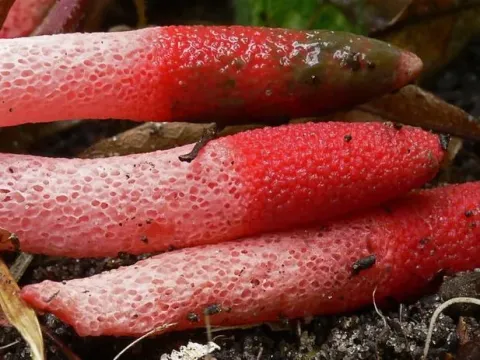
Mutinus ravenelii
Mutinus ravenelii
Mutinus ravenelii, commonly known as Ravenel's stinkhorn, is a fungus in the Phallaceae family. It is crucial to clarify that this organism is not a plant pathogen and does not cause diseases in cultivated crops.
What the section contains
Mutinus ravenelii
The fungus is a saprotroph, meaning its lifestyle is dedicated to the decomposition of dead organic matter. It lacks the biological machinery to infect living plants, meaning your crops are entirely safe from its presence.
The fungus reproduces via spores, which are embedded in a pungent-smelling slime. This slime attracts insects, such as flies, which transport the spores to new locations, allowing the fungus to colonize new areas rich in organic debris.
Because it is a saprotroph, its life cycle is restricted to breaking down lignin, cellulose, and other organic components found in wood chips, mulch, or compost piles. It thrives where organic turnover is high.
From an agronomical standpoint, Mutinus ravenelii is considered an indicator species for soil health and organic content rather than a threat. It is a natural decomposer that facilitates the nutrient cycling process in the soil ecosystem.
The most distinctive sign of this fungus is the emergence of its fruiting bodies. Initially appearing as small, white, egg-like structures partially buried in the ground, they eventually sprout into elongated, porous, pink or red columns.
The tip of the mature fruiting body is covered with a dark, olive-brown slime. This substance emits a strong, foul odor that is easily recognizable and serves to attract the insects necessary for spore dispersal.
Fruiting bodies are extremely ephemeral, typically lasting only one to three days before collapsing or being consumed by organisms. Their quick appearance and disappearance are typical traits of the stinkhorn group.
Since the fungus does not attack living tissues, plants nearby will show no symptoms of blight, wilting, or rot. Any damage to surrounding plants is purely coincidental and usually caused by other environmental factors.
There are no leaf spots, vascular discolorations, or root lesions associated with this species. If plants appear unhealthy, it is likely due to cultural practices, such as over-mulching or poor drainage, rather than the fungus itself.
The development of Mutinus ravenelii is driven by high soil moisture and an abundance of organic material. It is most commonly found in shaded, humid garden areas where the ground remains damp for extended periods.
Gardens that use fresh wood mulch, bark, or have buried decaying wood are highly susceptible to hosting this fungus. The decaying wood provides a perfect energy source for the mycelium network to expand.
Optimal temperatures for the fungus mirror the warmth of the growing season. Rainfall often triggers the sudden eruption of fruiting bodies, as the moisture provides the necessary environment for rapid growth.
In greenhouses, the fungus may appear if the structure suffers from poor ventilation or if organic fertilizers are applied excessively in damp corners. These conditions create microhabitats that favor the growth of saprotrophic fungi.
While the fungus prefers acidic conditions, its growth is primarily dictated by the availability of food sources. It will rarely colonize dry, sandy, or clean mineral soils that lack organic waste.
Mutinus ravenelii does not pose a risk to agricultural productivity. It is a non-parasitic species that does not secrete toxins, nor does it compete with crops for nutrients in a way that inhibits their growth.
The primary concern is the strong, unpleasant odor emitted by the slime, which can be disruptive in garden areas intended for leisure. This is strictly an aesthetic issue and does not indicate an underlying plant pathology.
In rare instances, high concentrations of this fungus might indicate that the soil is overly rich in raw, non-composted organic matter, which could technically harbor other, harmful pathogens, though the fungus itself remains harmless.
There is no evidence that the insects attracted to the fungus serve as significant vectors for plant pathogens. The odor-insect relationship is a specialized evolutionary strategy specific to the stinkhorn's reproductive cycle.
Ultimately, the fungus plays a beneficial role by returning carbon and other nutrients to the soil. Its presence can be viewed as part of a healthy, active decomposition cycle that supports long-term soil fertility.
There is no need for chemical fungicides, as they would likely kill beneficial soil microbes and disrupt the ecosystem without significantly affecting the saprotrophic growth of Mutinus ravenelii.
The most effective strategy is the modification of cultural practices. Avoid using fresh, non-composted wood mulch. Instead, use well-aged compost that has undergone thermophilic decomposition to ensure the absence of fungal spores.
Improving soil drainage and ensuring proper aeration through regular hoeing will help the surface dry out faster. This makes the environment less hospitable for the growth of the fungus's fruiting bodies.
If the fungus is unwelcome, simple manual removal is the most efficient solution. Use a trowel to dig out the fruiting bodies and dispose of them in the trash to prevent spore dissemination around the area.
In greenhouse settings, focus on improving airflow and sanitation. Removing piles of leaves or woody debris from the soil surface will eliminate the nutrient sources that the fungus relies on for its development.