
Munkovalsaria
Munkovalsaria
The causative agent of this disease is the fungus Munkovalsaria donacina, which belongs to the order Pleosporales. This pathogen is a microscopic fungus capable of colonizing the woody tissues of various perennial plants.
What the section contains
Munkovalsaria
The fungus survives primarily in infected bark or dead plant tissues. Its survival strategy allows it to remain dormant until favorable environmental conditions trigger the release of spores.
Spores are disseminated by wind, rain splashes, and movement of insects or garden tools. Upon landing on a suitable host with bark damage, the spores germinate and initiate the infection process.
Inside the plant, the fungal mycelium penetrates the bark and disrupts the function of the cambium, gradually spreading deeper into the tree's vascular system.
As a specialized pathogen, it effectively breaks down structural components of wood, leading to tissue necrosis and the weakening of the host's overall health over several growing seasons.
Initial symptoms are usually characterized by localized areas of dead bark, which may appear sunken, discolored, or cracked compared to healthy surrounding tissue.
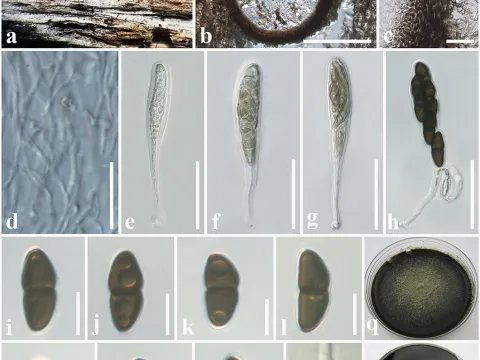
As the infection progresses, small, dark, raised structures called ascomata develop on the surface of the infected bark. These are the reproductive fruiting bodies of the fungus.
Symptoms often include reduced canopy density, premature leaf yellowing, and the cessation of growth in terminal shoots. The tree may appear generally lethargic or stressed.
In severe cases, the infected branches begin to die back, showing brittle wood that breaks easily. If the infection reaches the main trunk, it can jeopardize the entire tree.
- Necrotic patches on bark
- Appearance of dark fruiting bodies
- Dieback of branches
- Reduced vigor and foliage loss
- Cracking of the trunk bark
High humidity and moderate temperatures are the most critical environmental drivers for the development and spread of Munkovalsaria spores.
Mechanical injuries are the primary gateway for infection. Pruning wounds, winter frost cracks, and sunscald injuries significantly increase the susceptibility of the tree.
Poor orchard sanitation, characterized by the accumulation of infected wood and debris, provides a constant source of inoculum that facilitates the spread of the fungus.
Trees stressed by drought, nutrient deficiencies, or soil compaction have weakened defense mechanisms, making them significantly more prone to successful fungal colonization.
Overcrowded plantations with poor air circulation create microclimates that sustain the moisture levels required for the rapid germination and growth of the fungal spores.
The primary damage caused by Munkovalsaria is the progressive necrosis of the conductive tissues, which disrupts the transport of water and nutrients to the canopy.
The disease reduces the yield of fruit-bearing trees by weakening the branches responsible for fruit production and decreasing the energy reserves of the tree.
Repeated infections can lead to the death of major scaffold branches, necessitating significant structural pruning and reducing the economic lifespan of the orchard.
If left unmanaged, the fungus can spread to neighboring trees, causing an epidemic within the orchard that may necessitate the removal and destruction of affected specimens.
The aesthetic and structural integrity of the tree is compromised, increasing the risk of mechanical failure during high winds or heavy snow loads due to the weakened timber.
Sanitation is the most effective control strategy. All infected branches must be pruned back to healthy tissue and removed from the site immediately to prevent sporulation.
Disinfection of pruning tools after each cut is mandatory. Using a 70% alcohol solution or other effective disinfectants prevents the mechanical transfer of spores between trees.
All pruning cuts should be sealed with appropriate wound paint or a specialized antifungal dressing to create a physical and chemical barrier against new infections.
Application of copper-based fungicides during the dormant season can help reduce the spore load on the bark surface and limit the risk of new infections in early spring.
General tree vigor should be maintained through balanced fertilization and appropriate irrigation. A healthy tree is significantly better at walling off fungal infections.