
Murray pine rust
Cronartium murrayanae
The causal agent of this disease is the rust fungus Cronartium murrayanae. It is an obligate parasite that primarily infects species of pines, especially the lodgepole pine (Pinus contorta var. murrayana). Its biology is adapted to long-term survival within the host plant tissues.
What the section contains
Murray pine rust
The fungus follows a complex life cycle, requiring alternate hosts for its development. The spores produced on these alternate hosts are capable of infecting pine stems and branches, establishing a permanent infection site within the tree.
Upon infection, the mycelium colonizes the phloem and cambium layers of the host. This parasitic colonization disrupts the tree's natural transport systems, leading to localized swelling and structural damage to the bark and wood tissues.
During the sporulation stage, the fungus erupts through the bark to release its spores. These spores are easily wind-dispersed, allowing the pathogen to spread across forest stands and infect healthy trees over large distances.
The pathogen is highly specialized and has evolved mechanisms to survive in various forest environments. It can remain dormant during harsh winter conditions, resuming its growth cycle once the temperature and moisture levels become favorable.
The most characteristic symptom of Murray pine rust is the formation of distinct galls or swelling on the main stem and lateral branches. These swellings represent areas where the fungus has caused abnormal tissue growth.
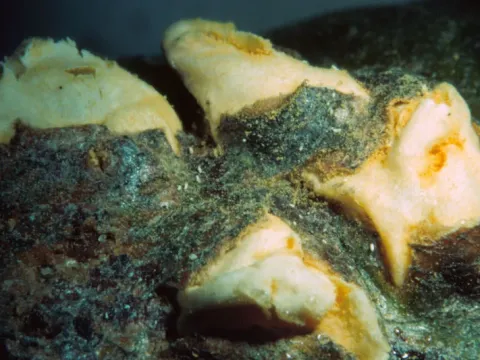
During the spring and early summer, bright orange or yellow blister-like pustules (aecia) appear on the surface of the infected areas. When these pustules break open, they release massive amounts of powdery spores into the air.
Infected branches often exhibit needles that turn yellow and drop prematurely. As the disease progresses, the tree may show signs of branch dieback, eventually leading to a reduced canopy and weakened vigor.
Structural deformities, such as trunk bending or swelling, occur as the infection interferes with normal vascular development. These physical deformities make the trees more susceptible to mechanical breakage from wind or snow.
- Localized swellings (galls) on trunks or branches.
- Bright orange sporulating pustules on bark.
- Premature needle drop and branch dieback.
- Deformed growth and bark cracking.
Murray pine rust thrives in environments with high humidity and moderate temperatures. These conditions are essential for spore germination and the successful infection of new host tissues, especially during the spring season.
Dense forest stands with poor airflow provide ideal conditions for the disease to spread. High humidity trapped within the canopy promotes the infection of neighboring trees by allowing spores to persist and germinate.
The presence of intermediate host species in the vicinity of pine plantations significantly increases the risk of infection. The fungus relies on these alternate hosts to complete its complex biological life cycle.
Trees that have been stressed due to drought, insect attacks, or poor soil nutrition are at a higher risk of succumbing to the fungus. These environmental stressors weaken the tree's defense systems against pathogen entry.
Wounded areas on the bark, caused by insects, wildlife, or mechanical equipment, serve as common entry points for the fungal spores. Once inside the tissue, the fungus begins its colonization process.
The primary damage caused by Cronartium murrayanae is the reduction in wood quality and timber value. Logs from infected trees are often unsuitable for structural lumber or high-quality pulp production.
The disease frequently kills young seedlings and saplings in nurseries or reforestation areas, leading to significant financial losses for forestry managers and reduced forest density.
By compromising the vascular system of the pine, the fungus leaves trees vulnerable to secondary attacks from bark beetles and wood-boring insects. This significantly shortens the lifespan of the host tree.
Management of the disease requires costly sanitary operations, including the removal and destruction of infected trees. If left unmanaged, the rust can cause widespread mortality within a pine population.
The ecological impact is also substantial, as the disease disrupts the normal growth dynamics of forest stands, potentially leading to long-term changes in forest composition and biodiversity.
Effective management begins with the selection of resistant pine stock during the reforestation process. Utilizing seedlings that have shown natural tolerance to the fungus can greatly reduce future disease incidence.
Sanitation measures, such as the pruning of infected branches or the removal of severely diseased trees, are critical. These materials should be removed from the forest to prevent further spore dispersal.
Silvicultural practices like thinning help to improve air circulation within the stand, creating a less hospitable environment for the fungus. This reduces the overall humidity and minimizes spore survival.
Monitoring programs are essential for early detection. Foresters should conduct regular surveys, particularly in areas known for high rust pressure, to identify and manage new infections as soon as they appear.
Chemical control methods are rarely used in large forest settings but may be applied in specific nursery conditions using registered fungicides. These treatments must be carefully timed to coincide with the most vulnerable phases of the fungus.