
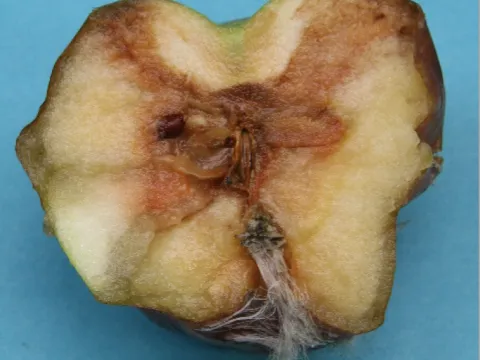
Lead mould
Mucor plumbeus
Mucor plumbeus is a species of zygomycete fungus belonging to the genus Mucor. This microorganism is a typical soil-borne saprotroph that can transition to facultative parasitism when plant immunity is compromised.
What the section contains
Lead mould
The pathogen spreads via spores (sporangiospores), which are easily carried by air currents, water, or insects. A distinguishing feature of the species is its large, dark, lead-colored sporangia located at the tips of sporangiophores.
The fungus possesses high enzymatic activity, allowing it to rapidly degrade plant tissues rich in carbohydrates and pectins. It can persist in the soil and on plant debris in the form of spores for extended periods.
Unlike other species of the genus, Mucor plumbeus is often found not only on the surface but also penetrating deeper into fruit tissues through micro-cracks and mechanical injuries to the epidermis.
The fungal mycelium colonizes the substrate rapidly, creating a dense, felt-like mass. Its development occurs over a wide temperature range, making it a dangerous pathogen for agricultural storage facilities.
The main symptom of infection is the appearance of a fluffy growth on the surface of fruits, vegetables, or seeds, which changes color from white to grey or dark lead over time.
Plant tissues under the mycelium soften rapidly, losing turgor pressure. Often, affected areas develop a watery consistency, distinguishing mucor rots from dry or bacterial infections.
As the disease progresses, a characteristic unpleasant fermentation odor is observed, caused by the breakdown of organic matter under the action of fungal enzymes.
Sporangia are clearly visible on the surface of the affected areas, giving the mould a characteristic metallic or "lead" hue, which allows for easy pathogen identification during visual inspection.
When seeds are affected, a reduction in germination capacity, darkening of the embryo, and the appearance of mould on the seed coat are observed, leading to a complete loss of sowing quality for the batch.
Favorable factors for the pathogen's development are high relative humidity (above 85%) and moderately warm ambient temperatures ranging from +18 to +25 degrees Celsius.
The fungus is particularly aggressive in conditions of poor ventilation where air stagnates, promoting rapid spore germination on the surfaces of fruits and seeds.
Breaches in the integrity of plant surfaces during harvesting, transport, or due to pest damage act as a key gateway for the infection.
Storing produce in conditions where condensation forms on fruit surfaces creates an ideal environment for Mucor plumbeus, leading to massive crop spoilage in a short time.
The presence of large amounts of decomposing plant residues in the soil increases the overall infectious background and the probability of primary infection in the field.
The primary damage lies in the loss of produce quality. Infected fruits and vegetables become completely unsuitable for human consumption or processing.
The fungus is capable of producing secondary metabolites that can be toxic, posing a threat to both human and animal health when affected raw materials are used in feed.
Massive infection in storage facilities can lead to losses of up to 30–50% of the harvest within a few weeks if sanitary standards are not maintained.
Affected seed materials show a sharp decline in germination energy, leading to poor crop stands and a decrease in overall yield in the field.
The spread of the pathogen complicates logistics and storage, forcing producers to incur additional costs for sorting products and utilizing fungicides.
To prevent the disease, it is necessary to strictly follow storage regulations: maintain optimal temperature and humidity, and ensure high-quality ventilation.
An important step in protection is the timely harvesting and discarding of damaged fruits, as infection centers can quickly spread to healthy produce.
Agrotechnical measures include deep plowing of plant debris, which serves as a primary reservoir for the infection, and crop rotation to reduce pathogen concentration in the soil.
- Disinfection of storage facilities before introducing a new harvest.
- Timely pest control to prevent mechanical damage to fruits.
- Pre-sowing seed treatment with authorized fungicide preparations.
- Use of varieties with increased resistance to fruit diseases.
The application of chemical protective agents must be carried out strictly according to the regulations and observation of waiting periods to exclude the accumulation of pesticide residues in the harvest.