
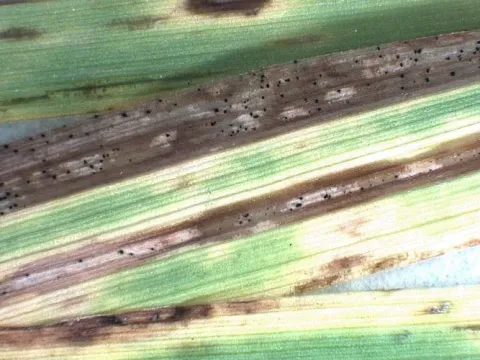
Leaf streak
Scolicotrichum graminis
The causal agent of leaf streak is the fungus Scolicotrichum graminis (also referred to as Cercosporidium graminis). This pathogen primarily affects the leaves and leaf sheaths of various cereal grasses.
What the section contains
Leaf streak
The fungus is classified as a deuteromycete. It survives in crop residues and soil, overwintering as mycelium or conidia, which allows it to persist in fields and infect new host plants in the spring.
Dissemination occurs via conidia, which are easily transported by wind, rain splashes, or insects from infected plants to healthy tissues. The pathogen has a high capacity for secondary infection cycles throughout the growing season.
The fungus enters the plant through stomata or mechanical injuries to the epidermis. Once inside, it colonizes the intercellular spaces, absorbing nutrients and causing localized tissue necrosis.
The rapid cycle of spore production allows the disease to propagate quickly under favorable environmental conditions, potentially leading to widespread infection within a field.
The primary symptom of leaf streak is the appearance of narrow, linear stripes or spots on leaves and leaf sheaths. These streaks are olive-brown or dark brown in color.
A distinctive feature of this disease is the orientation of the streaks, which run parallel along the leaf veins, creating a characteristic look that distinguishes it from other leaf spots.
Under conditions of high humidity, an olive-black mold, representing the fungus's conidial sporulation, can be seen covering the streaks on the leaf surface.
As the infection progresses, individual streaks may coalesce, resulting in widespread chlorosis and necrosis. Ultimately, this leads to the premature drying and death of the leaf blade.
The disease typically manifests first on the lower leaves of the plants, gradually moving upward toward the flag leaf if conditions remain favorable for the fungus.
High relative humidity, frequent rainfall, and fog are the most critical factors for the development of leaf streak. Moisture is essential for the germination of spores and the development of the fungal colonies.
Moderate temperatures, generally ranging from 15°C to 20°C, are optimal for the pathogen. These temperate conditions often coincide with spring growth periods in many cereal-growing regions.
High-density plantings create a microclimate with stagnant air and prolonged moisture, significantly increasing the risk of rapid disease spread within the crop.
Plants that are stressed due to nutritional deficiencies, drought, or poor soil conditions are notably more susceptible to infection by Scolicotrichum graminis compared to healthy, vigorous plants.
Poor agricultural practices, such as failing to rotate crops or leaving heavy infected crop residues on the soil surface, provide a continuous reservoir for the pathogen to thrive.
The economic impact of leaf streak is primarily due to the reduction of photosynthetic leaf area. This leads to impaired plant metabolism and a significant reduction in grain yield.
Infected crops often exhibit smaller, shriveled grains, which results in a lower hectoliter weight and poor processing quality, particularly affecting the baking value of rye.
Premature leaf senescence and death weaken the plant significantly, making it more vulnerable to secondary infections by other opportunistic pathogens or pests.
Extensive damage to the canopy can affect the overall development of the crop, potentially causing lodging and complicating harvesting operations due to reduced biomass and plant vitality.
If left unmanaged, leaf streak can reduce the overall stand vigor, leading to inconsistent crop maturation and lower profitability for the producer.
Crop rotation is the most effective cultural practice for managing leaf streak. Avoiding monoculture or frequent sowing of susceptible cereals in the same field disrupts the fungus's life cycle.
Deep plowing of crop residues is essential to bury infected material and promote its decomposition, which effectively reduces the primary inoculum present in the field.
Choosing resistant or tolerant crop varieties is a crucial preventive strategy. Additionally, using clean, high-quality seeds reduces the likelihood of early-season infection.
Balanced fertilization, particularly adequate potassium and phosphorus levels, helps improve plant resilience and overall health, making them better equipped to resist fungal attacks.
In cases of severe infection, the strategic application of systemic fungicides during the early stages of disease development is recommended to curb the spread and minimize yield loss.