
Leaf phyllachorosis
Phyllachora spissa
Description
Symptoms
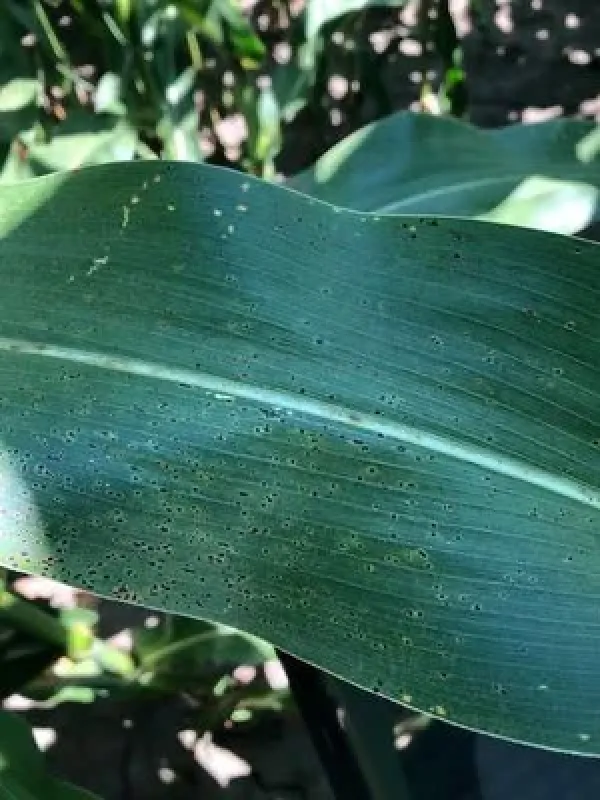
The main symptom of the infection is the development of characteristic black, shiny, raised stroma on both surfaces of the leaf. These structures are often surrounded by a halo of chlorotic or necrotic tissue, resulting in a distinct spotted appearance.
In the early stages, small yellowish or brown dots appear on the leaf surface. As the fungal spores mature, these dots become denser and develop a dark, shiny, varnish-like appearance.
The accumulation of stroma disrupts photosynthesis by destroying chloroplasts. This leads to premature yellowing and subsequent drying of the affected areas of the leaf surface.
Massive outbreaks of the disease can cause leaf deformation, twisting, and premature abscission. This significantly reduces the plant's aesthetic value or its overall physiological productivity.
Visually, the disease can be distinguished from other leaf spots by the unique "black lacquered" structure of the Phyllachora stroma, which acts as a key diagnostic feature for identification.
Pathogen
The causative agent of this disease is the ascomycetous fungus Phyllachora spissa, which belongs to the class Dothideomycetes. This pathogen is a specialized parasite that primarily attacks the leaves of various woody plants.
The life cycle of the fungus involves the formation of stromatic bodies directly within the leaf tissue. Within these structures, perithecia are produced, which contain asci with ascospores that serve as the primary source of infection during the growing season.
The fungus is predominantly endophytic, gradually infiltrating the intercellular spaces of the host plant. This allows the pathogen to remain viable within the leaf tissues for an extended period without immediately killing the host.
The host range of Phyllachora spissa is specific to certain plant species, making it a potentially problematic localized pathogen. Its biological requirements necessitate high humidity for spore germination and successful penetration into the plant epidermis.
Infection spreads mainly through ascospores, which are dispersed by air currents and rain splashes, leading to rapid infection of neighboring plants under favorable conditions.
Conditions for development
The development of Phyllachora spissa is favored by high relative humidity and frequent rainfall during the spring and summer months. Wet conditions are essential for spore germination on the leaf surface.
Temperatures ranging from +18°C to +25°C are optimal for the growth of mycelium within the plant tissues. Under these conditions, the incubation period of the disease is significantly shortened.
Crowded plantings that lack proper aeration create a microclimate with high moisture retention on leaves. This environment significantly increases the risk of epiphytotic development of the disease.
Fallen, infected leaves beneath the tree canopy serve as the primary reservoir for the fungus during winter. In the spring, the mature spores are released, providing the initial infection source for young leaves.
Plants that are weakened due to nutrient deficiencies or stress from adverse weather conditions are much more susceptible to infection compared to healthy, vigorous plants.
Why it matters
Leaf phyllachorosis causes significant damage by reducing the total photosynthetic surface area. As a result, trees and shrubs suffer from restricted organic matter synthesis, which slows down their growth.
Premature leaf drop leads to decreased winter hardiness. The plant fails to store enough carbohydrates to survive the winter dormancy period effectively, making it prone to frost damage.
For ornamental crops, the disease is a major aesthetic issue that ruins the appearance of plantings and lowers the market value of nursery stock.
Prolonged infection over several consecutive years can lead to crown degradation, the dieback of small branches, and overall decline of the plant's vital functions, predisposing it to secondary pests.
Economic losses arise from the need for additional chemical control measures and potential losses in yield or decorative appeal, requiring professional management.
Protection
The primary control measure is the thorough removal and disposal of fallen leaves, which act as the main reservoir for the pathogen. Burning or deep composting away from the garden is highly recommended.
Applying copper-based fungicides in the early spring before bud break helps to suppress the primary infection potential and provides a protective barrier for emerging leaves.
During the growing season, systemic fungicides should be applied upon the detection of the first symptoms. It is crucial to rotate chemical classes to prevent the development of fungal resistance.
Cultural practices, such as crown thinning and maintaining proper spacing, are essential for improving airflow and reducing the humidity levels favorable to the fungus.
- Regular pruning of infected branches and leaves.
- Application of balanced potassium-phosphorus fertilizers to boost plant immunity.
- Selection of resistant plant varieties for new plantations.
Discussion
No discussions yet — be the first.