
Leaf curl spot
Taphrina maculans
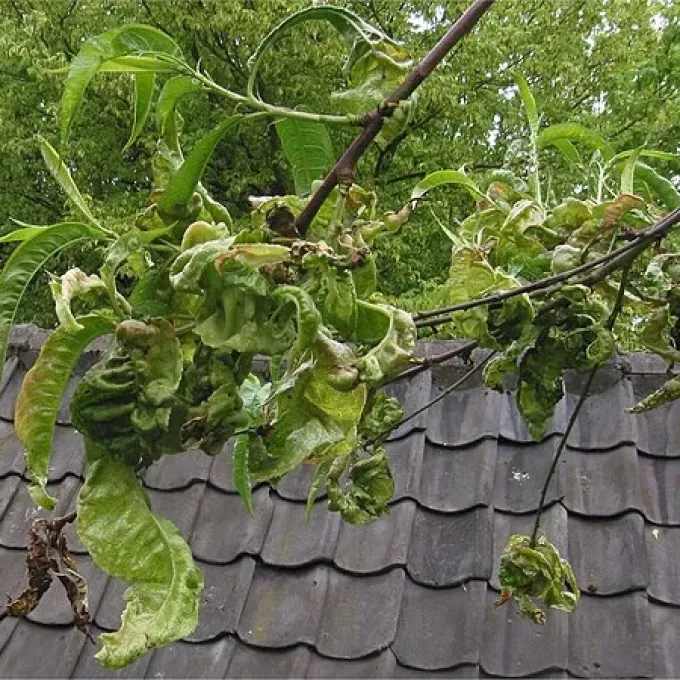
Description
Symptoms
The first symptoms appear as tiny spots on the leaves. These spots usually start as light yellow or chlorotic areas and may transition to dark brown or black as the tissue begins to necrotize.
Leaf curling is the most prominent sign of the disease. The affected leaf blades become distorted, crinkled, or exhibit irregular swellings, which significantly alters the leaf morphology.
Under humid conditions, a fine, powdery layer may be visible on the underside of the leaf spots. This corresponds to the fungal sporulation stage, indicating that the plant is actively releasing spores.
As the infection progresses, multiple spots may coalesce, covering large parts of the leaf area. This causes the leaves to turn yellow, wither, and eventually drop off before the normal growing season ends.
On susceptible crops, such as Curcuma longa, the disease is easily recognized by these specific deformations combined with the patchy necrotic discoloration of the foliage.
Pathogen
The disease is caused by the ascomycete fungus Taphrina maculans. This pathogen is known for causing characteristic deformities and localized leaf spots on susceptible plant species.
The fungus develops primarily within the leaf tissue, causing the cells to proliferate abnormally. During its reproductive phase, the pathogen ruptures the leaf epidermis to release conidia, which are responsible for further spreading the infection.
Taphrina maculans has a life cycle closely linked to moist conditions. The fungus survives unfavorable seasons as resting spores in the soil or on infected debris, ready to infect new growth when the environmental conditions become optimal.
Biological studies indicate that the fungus disrupts the hormonal balance of the plant. This disruption leads to the typical curling and distortion observed on the foliage during the active growth phase.
The pathogen is highly host-specific. In agricultural settings, it is a significant concern for crops like turmeric, where leaf integrity is crucial for the development of healthy rhizomes.
Conditions for development
High humidity and moderate temperatures are the most critical factors for the development of Taphrina maculans. Frequent rainfall and persistent morning dews promote spore germination.
Poor aeration within the crop canopy significantly increases infection rates. Dense planting configurations hinder the drying of foliage, creating a perfect micro-climate for the fungus to thrive.
The optimal temperature range for the pathogen is typically between +18°C and +25°C. Outside of this range, the development of the mycelium slows down, although the pathogen can remain dormant.
Spread is facilitated by rain splashes and wind, which carry the spores from infected leaves to healthy ones. Insects may also play a minor role in moving the fungal spores between plants.
Excessive use of nitrogen-rich fertilizers can encourage lush, succulent growth, which is often more susceptible to the penetration of the fungal hyphae.
Why it matters
The primary damage is a significant reduction in the photosynthetic efficiency of the plant. Since the leaves are deformed and partially necrotic, the plant cannot produce enough carbohydrates.
For tuber and rhizome crops, this reduction in energy production leads to stunted growth and lower yields. The quality of the harvested produce is often severely compromised, leading to economic loss.
Premature leaf drop weakens the plant's overall vitality. This makes it more susceptible to environmental stresses such as drought or secondary infections by other opportunistic pathogens.
In large-scale farming, the disease can spread rapidly. Without proper intervention, a single infestation can turn into an epidemic, leading to total failure of the crop in a relatively short period.
Control of Taphrina maculans is difficult once the symptoms are widespread. Therefore, the economic impact is compounded by the high costs of frequent fungicide applications and labor-intensive sanitation.
Protection
Effective management begins with strict field sanitation. Removing and destroying all infected plant residues after harvest is essential to reduce the inoculum levels in the soil for the next season.
Using certified, disease-free planting material is the best preventive strategy. Growers should carefully inspect rhizomes or seeds before planting to ensure they are clean.
Fungicidal sprays, particularly those containing copper, are effective when applied at the first sign of symptoms. Systemic fungicides can be used for more severe or persistent infestations.
- Ensuring proper spacing between plants to enhance air circulation.
- Regular monitoring of fields for early symptoms.
- Applying balanced fertilizers to avoid overly succulent growth.
- Using biocontrol agents to suppress fungal growth.
Integrated Pest Management (IPM) practices, including the control of insects that might spread the disease, are recommended to maintain healthy crops throughout the growing season.
Discussion
No discussions yet — be the first.