
Medlar moniliosis
Monilinia mespili
The causative agent of this disease is the ascomycete fungus Monilinia mespili, belonging to the Sclerotiniaceae family. This pathogen is a specialized parasite that primarily affects plants of the Mespilus genus.
What the section contains
Medlar moniliosis
The fungus's life cycle involves the formation of apothecia that develop from overwintered sclerotia, which are found in fallen mummified fruits or infected shoots. Spores are dispersed by wind and rain during the flowering period.
The fungus actively penetrates plant tissues through the flowers, after which the mycelium spreads rapidly to young shoots and ovaries. During its life cycle, the pathogen releases toxins that cause plant tissue necrosis.
A key feature of this pathogen's biology is its ability to survive in the soil and on plant debris in the form of sclerotia for several years, making it highly resistant to adverse environmental conditions.
The infection process often begins in early spring, when favorable temperature conditions for spore germination coincide with the active sap flow and flowering phase of the medlar tree.
The first signs of infection are sudden wilting and browning of flowers, which look as if they have been frostbitten. Affected inflorescence areas soon become covered with a characteristic grey bloom—the fungal sporulation.
On young shoots, the disease manifests as dark spots that expand rapidly, girdling the branch. As a result, the shoot dries out along with the leaves, which remain hanging on the tree.
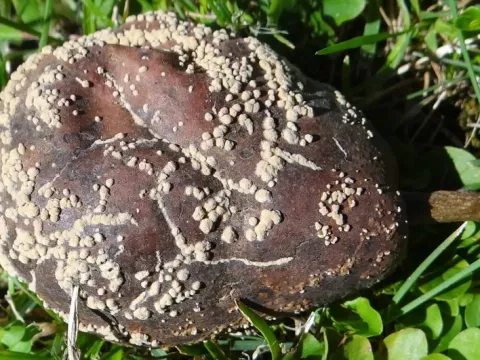
Brown sunken spots form on young medlar fruits, gradually increasing in size. In high humidity, conidial sporulation pads of the fungus form on the surface of the fruit.
In later stages of the disease, the fruits turn black, shrivel, and take on the appearance of "mummies." These mummified fruits often fall to the ground or remain hanging on the branches.
- Darkening and dieback of shoot tips.
- Appearance of grey mold on inflorescences and fruits.
- Mass wilting of flowers during the blooming period.
- Deformation and mummification of ovaries and fruits.
- Presence of dark lesions on the bark of young branches.
Prolonged rainfall and high relative humidity during medlar flowering contribute to the development of moniliosis. The optimal temperature for spore germination is +15 to +20 degrees Celsius.
Dense tree plantings, where air circulation is restricted, create an ideal microclimate for the rapid spread of fungal spores within the crown of the tree.
The lack of regular sanitary pruning contributes to the accumulation of inoculum. Old, diseased branches serve as a permanent reservoir for the fungus to survive the winter period.
Damage to the bark or fruit surface by pests significantly facilitates the entry of infection into the plant tissues, as the fungus uses any micro-cracks to establish a colony.
Soil moisture and excessive plant debris under the tree crown also play a decisive role, providing the necessary conditions for the survival and subsequent germination of sclerotia in the spring.
The primary damage from moniliosis is the loss of a significant portion of the fruit harvest. Infected ovaries fall off en masse, and those that remain are unsuitable for consumption due to rot.
Infection of skeletal and fruit-bearing branches leads to their gradual drying out. If treatment is not carried out, the tree can lose its ability to bear fruit entirely and eventually die.
The disease significantly weakens the overall condition of the plant, reducing its cold hardiness and resistance to other pathogens, leading to premature aging of the orchard.
Infected mummified fruits left on the branches are an active source of infection for neighboring healthy trees, leading to the rapid spread of the disease across the entire site.
Economic losses include not only direct losses from spoiled crops but also significant costs for implementing protective measures, such as regular fungicide applications and pruning.
The key control measure is the sanitary pruning of all infected shoots and the removal of mummified fruits. All plant material must be collected and destroyed by burning.
It is important to carry out regular crown cleaning to ensure high-quality aeration and light penetration. Removing excess branches reduces humidity inside the crown, which hinders fungal growth.
Preventive fungicide treatments based on copper or modern systemic preparations during the "green tip" stage and during flowering can significantly reduce the risk of primary infection.
It is necessary to maintain soil health and limit nitrogen fertilizer application in late summer to avoid excessive shoot growth, which becomes more vulnerable to infection before winter.
Pest control to prevent damage to fruit skin and bark is an essential part of the defense system, as the fungus most often enters the plant through wounds caused by insects.