
Megacollybia
Megacollybia
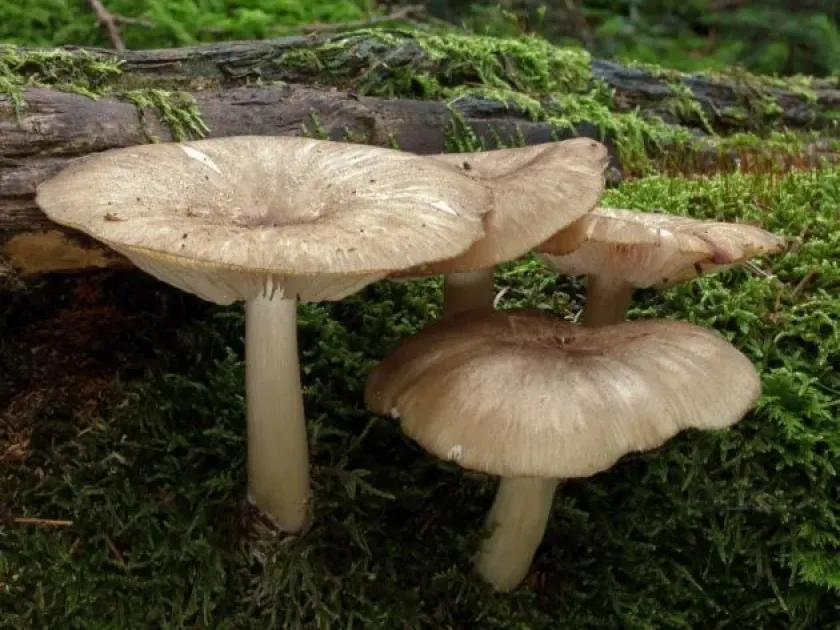
Description
Symptoms
The primary sign of infection is the appearance of distinct fruiting bodies at the base of tree trunks, on stumps, or near exposed roots during spring and summer.
Fruiting bodies are characterized by a large, typically greyish-brown cap with a radial fibrillose texture and wide, sparse gills.
Affected wood displays signs of white rot, where the structural integrity of the fibers decreases, and the tissue turns yellowish or brown.
Internally, the wood becomes brittle and loses its mechanical strength, which often results in the snapping of branches or trunk failure.
The presence of white, fan-shaped rhizomorphs beneath the bark serves as a critical indicator of deep fungal penetration into the host's internal tissues.
Pathogen
The causal agent is the fungus Megacollybia platyphylla, which belongs to the Basidiomycota division. This organism exhibits a dual lifestyle, acting as a facultative parasite and an active saprotroph.
The fungal mycelium actively penetrates the tissues of woody plants through bark lesions, wounds, or directly into the root system from the soil.
Biologically, the fungus is capable of colonizing substrates rapidly due to the development of strong, extensive rhizomorphs that navigate through the wood.
It produces specific enzymes that degrade the complex polymers of wood, allowing it to survive and thrive even in environments with limited oxygen levels.
The life cycle includes a robust vegetative growth phase followed by the formation of characteristic lamellate fruiting bodies on the surface of the substrate.
Conditions for development
Development is heavily dependent on high moisture levels, as the mycelium is extremely sensitive to desiccation in its early growth stages.
Optimal temperatures for colonization range from +15 to +22 degrees Celsius, which aligns with the typical climate of temperate forest ecosystems.
A significant factor in the spread is the presence of mechanical bark damage, which provides an easy entry point for fungal spores.
Dense, poorly ventilated plantings create a microclimate that promotes spore accumulation and increases the risk of transmission to neighboring trees.
Trees under physiological stress, caused by drought or insect infestation, are significantly more susceptible to the encroachment of this fungus.
Why it matters
Megacollybia causes white rot, which progressively destroys the wood's structural integrity, leading to internal degradation of the trunk.
In forestry, the fungus is detrimental because it accelerates the dieback of weakened trees, reducing both total timber productivity and wood quality.
In urban or park environments, infected trees pose a safety risk, as the internal decay increases the probability of sudden trunk or branch failure.
The fungus competes aggressively with other beneficial microbes, colonizing large areas of roots and stumps and displacing natural beneficial flora.
The gradual destruction of the root system limits the tree's ability to absorb water and nutrients, further weakening the host's vitality.
Protection
The primary control measure involves maintaining strict sanitary standards in the forest, including the timely removal of deadwood and infected trees.
It is essential to minimize mechanical damage to tree bark during maintenance operations to prevent infection entry points.
Disinfecting pruning tools and treating bark wounds with wound sealants or fungicidal pastes can significantly lower the risk of infection.
Maintaining appropriate stand density ensures good air circulation and reduces humidity levels around the base of the tree trunks.
- Regular monitoring of tree health and forest stands.
- Prompt removal and disposal of infected wood material.
- Prevention of mechanical injury to trees during forestry work.
Discussion
No discussions yet — be the first.