
Megalaria grossa
Megalaria grossa
Megalaria grossa is a lichenized fungus that often colonizes the bark of trees and shrubs in temperate climates. While primarily an epiphyte, in high-density orchards or stressed conditions, it can develop into a nuisance by impacting the bark's surface and interfering with the tree's physiological processes.
What the section contains
Megalaria grossa
The pathogen functions by forming a thallus on the outer bark layer, utilizing the surface as a structural substrate. Its biological nature involves a symbiotic relationship between a fungal partner and photosynthetic organisms, allowing it to survive in various environments.
Reproduction occurs via spores that are dispersed by wind and rain. Once they land on suitable damp surfaces, they germinate and initiate the development of a new lichen colony, which slowly expands over the tree trunk.
In agronomic terms, this organism is often considered an indicator of ecosystem conditions. Its presence is frequently linked to microclimates characterized by high relative humidity and lack of direct sunlight, which are common in unpruned or neglected orchards.
Understanding the biology of Megalaria grossa is essential for maintaining tree health, as it reflects the overall environmental stability within a given agricultural area.
The primary symptom of Megalaria grossa infection is the appearance of gray-green crusty patches on the bark. These patches may start as small spots but can coalesce to cover large areas of the trunk and primary branches.
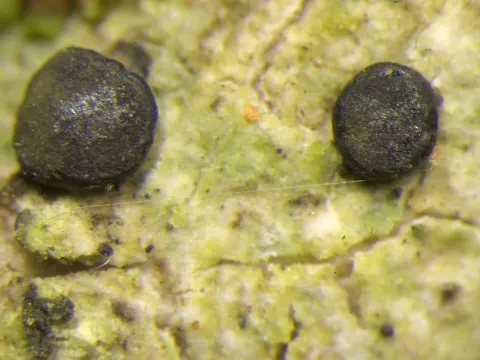
Upon closer inspection, the presence of dark, disc-shaped apothecia (fruiting bodies) is a distinct characteristic. These structures are scattered across the thallus, giving the colony a granular or textured appearance.
The edges of these patches often show a well-defined, darker boundary that contrasts with the natural color of the tree bark. This sharp delineation is helpful for identifying the pathogen during regular orchard scouting.
In dry weather, the colonies may appear brittle and hardened, yet they rapidly regain turgidity and flexibility when moisture levels rise. This cycle is critical for their survival and allows them to persist throughout the seasons.
Presence on younger branches is a sign that humidity levels are too high within the tree canopy, suggesting that immediate attention to aeration is required.
High relative humidity is the most critical condition for the spread of Megalaria grossa. Orchards with thick, unpruned canopies are particularly susceptible because they trap moisture and limit the airflow necessary to keep bark surfaces dry.
Lack of light plays a significant role in the pathogen's development. Shaded areas of the tree, especially in the inner parts of the canopy, provide the stable, moist environment that the lichen requires to establish and proliferate.
The state of the host's bark is another contributing factor. Older trees with fissures, cracks, and rough surfaces offer better anchoring points for spores, leading to higher rates of colonization compared to smooth-barked younger trees.
Over-irrigation that directs water toward the trunks can exacerbate the issue. Consistent wetting of the bark provides the continuous moisture needed to support the growth and activity of the lichen colony.
Cool, stagnant air pockets within an orchard or plantation area can trap moisture-laden air, further promoting the expansion of Megalaria grossa populations during the growing season.
The main harm caused by Megalaria grossa is the physical obstruction of the tree bark's gas exchange. By sealing off lenticels, the lichen reduces the amount of oxygen available to the tree, causing stress to the underlying tissues.
Lichen colonies provide ideal hiding spots and protection for various pests, including scale insects and mites. This cover significantly reduces the effectiveness of chemical pesticides, as it shields the pests from direct contact with treatments.
The presence of significant lichen cover is usually a secondary symptom, indicating that the tree is in a weakened or neglected state. Such trees typically exhibit lower vigor, decreased shoot growth, and overall reduced fruit production.
Underneath the dense lichen thallus, constant moisture levels are maintained, which can lead to secondary fungal or bacterial infections that damage the cambium layer, potentially leading to bark necrosis.
Economic impact is largely felt through increased maintenance costs, as arborists and farmers must invest time and resources in cleaning the bark to keep the trees healthy and productive over time.
Management of Megalaria grossa begins with cultural practices. Proper annual pruning is essential to thin the canopy, improve airflow, and increase light penetration, which dries out the bark and inhibits lichen growth.
Mechanical removal is a highly effective control measure. Using soft wire brushes or scrapers, the colonies can be physically removed from the bark without causing damage to the healthy inner tissues of the tree.
Copper-based fungicides, such as Bordeaux mixture, are effective for controlling lichen populations. Applying these during the dormant season ensures thorough coverage of the trunks and main branches, killing established colonies.
Maintaining strong tree vigor through balanced fertilization and appropriate water management is key. Healthy trees are better able to support vigorous bark growth, which naturally sheds old bark and limits the colonization of epiphytes.
- Regular monitoring of orchard health to catch early signs of colonization.
- Applying lime wash to trunks for disinfection and protective purposes.
- Adjusting irrigation systems to prevent water from hitting the trunks directly.