
Megalospora sulphurata
Megalospora sulphurata
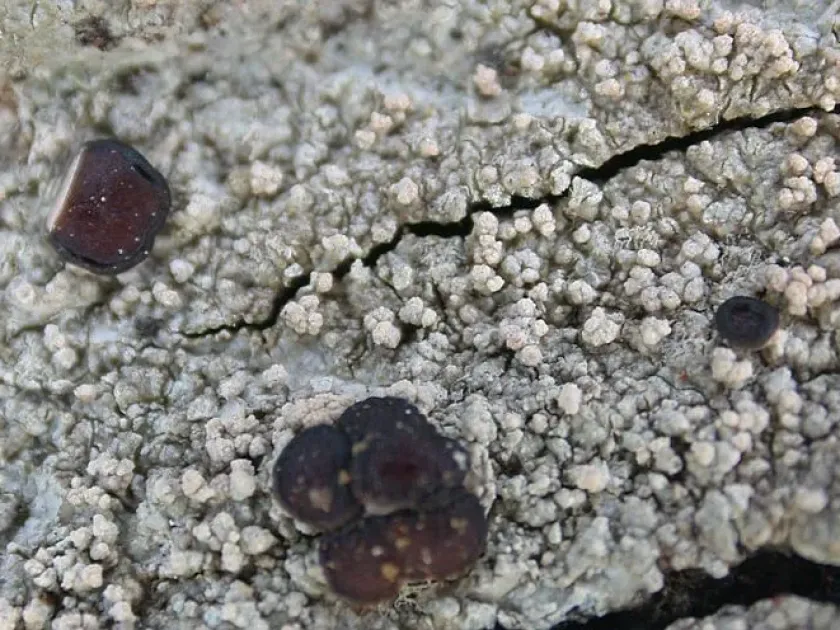
Description
Symptoms
The primary symptom of Megalospora sulphurata is the formation of sulfur-yellow or greenish-grey patches on the bark of trunks and main branches. Over time, these patches grow and expand across the surface of the tree.
The thallus appears as a dense crust or a scaly coating that attaches firmly to the bark. The surface texture is often granular or bumpy, which is easily observable upon closer inspection of the tree.
During the initial stages of colonization, symptoms appear as small, isolated spots. As the colony matures, these spots coalesce into a solid, large-scale cover that can obscure significant portions of the bark surface.
The presence of this lichen often coincides with a general decline in the tree's vitality. This is usually not caused by the lichen itself, but rather by the environmental conditions that support the lichen's growth alongside tree senescence.
Unlike genuine fungal pathogens, this lichen does not induce necrosis, rot, or structural damage to the bark tissues. Its presence is primarily an indicator of the ecosystem's age and the tree's current environmental conditions.
Pathogen
Megalospora sulphurata is a species of lichen belonging to the family Megalosporaceae. It is important to clarify that this organism is not a pathogen causing plant disease but an epiphyte that uses tree bark as a habitat.
This organism exists through a symbiotic relationship between a fungus and algae. It does not feed on the plant's sap or damage its internal tissues, but its presence is often a sign of environmental conditions that favor humidity and slower tree growth.
The biology of this lichen is highly dependent on air quality, as it acts as a biological indicator and is very sensitive to air pollution. Its name refers to the distinctive sulfur-yellow or greenish-grey color of its thallus.
Propagation occurs via spores carried by wind or by vegetative fragmentation of the thallus. Once these spores land on suitable bark in a humid environment with adequate light, they begin to develop into new colonies.
The lichen is most frequently observed on mature trees with rough, aged bark. Young, actively growing trees with smooth bark are significantly less susceptible to colonization by this specific species.
Conditions for development
The development of Megalospora sulphurata requires prolonged periods of bark surface moisture. Therefore, it is most common in regions characterized by high rainfall, fog, and elevated relative humidity levels.
Shaded areas on tree trunks provide the ideal microclimate for the lichen. Dense, unpruned tree crowns that limit airflow and sunlight penetration encourage the establishment and rapid growth of these lichen colonies.
A lack of proper orchard maintenance, such as timely pruning, creates conditions where moisture and dust accumulate on branches, providing a perfect substrate for spore attachment and growth.
Bark texture is a significant factor, as old trees with deep fissures and rugged surfaces retain more moisture than young, smooth-barked trees, making them more attractive for colonization.
Clean atmospheric air is essential for the growth of this species, as it is highly intolerant to sulfur dioxide and other industrial pollutants. Consequently, its presence indicates a relatively healthy, unpolluted local environment.
Why it matters
The direct harm caused by Megalospora sulphurata is minimal because it is not a parasite. However, dense layers of lichen can act as a refuge for various pests, such as scale insects and mites, which overwinter underneath them.
Excessive lichen cover can keep the bark surface damp for longer periods than normal. This persistent moisture can facilitate the development of secondary fungal infections that lead to wood rot in cracks or wounds.
Massive colonization of lichen is often an indicator that the tree's immune system is weakened. Such trees are generally less resilient to environmental stressors, including frost damage and pest attacks.
From a landscaping and ornamental perspective, heavy lichen growth is often considered undesirable as it makes the garden appear unkempt and neglected, which is problematic for high-aesthetic value trees.
In commercial orchards, thick lichen crusts make it difficult to perform thorough visual inspections. This can lead to the delayed detection of more dangerous diseases or pests, potentially affecting fruit yields.
Protection
The primary control method is consistent agrotechnical maintenance. Timely sanitary pruning improves canopy aeration, reduces trunk humidity, and prevents the buildup of moisture that lichen colonies require.
Mechanical cleaning is an effective way to remove lichen. Using soft metal or synthetic brushes, growers can manually scrub the bark, taking care to avoid damaging the underlying healthy tissue of the tree.
Applying a lime wash to trunks in early spring or autumn is a traditional and highly effective preventive measure. Lime creates an alkaline environment that is detrimental to lichen spores and removes existing colonies.
Treatment with iron or copper sulfate solutions during the dormant period (late autumn or early spring) can effectively clear the bark of epiphytic lichens without causing phytotoxic stress to the tree.
Overall tree health management, including proper fertilization, hydration, and immediate treatment of bark wounds, strengthens the tree’s natural defenses and makes it less susceptible to lichen colonization.
Discussion
No discussions yet — be the first.