
Biscogniauxia nummularia
Biscogniauxia nummularia
Description
Symptoms
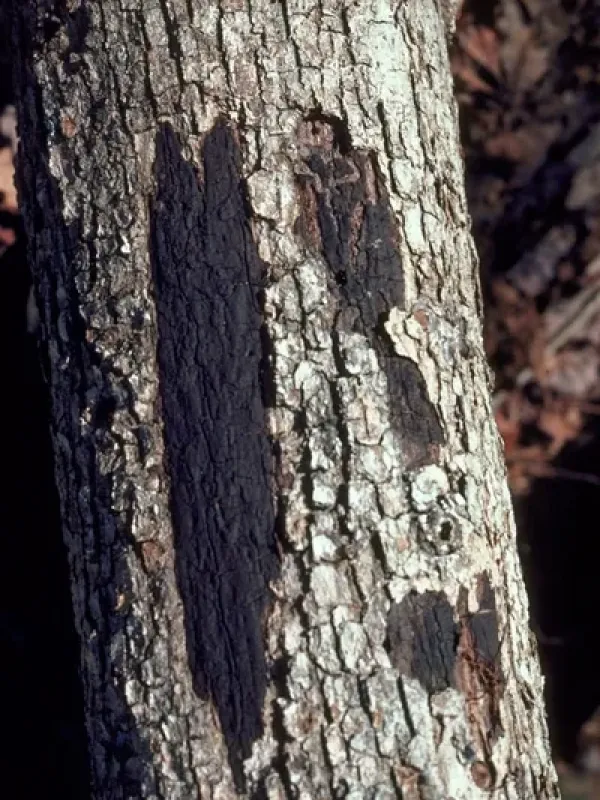
The primary symptom is the localized discoloration and drying of the bark on infected branches or trunks. The bark becomes brittle, cracks, and eventually begins to peel off.
Diagnostic indicators are the black, disc-shaped stroma that emerge through the bark cracks. These structures resemble small coins, which is the origin of the common name used in many regions.
Removing the outer bark reveals necrosed wood underneath. The infected wood usually displays dark staining and decay, a result of the fungal mycelium colonizing the vascular tissues.
As the infection girdles the branch or trunk, it interrupts the flow of water and nutrients, leading to the rapid dieback of the canopy above the infected area.
- Black disc-shaped stromatic structures on the bark surface.
- Cracking and peeling of the bark layer.
- Localized wilting and canopy dieback.
- Dark necrosis of the wood tissue beneath the bark.
Pathogen
The causal agent is the ascomycete fungus Biscogniauxia nummularia, belonging to the order Xylariales. This pathogen is known as a necrotrophic parasite that infects the bark and cambium of various hardwood trees.
The fungus produces distinctive stromatic structures that erupt through the periderm of the host. These stroma are the site where sexual and asexual spores are produced and released into the environment.
It often exists as an endophyte within the tree tissues for long periods, remaining dormant until the tree experiences physiological stress, which triggers the fungus to transition into an aggressive necrotroph.
Spore dispersal occurs mainly through air currents and rain splash, enabling the fungus to spread rapidly across woodland areas during periods of high humidity.
Its ability to remain latent within host tissues makes Biscogniauxia nummularia a particularly difficult pathogen to manage, as it can be present in healthy-looking trees long before outward symptoms appear.
Conditions for development
The development of Biscogniauxia nummularia is strongly correlated with environmental stress, specifically prolonged drought and heat waves which weaken the tree's defense systems.
High temperatures combined with moisture deficits reduce the tree's vitality and inhibit the production of defensive compounds in the bark, facilitating fungal colonization.
The fungus thrives in dense stands where limited air circulation and light penetration create a microclimate that supports mycelial growth and spore survival.
Periods of sustained humidity and rainfall during the growing season facilitate the release of spores and their subsequent germination on susceptible host surfaces.
Old or suppressed trees are significantly more vulnerable to infection compared to vigorous, younger trees, as their capacity to respond to pathogen attack is diminished.
Why it matters
This fungus is a significant threat to beech forests, causing widespread branch dieback and even tree mortality, which drastically reduces the biological productivity of the ecosystem.
Infected wood loses its structural integrity and commercial value due to the decay and internal damage caused by the fungus, rendering it unsuitable for timber production.
The ecological impact is profound, as the loss of mature canopy trees alters the forest structure and may lead to a shift in species composition within the stand.
In urban and recreational forestry, infected trees pose a physical hazard due to the high risk of limb failure and falling branches from the weakened canopy.
Controlling the spread of the pathogen is extremely challenging due to the long-distance dispersal of its spores, which can initiate new infection cycles in previously healthy areas.
Protection
The primary management strategy involves strict forest hygiene: the prompt removal and destruction of symptomatic branches or dead trees to eliminate the source of inoculum.
Regular monitoring of forest stands, especially during and after extreme climate events, is essential for the early detection and management of localized outbreaks.
Silvicultural practices that maintain appropriate stand density are crucial for ensuring adequate airflow, which prevents the build-up of fungal spores and reduces moisture stress.
In nursery or ornamental settings, fungicidal applications during peak spore release periods may be implemented as part of an integrated disease management program.
Long-term prevention is best achieved by maintaining high tree vigor through proper site selection, appropriate tree species selection, and ensuring adequate soil nutrition to boost natural resistance.
Discussion
No discussions yet — be the first.