
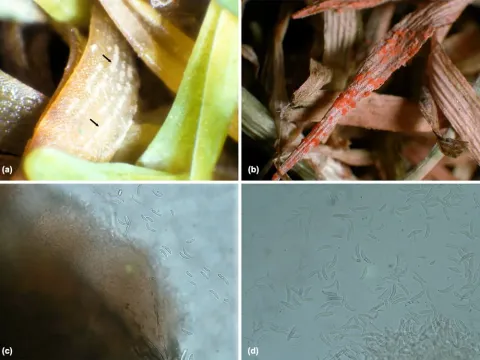
Micronectriella
Micronectriella
The pathogen Micronectriella nivalis (syn. Monographella nivalis) is a fungus belonging to the Ascomycota phylum. It is widely recognized in agriculture as a primary agent responsible for snow mold in cereal crops.
What the section contains
Micronectriella
This fungus survives in soil, crop residues, and seeds through mycelium or conidia. It exhibits remarkable resilience to harsh environmental conditions, allowing it to persist in agricultural landscapes for extended periods.
The fungus maintains both asexual and sexual stages, which contributes to its genetic diversity and adaptability. These life cycles allow it to thrive under cool, moist conditions that often inhibit the growth of competing microorganisms.
The mycelium of Micronectriella possesses potent enzymes that degrade plant cell walls. This enzymatic activity allows the pathogen to colonize plant tissues even at near-freezing temperatures, which is a key survival strategy.
Infection primarily occurs via root colonization or direct penetration of the epidermis. Once inside, the fungus disrupts the host's metabolic processes, extracting nutrients and weakening the plant structure.
The most prominent sign of Micronectriella infection is the appearance of web-like fungal growth, ranging from white to pinkish, on the leaves and stems of winter crops, typically after snow melts.
Initial symptoms include water-soaked, irregular lesions on the foliage. As the infection advances, these spots expand, leading to the browning and eventual death of the affected tissues, often destroying the plant's crown.
Severely infected fields often exhibit large, irregular patches of dead plants, colloquially known as gaps. In these areas, the crop fails to recover during the spring, significantly reducing the overall plant population.
Microscopic examination of dead plant parts often reveals the presence of perithecia—small, dark fruiting bodies. These structures serve as diagnostic evidence of the pathogen's activity and play a role in spore dispersal.
Root system impairment is another symptom; infected plants show reduced vigor and root decay, which limits water and nutrient uptake, leading to stunting and premature wilting once the growing season resumes.
The development of Micronectriella is heavily influenced by autumn and winter weather. Prolonged, damp, and cool autumns followed by significant snow cover on unfrozen soil provide the ideal environment for the disease.
The snow layer acts as an insulator, keeping the soil-surface temperature near freezing. This creates an incubation chamber that allows the fungus to continue growing while the host plant is dormant and less capable of defense.
High planting density contributes significantly to disease spread. Dense canopies trap moisture and reduce airflow, creating a humid microclimate that facilitates rapid fungal germination and tissue colonization.
Excessive nitrogen application prior to winter dormancy can cause lush, succulent vegetative growth. This tissue is softer and more susceptible to pathogen invasion compared to properly hardened, nutrient-balanced plants.
Spread of the disease occurs via conidia dispersed by wind, splashing rain, or through physical contact with contaminated tools and soil particles moved across the field by agricultural machinery.
The primary economic impact of Micronectriella is the loss of stand density, which frequently necessitates reseeding or complete field abandonment, leading to substantial yield losses.
Surviving plants often suffer from reduced productivity, impaired tillering, and general lack of vigor. This makes the crop more susceptible to secondary infections throughout the rest of the growing season.
Infection results in poor grain quality, characterized by low thousand-grain weight and shriveled seeds. Such grain is often unsuitable for market and may be rejected by milling or malting facilities.
The potential for mycotoxin production by the fungus poses a significant risk. These toxins can contaminate harvested grain, making it unsafe for human consumption or animal feed, leading to market restrictions.
Direct costs include expenditures on reseeding, additional fertilizers, and rescue fungicide applications, all of which diminish the overall profitability of the cereal operation.
The use of resistant or tolerant cultivars is the foundation of an effective management strategy. Modern breeding programs prioritize winter hardiness and rapid spring recovery to minimize the impact of the pathogen.
Seed treatment with systemic fungicides is a standard and essential practice. It provides early protection for seedlings, preventing the fungus from establishing itself during the critical germination phase.
Crop rotation is an effective preventive measure. Avoiding continuous cereal cropping helps reduce the inoculum level in the soil, forcing the pathogen to decline in the absence of a preferred host.
Optimizing agronomic practices, such as proper sowing dates and adequate potassium and phosphorus nutrition, strengthens the plant cell walls and enhances general resistance against winter-related infections.
In high-risk areas, a prophylactic fungicide application in late autumn can be highly effective. This measure reduces the fungal load before the onset of permanent snow cover, thereby preserving plant health through the winter.